





What next after AFC/M23-EU talks?

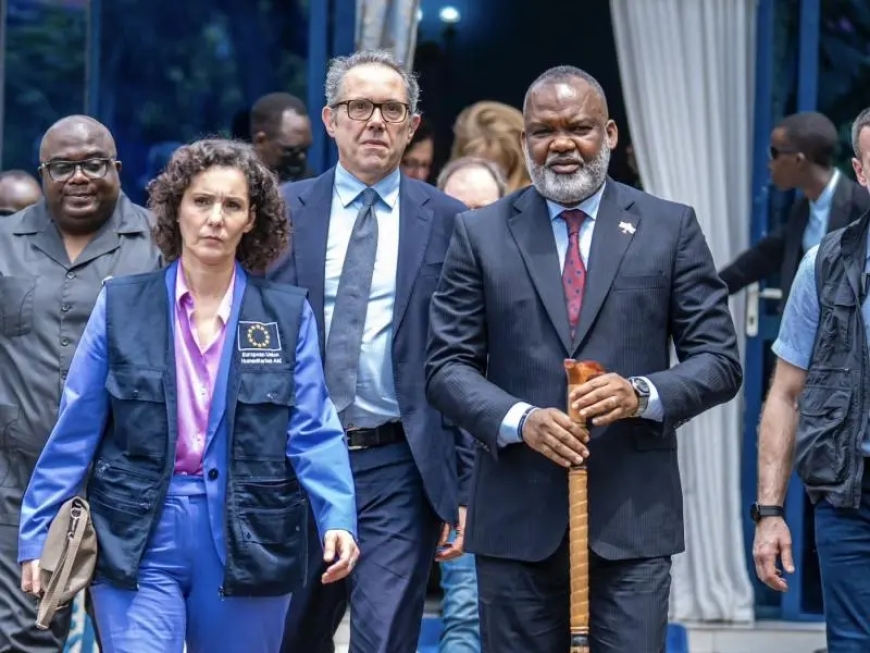
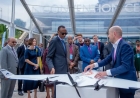
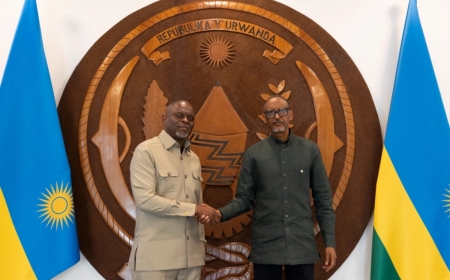
When Hadja Lahbib, the European Commissioner for Preparedness, Crisis Management and Equality, concluded her tour of the Great Lakes region with a stop in Goma on February 20, her meeting with AFC/M23 leaders quickly shaped the conversation around two subjects: the reopening of Goma International Airport and the humanitarian situation in areas under the movement’s control.
ALSO READ: Angolan forces officially Join War Against AFC/M23 in DRCongo
Since then, those themes have dominated discussions following the encounter. But beyond the exchanges, questions remain: what exactly is meant by the humanitarian situation in Goma, what stands in the way of reopening the airport that has closed for more than 12 months, and what comes next after the AFC/M23-EU talks?
Airport reopening tied to ceasefire mechanism
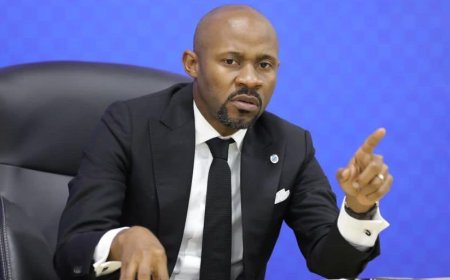
In an interview on Monday, February 24, AFC/M23 spokesperson Oscar Balinda traced the airport debate back to a humanitarian conference convened in Paris late last year, which was attended by Congolese President Felix Tshisekedi.
“At the end of last year, France organized a humanitarian fundraising conference in Paris and raised €1.5 billion,” Balinda recalled. “Part of that money was intended for DR Congo, including Goma. But they declared that for the money to be used, Goma airport had to be reopened for flights from Paris.”
Balinda then reflected on subsequent developments in Kinshasa, recalling that a cabinet meeting was convened to discuss the reopening of the airport and that Tshisekedi appointed officials to oversee the process. In his view, however, that sequence overlooked prior understandings reached in another framework.
“We told them this was a mistaken approach,” he said. “The airport question is linked to the ceasefire mechanism discussed in Doha.”
ALSO READ: $15,000 Per Month: Colombian Mercenaries arrive in DRCongo to fight M23
Balinda referred to earlier negotiations in Doha, where parties examined mechanisms for verifying the ceasefire, including the role of the Expanded Joint Verification Mechanism (EJVM), troop movements involving AFC/M23 and Congolese forces, and logistical support by the United Nations peacekeeping mission (MONUSCO).
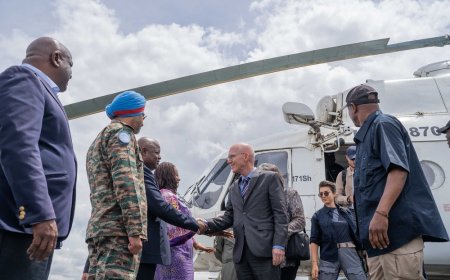
“As part of those discussions, we agreed to prepare a section of the runway for MONUSCO helicopters to land,” he said. “We even went to the airport to receive the MONUSCO leader who arrived by helicopter. About 500 meters are operational for that purpose.”
ALSO READ:AFC/M23 spokesperson Lt. Col Willy Ngoma killed in drone attack
While the runway stretches roughly 3,000 meters, only a limited portion is currently usable. Balinda pointed to technical and security challenges that still require attention, including landmines and equipment he said was looted by government forces before their departure.
“For civilian aviation, international authorization is required, and that involves cooperation between governments,” he added. “That is why we insist that reopening Goma airport must be tied to the ceasefire mechanism agreed in Doha. Progress in negotiations will determine how soon the airport reopens.”
ALSO READ: AFC/M23 releases 230 FARDC soldiers during Visit of EU commissioner to Goma
Speaking to the press after returning from Goma, Lahbib underlined what she described as the responsibilities of the “occupying authority.”
“The occupying authority, which is AFC-M23, has responsibilities to allow humanitarian actors to do their job of helping people, saving lives, alleviating suffering,” she said, calling for clear landing arrangements and guarantees that aid workers would not be mistaken for parties to the conflict.
“There are still technical tasks to be considered,” Lahbib noted. “What I have seen from our discussions is goodwill. However, technically and administratively there is some work to be put in place which is not there yet. That verbal commitment must be followed by concrete actions. There is also a problem of airspace that has to be opened by the Congolese government.”
Her remarks suggested that beyond local arrangements, broader coordination with authorities in Kinshasa would be required, particularly regarding control of Congolese airspace.
The real problem is access to funds
Balinda, however, challenged the framing of the situation as primarily a humanitarian access issue.
“More than 11 UN agencies, 100 international NGOs, and over 500 local NGOs are operating in our areas,” he said. “They have access everywhere and are delivering aid freely.”
According to him, the deeper crisis stems from the closure of banks in Goma since the second day of the rebels’ presence in the city, which they liberated on January 27 last year.
“We told them that before Kinshasa’s regime goes abroad begging for aid, they should first help the people of Goma by reopening the banks and allowing citizens to access their savings,” Balinda said. “How can you block people’s savings, impoverish them, and then claim to seek humanitarian aid?”
He argued that the core challenge is purchasing power, not supply shortages.
“At the markets, food and goods are available, even at low prices,” he said. “But people cannot buy them because they have no money. Let the banks open, let people access their funds, and then we can know the real gap. Calling it a humanitarian crisis without addressing the root causes is misleading.”
Balinda maintained that reopening financial institutions would enable residents to pay for healthcare, school fees and daily needs without relying on external assistance.
Awaiting the Doha process
Despite differing emphases, both sides acknowledged elements of goodwill in their exchanges. For AFC/M23, however, any lasting breakthrough must emerge from the Doha track.
“In the end, they realized that the solution to the Goma airport issue lies not in Kinshasa but in Goma itself, and they had to come,” Balinda said of the EU engagement. “We welcomed them and told them clearly that the final resolution must be found in Doha.”
He confirmed that the movement is awaiting an invitation from mediators to return to Doha to finalize protocols and a memorandum of understanding on the ceasefire mechanism, paving the way for the EJVM to deploy fully on the ground.
“For us, dialogue in Doha is the only path forward,” Balinda said. “War is not our choice. We act in self-defense, but our priority is talks.”