















‘We Will Not Outsource Our Security’: Kagame Defends Rwanda’s Stance on DRCongo

I taught in the Peace Corps after college in western Kenya. We built a playground for the boys and girls after the school gained some size. The girls sat on the ground with their legs straight and forward, in what looked like a torturous position.
They laughed and sang and enjoyed the sunshine. The boys played sports and games and one of the games was to take a junior classman and stand him up against the school wall.
The older stronger boys put their fists up to his face and told him to step backwards. But the little boy could never step back because of the wall. The more powerful boys then threatened the younger one that if he didn’t step backwards, he was going to get punched. Since he had no place to move, he received one punch, and then another, and then another. It was an impossible choice.
The punches only ended when someone with authority and common sense stepped in, and ended it.
President Kagame’s historic speech
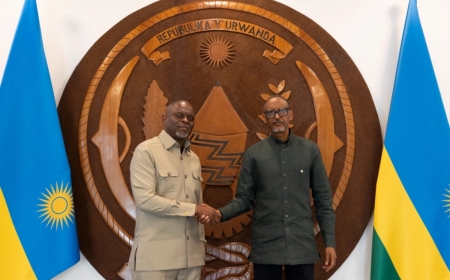
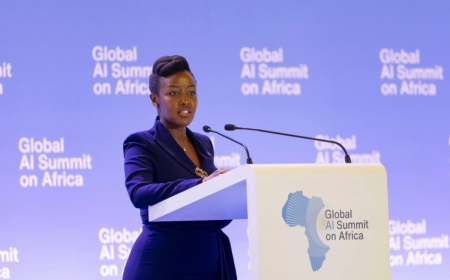
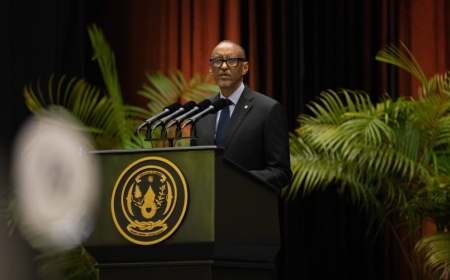
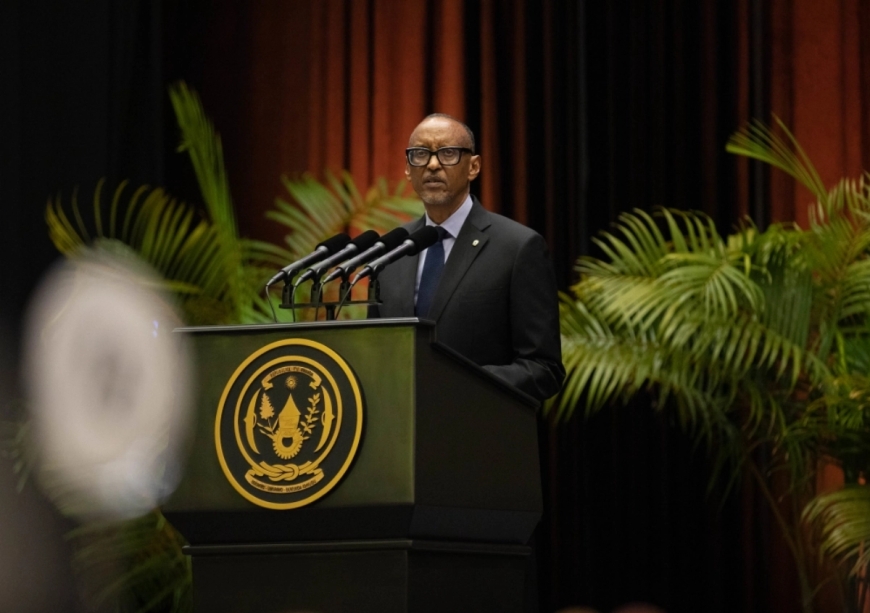
In Kigali this week, President Paul Kagame said out loud what many small states only hint at in private: Rwanda is being asked to accept a security settlement in eastern Congo that no Western country would ever tolerate.
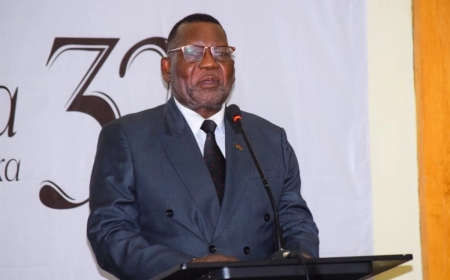
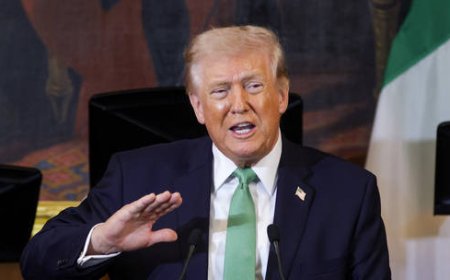
At a widely attended diplomatic dinner on March 6, he laid out a blunt proposition to his guests: if the world insists that Rwanda live next to genocidal forces, Rwanda will choose survival over their approval.
For three decades, donors and diplomats have celebrated Rwanda as a post‑genocide success story they helped build. Kagame begins there, with gratitude for partnerships that supported the country’s recovery. But he turns that history into an indictment. The same governments that praise Rwanda’s stability now condemn the measures that made that stability possible: a hard line on hostile armed groups operating from Congolese soil.
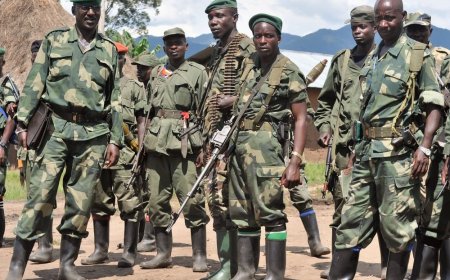
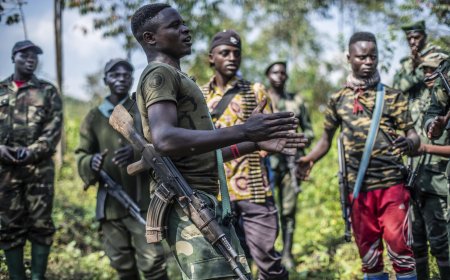
At the core of his argument is the FDLR, the genocidal militia born from the génocidaires many of whom fled under UN protection into Zaire/Congo in 1994. Kagame does not describe them as a spent force lurking in the forest; he calls them the incarnation of the “ideology of genocide”, tolerated and even integrated into Congo’s security apparatus. This is the reality, he suggests, that Western talking points politely skip.
African Self-Determination
Here, Kagame is not alone. When Patrice Lumumba stood before King Baudouin in 1960 and refused to pretend Congolese independence was a “gift” from Belgium, he shattered the script and was assassinated by the Belgians and with the consent other western nations.
Julius Nyerere, confronted with West German threats to withdraw aid unless Tanzania severed ties with East Germany, told them to take their money. Tanzania, he said, would not “allow its friends to choose its enemies”. Thomas Sankara rejected loans and aid that came with imperial strings, insisting that Africans “dare to have confidence in ourselves and our abilities.” Each, in his own register, refused to let European interests dictate African destiny.
Kagame’s March 6 speech, which will go down in history as one of his most important, belongs in that “African tradition of self-determination.”
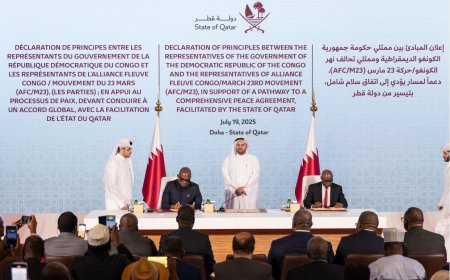
“The Washington Accords,” brokered in the United States, are his focus. They are, as he reminds his audience, a three‑party deal among Rwanda, the DRC, and Washington itself. On paper, they recognize each side’s security concerns and promise a ceasefire and an economic and security roadmap.
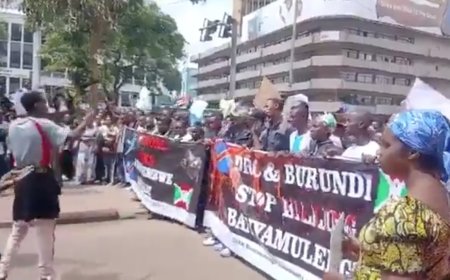
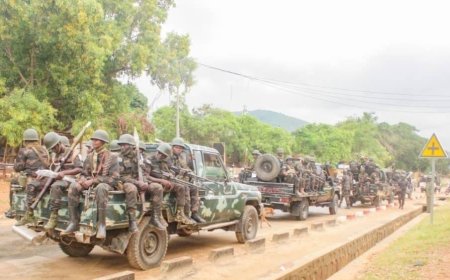
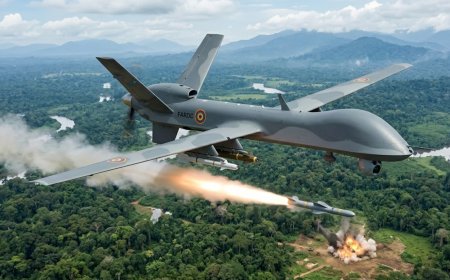
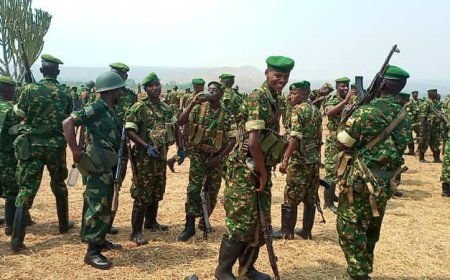
In practice, he says, they became another exercise in asymmetry: as talks continued, thousands of Burundian troops and government‑affiliated mercenaries, paid for by the Congolese, amassed and launched attacks in South Kivu, while the aftermath in Uvira was narrated abroad as an episode of Rwandan aggression.
Kigali’s impossible choice
This is where Kagame’s “impossible choice” comes in. Either Rwanda allows the FDLR and allied militias to creep closer to its border, or it acts and is condemned. He insists there is only one responsible option, and asks his listeners: in our position, would your country choose differently?
He states that any ensuing condemnation is a “badge of honor” for Rwanda’s security forces. This is not bravado. It is a deliberate rejection of the idea that Western displeasure is any kind of a moral verdict. For Lumumba, Nyerere, and Sankara, the willingness to incur that displeasure was the precondition of sovereignty.
The speech is not just a security brief. It is a meditation on who gets to be seen as morally and politically “enough.” Kagame recounts being told he is “not Christian enough,” despite a Catholic upbringing and parents who tithed from their limited wealth. He skewers the hypocrisy of those who shout their faith by day and visit witch doctors by night. Then he shifts: Rwanda, he is told, is “not wealthy enough”—lacking minerals, forests, the assets that make a country’s concerns hard to ignore in global politics.
This is where Nigerian novelist Chimamanda Ngozi Adichie’s warning about the “danger of a single story” becomes more than a literary insight. Adichie showed how reducing a place to one flattened narrative, Africa as perpetual victim, or as singular villain, produces “critical misunderstanding” and licenses condescension. In eastern Congo, Kagame argues, Western policy has succumbed to its own single story: Rwanda as the perpetual disrupter, Congo as the victim, the FDLR as an inconvenient footnote, only a gadfly. Once that script takes hold, Rwandan fears become overreactions, Congolese Tutsi casualties become collateral, and the complex deadly ecosystem of armed actors is compressed into a morality play with one villain.
A fable for our times
The AI‑generated fable that closes his remarks makes the point sharper than diplomatic prose can. A lion king devours an oblivious deer while blaming a tortoise for crops the king knows his own pride destroyed. “One met the king’s desire, the other, his blame.” Rwanda, in this telling, is the tortoise, shoulders burdened, standing dignified in the shadows of larger powers’ appetites and narratives.
It is hard to miss the pattern: like Lumumba’s Congo, punished for asserting equality, or Nyerere’s Tanzania, ready to walk away from aid rather than surrender the right to decide its own alliances, Rwanda finds itself judged by a narrative it did not write.
You do not need to buy every Rwandan move in eastern Congo to see the danger in the double standard the President describes.
If Washington and its partners want de‑escalation, they cannot keep treating the FDLR and its genocidal ideology as a gust of wind and demand that Kigali act as if 1994 was a mere squall. They cannot preside over agreements in which one party’s violations are quietly excused, and another’s responses are loudly condemned.
Kagame’s message, stripped of metaphor, is that Rwanda will not outsource its security to an international conscience that has failed it before. Kagame is closer to Lumumba, Nyerere, and Sankara than many of his critics would admit: an African leader prepared to say “no” when the price of Western approval is coerced Rwandan national amnesia.
The real question is whether those who helped write the Washington Accords are prepared to see themselves as authors of an impossible choice, abandon their own “single story,” and treat all lives at risk in the hills of eastern Congo as if they matter equally.
The writer is a member of the President’s Advisory Council, a bioethics Fellow at Harvard Medical School, and a founder of Rwandan-owned Akagera Medicines.