







































Point-Zero deployment, bonus pay, and drones: FARDC’s coalition readies to break the ceasefire in South Kivu

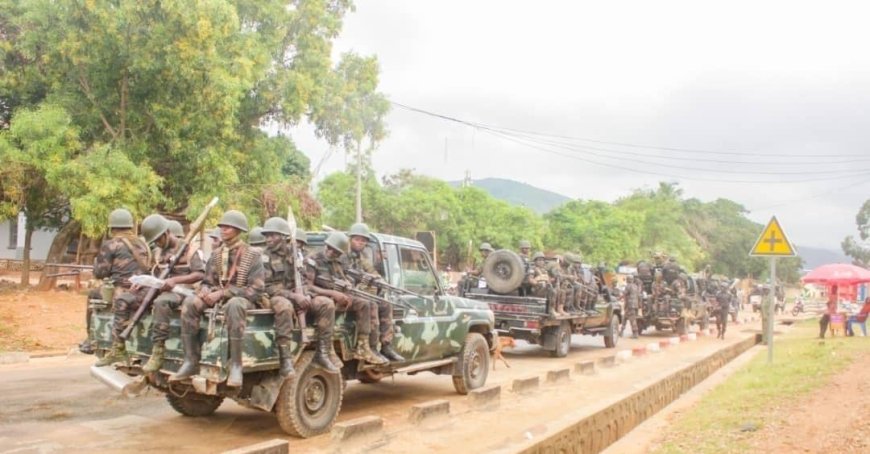
What Congolese army coalition is intensifying in South Kivu Province of eastern Democratic Republic of Congo (DRC) is no longer a routine force posture but preparation for war.
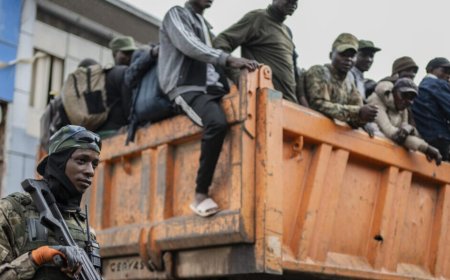
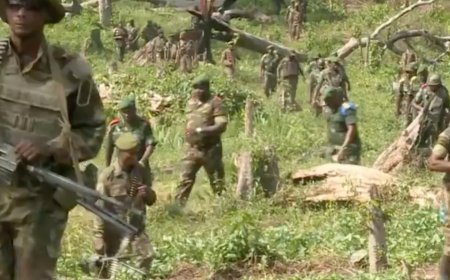
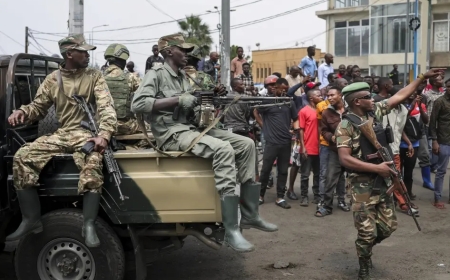
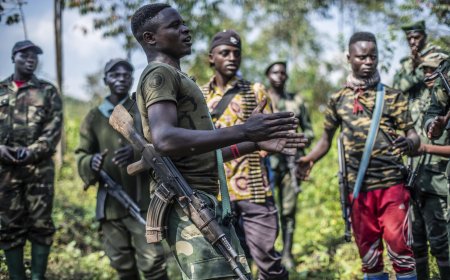
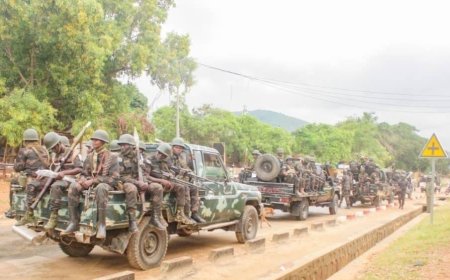
According to field witnesses from the Fizi-Mikenge axis, a fresh battalion of the Burundian army (FDNB), numbering more than 700 soldiers, was deployed in mid-April into Fizi territory, specifically at Point-Zero, where it joined the FDNB’s 11th, 16th, and 29th battalions.
Point-Zero is not just another hilltop. It is the elevated military hinge that controls access toward Minembwe, Mikenge, and Baraka along the RN5. In any campaign design, that kind of ground is used to stage, concentrate, and launch.
Human Rights Watch said on April 14 that Burundian forces were already operating in Fizi and Mwenga alongside Congolese forces, citing security sources who estimated about 4,000 Burundian troops in those territories.
Critical Threats also reported last week that additional Burundian troops were being moved toward South Kivu while clashes and drone attacks were around Minembwe.
That build-up sits uneasily, to say the least, with the ceasefire architecture that the region and its mediators have spent the last year trying to construct.
In April 2025, representatives meeting in Doha, Qatar, welcomed a joint declaration between the DRC and AFC/M23 committing to a ceasefire. In July 2025, the DRC and AFC/M23 rebels signed a declaration of principles toward a comprehensive peace deal.
On February 12, 2026, the African Union publicly welcomed the signing of the Terms of Reference for a ceasefire mechanism between the DRC and AFC/M23, stressing that such a mechanism was essential for compliance, trust-building, and the protection of civilians.
And just on April 18, 2026, representatives of DRC and AFC agreed again, in a US-announced protocol process, to facilitate humanitarian access and to refrain from attacking civilians.
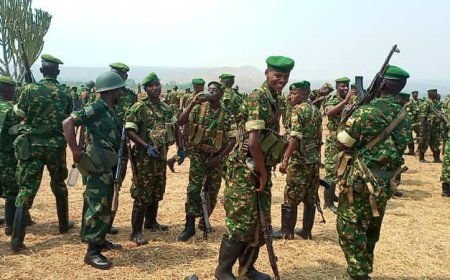
The preparations on the Point Zero–Mikenge axis are not deterrence but a pending breach. If the FARDC 33rd Military Region planned to send a technical team on April 19 from Uvira to the Point-Zero–Mikenge front to distribute special bonuses, then the political meaning is obvious: this is not administrative housekeeping; it is combat conditioning.
Special pay at the front line is meant to stiffen resolve, reward loyalty, and prime fighters for the next push. In other words, morale is being financed because an assault is being prepared.
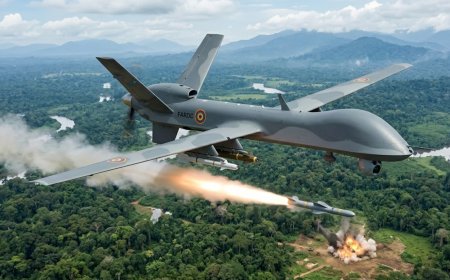
And this would not be the first sign. The ground troops appear to be coming after weeks of drone strikes in and around Minembwe.
Human Rights Watch documented a pattern of apparent drone attacks in South Kivu between January and March 2026, including strikes that killed Banyamulenge civilians in March, destroyed houses, damaged a church and a community radio station near Minembwe, and killed scores of livestock.
HRW said it could not establish responsibility with certainty but added that the targets suggested the Congolese army or allied fighters controlled the drones.
Critical Threats separately reported drone attacks on Mikenge on April 7 and further drone attacks and clashes around villages near Minembwe on April 13 and 14.
Drone strikes soften terrain physically and psychologically before infantry moves. They spread panic, empty villages, degrade communications, and test escape routes.
When civilians in Minembwe say reconnaissance drones now signal that it is time to flee, that is not collateral atmosphere; it is the operational environment of an advancing coalition.
The destruction of cattle deepens the gravity of the campaign. For the Banyamulenge, often described as Congolese Tutsi from the high plateaux, cattle are not merely an economic asset. They are central to livelihood, status, memory, and social identity.
Analysts and cultural background sources alike note that cows occupy a core place in Banyamulenge life, which is why attacks on cattle are widely experienced not only as economic devastation but also as a symbolic attack on the community itself.
So when drone strikes kill cattle in large numbers around Minembwe, many do not see random battlefield loss; they see a strike at the cultural heart of a people.
That is why the current pattern is so alarming. A coalition position is being reinforced at a strategic launch point. Additional Burundian troops are being reported in the theater. Special bonuses are being delivered to raise frontline morale.
Drone strikes have already terrorized the Minembwe area, damaged civilian sites, and wiped out livestock central to Banyamulenge identity. And all of this is happening while a ceasefire mechanism is supposed to be in force and while the parties are publicly recommitting to humanitarian access and civilian protection.
The FARDC-led coalition is not preparing peace; it is preparing an imminent offensive against AFC/M23 rebels and Twirwaneho, a self-defense group for Banyamaulenge, in direct contradiction to the spirit, and potentially the letter, of the ceasefire arrangements now on the table.
Bonus money is being used as fuel for morale. Drones have already prepared the psychological battlefield. And civilians, especially in the Banyamulenge community, are again being forced to pay the price.
Peace cannot be proclaimed in conference rooms while war is organized on the ground.