











































Rwanda–Anthropic AI deal targets health, education gains

Rwanda’s new three-year partnership with Anthropic is expected to accelerate improvements in health, education and public sector efficiency by embedding responsible artificial intelligence use across government institutions, officials have said.
Signed on February 17 between the Government of Rwanda and Anthropic, the Memorandum of Understanding (MoU) positions AI as a practical tool to help the country advance national development priorities, while strengthening safeguards around safety, data protection and ethical use.
At the core of the agreement is the deployment of Anthropic’s AI systems to support concrete outcomes in the health and education sectors, ranging from improved disease prevention to more effective teaching and public service delivery.

Speaking to The New Times, Elizabeth Kelly, Anthropic’s Head of Beneficial Deployments, said the partnership is designed to ensure that AI adoption delivers measurable public value.
“In health, AI will be explored as a tool to accelerate progress in eliminating cervical cancer, reducing malaria prevalence and lowering maternal mortality,” Kelly said, adding that these focus areas align directly with Rwanda’s existing national goals.
Targeted solutions for national priorities
Under the partnership, Anthropic will provide access to its flagship AI system, Claude, alongside Claude Code, training programmes, technical support and capacity-building initiatives for public servants.
The tools will be deployed in collaboration with relevant government institutions, including the Ministry of Health, to develop use cases tailored to Rwanda’s specific needs.
“Specific applications will be developed hand in hand with government teams and grounded in Rwanda’s own priorities,” Kelly said. “Our role is to provide the tools and expertise that help institutions achieve their goals more efficiently.”
In education, the partnership is expected to support lesson planning, curriculum delivery and teacher productivity, while laying the groundwork for broader AI integration in public administration.
Building long-term public sector capacity
Rather than setting fixed numerical targets, the three-year agreement establishes a framework aimed at strengthening Rwanda’s institutional readiness to adopt AI responsibly over the long term.
Kelly noted that success will be measured against Rwanda’s own development benchmarks, with an emphasis on sustainable skills transfer and local ownership.
“The focus is on building capacity so that public servants can confidently and safely use AI as part of their everyday work,” she said.
Beyond government institutions, the deal is also expected to benefit Rwanda’s growing developer community. Local software developers will gain access to training and API credits, enabling them to build AI-powered solutions that can be integrated into public sector systems.
Safeguards and responsible use
Officials stressed that the partnership places strong emphasis on data protection and preventing misuse of AI technologies.
Deployment will be coordinated with the Ministry of ICT and Innovation, ensuring that all applications comply with Rwanda’s regulatory frameworks and national data protection policies.
“Training and technical support are central to this agreement, so that public servants understand not just how to use AI tools, but how to use them appropriately,” Kelly said.
She added that the collaboration reflects Anthropic’s broader safety-first approach, with responsible AI principles guiding all implementations.
Building on earlier initiatives
The MoU builds on previous collaborations between Anthropic and Rwanda. In November last year, Anthropic partnered with the Government of Rwanda and ALX to roll out Chidi, a learning companion powered by Claude, to learners and teachers across Africa.
Under that initiative, Rwanda set a target of training up to 2,000 teachers and civil servants, equipping them with practical skills in applying AI to teaching, lesson preparation and productivity.
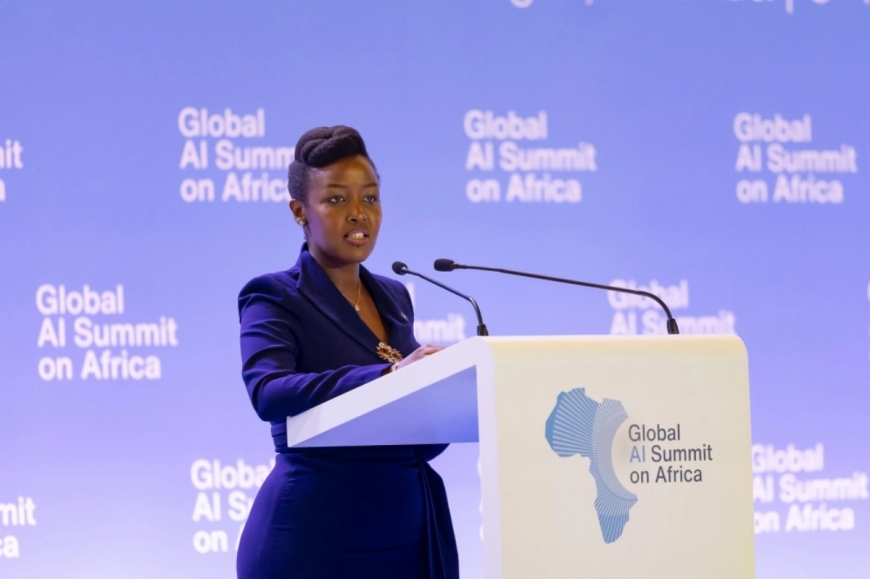
With the expanded partnership now in place, Paula Ingabire, the Minister of ICT and Innovation, said the goal is to design and deploy AI solutions that can be scaled nationally to strengthen education, improve health outcomes and enhance governance, while remaining firmly rooted in Rwanda’s context.