


















“U.S.-Based Prof. Banyaga Is a Genocide Criminal, Not the Celebrated Mathematician on Social Media”-Minister Dr Bizimana
On social media and academic platforms, Augustin Banyaga often appears as a distinguished Rwandan mathematician teaching complex theories to students in...

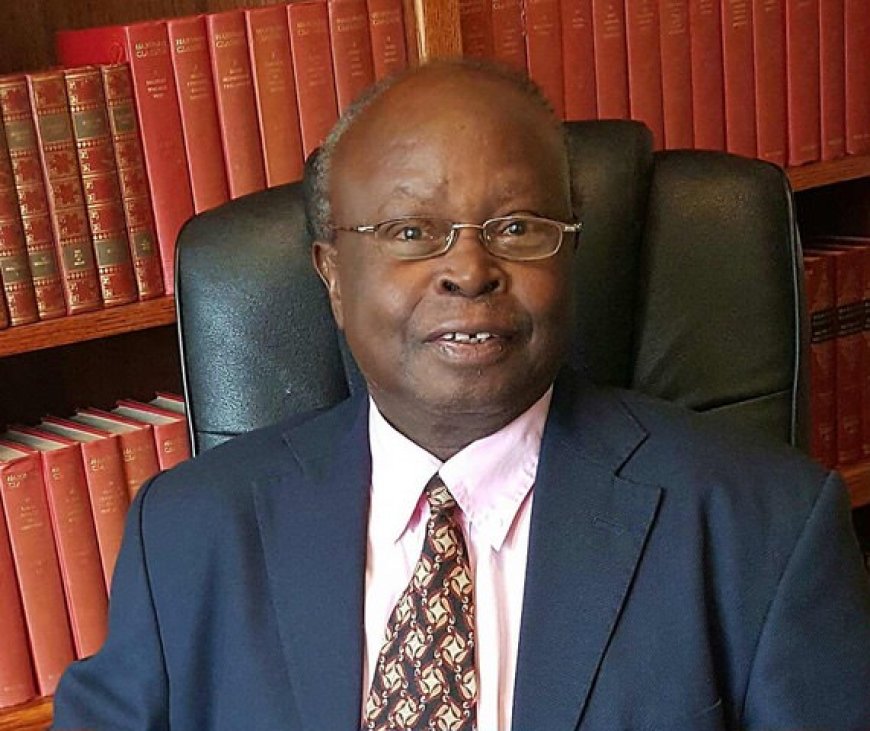
On social media and academic platforms, Augustin Banyaga often appears as a distinguished Rwandan mathematician teaching complex theories to students in the United States.
In a video widely shared online, the professor calmly explains intricate mathematical concepts before an audience of scholars, reinforcing the image of an accomplished academic.
The footage, uploaded to YouTube in 2018, shows Banyaga speaking during the International Conference on Symplectic, Contact and Low-Dimensional Topology, an academic meeting held from May 18 to May 29, 2009, at the University of Georgia in Athens, United States.
The conference brought together more than 200 mathematicians from around the world to discuss advances in geometry and topology — fields that study the structure and properties of mathematical spaces in three and four dimensions.
Banyaga was among the invited participants at the time, serving as a professor of mathematics at Pennsylvania State University.
But Rwanda’s Minister of National Unity and Civic Engagement, Dr Jean-Damascène Bizimana, himself an accomplished legal scholar, says Prof Banyaga’s academic reputation now circulating online tells only part of the story.
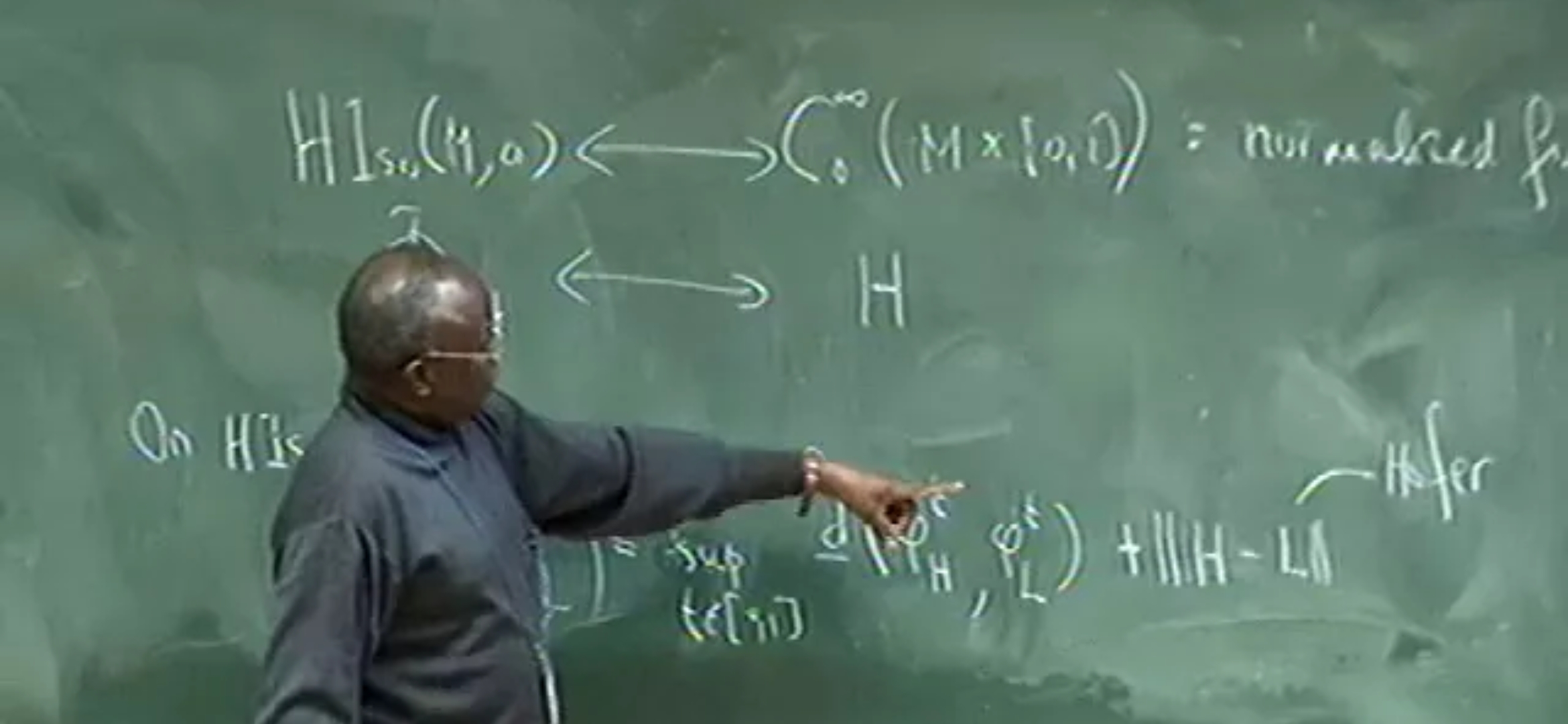 Prof Banyaga Augustin during the reported conference from 2009.
Presenting the evidence, Bizimana said Banyaga played a role in promoting the ideology that led to the Genocide against the Tutsi in 1994, rejecting claims on social media that the professor could not have been involved because he was living abroad at the time.
In recent weeks, spontaneous comments began emerging on social media that appeared to show him one with a clean record, arguing that Banyaga bears no responsibility for the genocide because he was not physically present in Rwanda during the mass massacres.
Bizimana dismissed those claims as misinformation spread by Interahamwe members also living outside, supporters of the FDLR militia and government critics who claim the professor committed no genocide because he was outside the country in 1994.
“Committing genocide does not only mean hacking, shooting or killing with your own hands, or even being physically present where the killings occurred,” said the Minister.
“The plan to commit genocide begins with an ideology that is prepared, taught and spread among those expected to kill, while intimidating those targeted for extermination. That is exactly what Banyaga did openly, both in speech and in writing.”
The minister said the Convention on the Prevention and Punishment of the Crime of Genocide of December 9, 1948 defines genocide-related crimes to include direct and public incitement to commit genocide, as well as conspiracy to commit genocide.
“These crimes do not require the perpetrator to have physically gone to the place where the killings occurred,” Bizimana said, noting that international courts have repeatedly upheld this principle when prosecuting genocide cases.
As an example, he cited the 2015 convictions in Germany of Ignace Murwanashyaka and Straton Musoni, senior leaders of the Democratic Forces for the Liberation of Rwanda (FDLR), who were found guilty for crimes committed by the group in the Democratic Republic of Congo after providing political and financial support.
“Neither Ignace Murwanashyaka nor Straton Musoni personally went to Congo to fight or kill,” Bizimana said. “But they supported the FDLR. In the same way, Augustin Banyaga supported the MRND ideology that called for genocide and encouraged MRND and Interahamwe members to carry it out, opposed peace agreements and promoted the ideology behind the genocide plan.”
The National Republican Movement for Democracy and Development (MRND) was Rwanda’s ruling party from 1975 to 1994 under President Juvénal Habyarimana.
MRND dominated political life during the one-party era and engineered the extremist ideology that fueled the Genocide against the Tutsi. Its youth wing, the Interahamwe, carried out many killings across Rwanda’s villages and hills.
According to Minister Bizimana, Banyaga actively promoted genocide ideology while living in the United States.
In 1992, he helped establish an organization called Cercle Rwandais de Réflexion (loosely translated as ‘Rwandan Forum for Thought’), together with Joseph Ntamatungiro. The group was based in Lemon, Washington.
Members of its executive committee included Judith Mukaruziga, Jeanne d’Arc Niyigena, Patel Twarabamenye, Felicien Ntawukuriryayo, Faustin Iyamuremye, Emmanuel Nyemera and Felicien Rwangano. Today, several of these individuals — particularly Emmanuel Nyemera and Banyaga — are known supporters of the FDLR.
Bizimana said the organization produced documents that spread hostility toward the Rwandan Patriotic Front (FPR), promoted the extremist “Hutu Power” ideology and circulated these ideas among Rwandans both abroad and inside the country.
On July 28, 1992, Banyaga wrote an open letter to then-Prime Minister Dismas Nsengiyaremye containing what Bizimana described as hate speech and genocide ideology.
In the letter, Banyaga sharply criticized Foreign Affairs Minister Boniface Ngulinzira for signing part of the peace agreement concerning power sharing and the integration of forces from the RPF and the former Rwandan army.
Banyaga argued that signing the peace agreements would effectively hand control of the country to the RPF, describing it as “stabbing Rwandans in the back.” He also condemned the agreements for granting positions in government to the Tutsi.
Banyaga warned of what he called the “Tutsisation” of Rwanda and argued that the agreements would not bring peace, but would instead push “Hutu” citizens to unite against the “Inyenzi,” a derogatory term used for Tutsi.
Bizimana said Banyaga also argued that integrating the former government army with RPF/A forces would lead to unrest and predicted that ethnic conflict could erupt within eight months.
Banyaga also claimed the integration of the armies would give Tutsi an opportunity to commit genocide against Hutu.
Banyaga also called on Rwandans who “love their country” to unite against what he described as the enemy and argued that negotiations should not prioritize the return of Tutsi refugees.
Instead, he said talks should focus on people displaced by war rather than refugees living in Europe and the United States whom he accused of seeking to establish an ethnic government dominated by Hima and Tutsi.
Bizimana said Banyaga also supported the ideology and actions of the Coalition for the Defence of the Republic (CDR), which promoted Hutu unity, and argued that the RPF was not a political party but a terrorist organization.
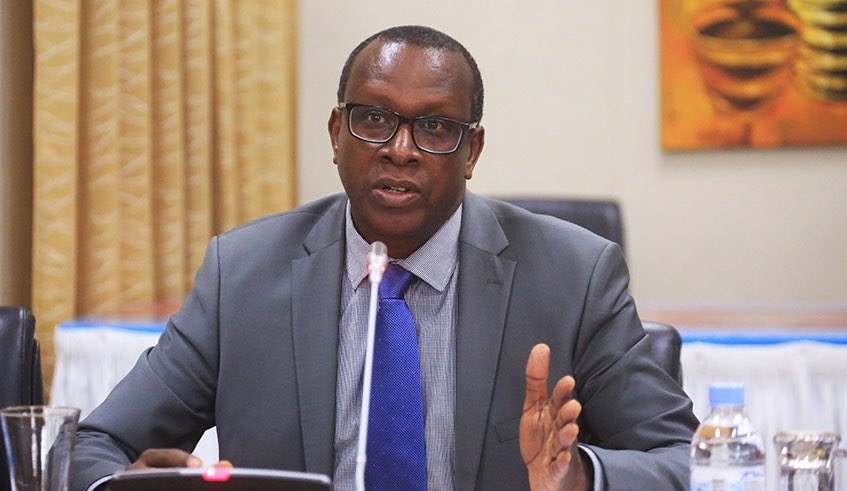
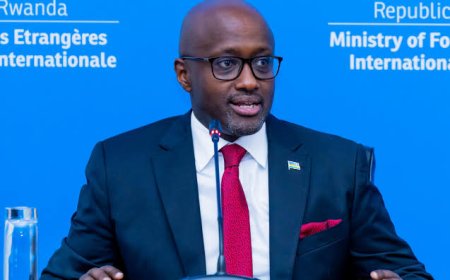
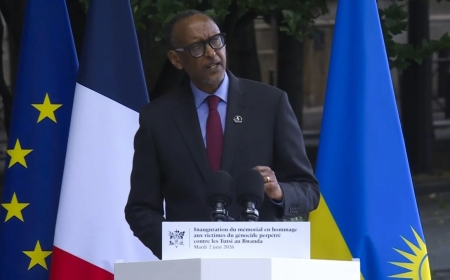
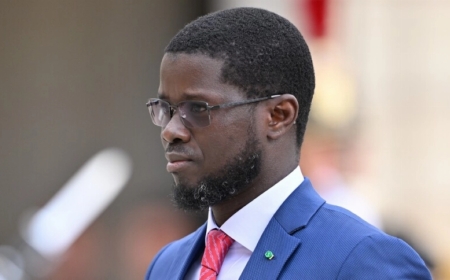
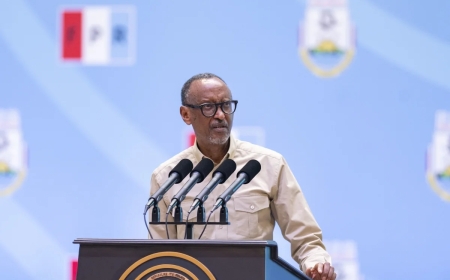
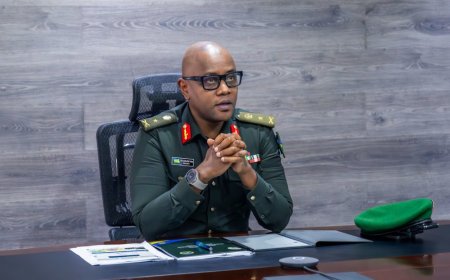
Rwanda’s Minister of National Unity and Civic Engagement, Dr Jean-Damascène Bizimana
According to Bizimana, Banyaga concluded his message by saying Rwanda needed another leader like former president Grégoire Kayibanda.
The minister questions how anyone could deny that such statements constituted genocide incitement.
At the International Criminal Tribunal for Rwanda, he noted, similar forms of incitement led to the conviction of several individuals including former prime minister Jean Kambanda, former planning minister Augustin Ngirabatware, MRND leaders Mathieu Ngirumpatse and Édouard Karemera, and media figures such as Ferdinand Nahimana, Jean Bosco Barayagwiza and others.
Bizimana stressed that Rwanda’s unity cannot be built on falsehoods or distorted history.
“Rwandan unity begins with understanding what destroyed it and preserving the history of the ideology and actions that caused that destruction,” he said.
“At the center of what destroyed Rwanda’s unity was the genocide against the Tutsi, which was planned and promoted by educated individuals such as Professor Augustin Banyaga and others.”