













































How Rwanda’s certified teleport benefits citizens
Better internet connectivity, more accurate weather forecasts, stronger disaster warning systems and smarter farming solutions are among the benefits...

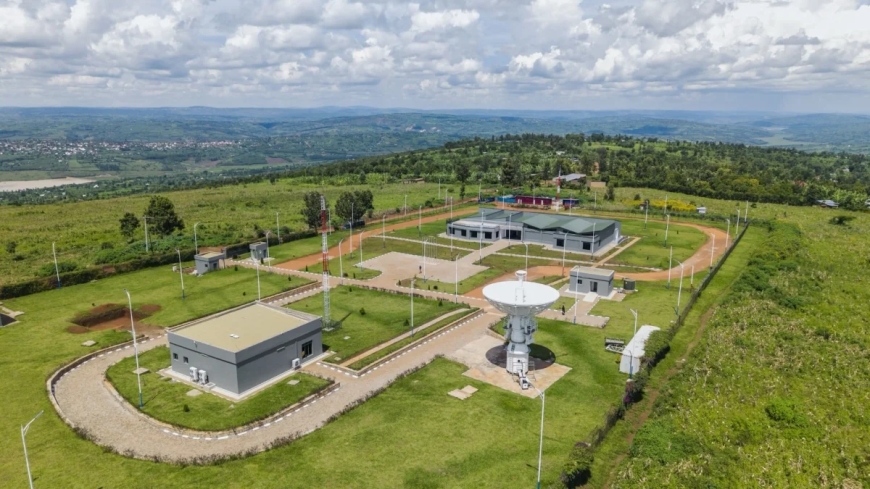
Better internet connectivity, more accurate weather forecasts, stronger disaster warning systems and smarter farming solutions are among the benefits expected from the country's teleport facility, which recently became the first fully certified teleport in Sub-Saharan Africa.
The facility, located in Rwamagana, received Tier 3 certification from the World Teleport Association (WTA), an internationally recognised standard that validates the reliability, resilience and operational quality of teleport infrastructure.
For many people, however, the term "teleport" remains unfamiliar.
A teleport is a highly specialised ground station that connects satellites in space with users and networks on Earth. It receives data from satellites and transmits information back to them, serving as a gateway between space-based infrastructure and terrestrial communication systems.
This connection supports a wide range of services that people rely on every day, including weather forecasting, disaster warnings, television broadcasting, internet connectivity and precision agriculture.

According to Gaspard Twagirayezu, Chief Executive Officer of the Rwanda Space Agency (RSA), a teleport hosts the infrastructure needed to communicate with satellites and manage the flow of information between space and Earth.
“While satellites collect, transmit and relay information from orbit, they cannot communicate directly with most users on the ground. They rely on teleports and ground stations to receive commands, transmit data and connect with communication networks on Earth,” he said.
A typical teleport comprises satellite antennas, ground stations, data centres and operational facilities that work together to transmit information to satellites and receive data from them.
How citizens benefit
The Rwanda Space Agency says sectors such as agriculture, environmental management, urban planning and disaster response are already benefiting from satellite-derived data.
“Space technology and satellite communication are becoming increasingly relevant to improving the lives of citizens. Naturally, teleports come into the picture because they help communicate with assets in space.
All sectors that rely on spatial data need teleports,” Twagirayezu said.
“For ordinary citizens, the benefits are significant, ranging from enhancing food security and disaster mitigation to smart urbanisation and connectivity. It is worth noting that the teleport serves international customers and generates income for the country.”
For farmers, satellite data can help monitor crop health, track weather patterns and improve agricultural planning. Disaster management agencies can use the technology to strengthen early warning systems and improve responses to floods, landslides and other emergencies.
Urban planners rely on satellite imagery and geospatial data to guide infrastructure development, while environmental agencies use such information to monitor land use and natural resources.
The technology is also helping extend connectivity to communities in areas where conventional telecommunications infrastructure remains limited.
“Satellites are playing a major role in connecting underserved citizens in rural areas,” Twagirayezu noted.
Understanding Tier 3 certification
The Tier 3 certification awarded to the Rwamagana-based teleport is an internationally recognised standard that assesses the reliability, resilience and operational quality of teleport facilities.
According to RSA, the certification assures customers and partners that the facility meets high international standards for service delivery and operational performance.
“The certificate provides greater confidence in the quality and reliability of services delivered through the facility. It also increases Rwanda’s attractiveness as a destination for satellite operators, service providers and technology partners seeking trusted infrastructure in the region,” Twagirayezu said.
“More broadly, the certification positions Rwanda among a select group of countries with internationally recognised teleport infrastructure on the continent and worldwide, helping attract more clients and generate additional revenue.”
Supporting Rwanda’s technology ambitions
The teleport is part of Rwanda’s broader ambition to build a knowledge-based, technology-driven economy. Officials say the facility complements national investments in digital transformation, artificial intelligence, geospatial technologies and other space-related applications.
“Beyond the physical infrastructure itself, Rwanda has invested in technical expertise, operational capacity and international partnerships needed to build a modern satellite communications ecosystem,” Twagirayezu said.
He added that, beyond attracting satellite operators, communications providers and technology companies seeking reliable ground infrastructure in Africa, Rwanda’s long-term vision is to position itself as a hub for space-related activities, including space tourism.
According to Twagirayezu, the Tier 3 certification also strengthens Rwanda’s visibility and competitiveness in the global satellite communications market, creating opportunities for partnerships, investment and service expansion.
For businesses, this could unlock opportunities in satellite communications, geospatial services, data analytics and other technology sectors. For young people, it could create pathways to specialised careers in engineering, telecommunications, space operations and information technology.
RSA expects demand for satellite communications services across Africa to continue growing in the coming years.
As a result, Rwanda’s teleport is expected to play an increasingly important role in supporting governments, businesses, researchers and international operators seeking reliable infrastructure on the continent.
“Together with other initiatives such as the Geo-Hub, Rwanda’s centralised geospatial platform, the teleport forms part of a broader strategy to ensure that investments in space technology translate into practical benefits on the ground,” Twagirayezu said.
For citizens, those benefits could include improved connectivity, stronger disaster preparedness, smarter farming practices and new opportunities in a rapidly expanding technology sector.
According to RSA, the ultimate goal is to ensure that investments in space infrastructure deliver tangible benefits for communities and contribute to Rwanda’s long-term socio-economic development.