










The politics behind DRC’s ICJ case against Rwanda
DR Congo's ICJ case against Rwanda raises legal and political questions, with scrutiny extending to Kinshasa's alleged ties to the FDLR and Wazalendo militias in eastern DRC.

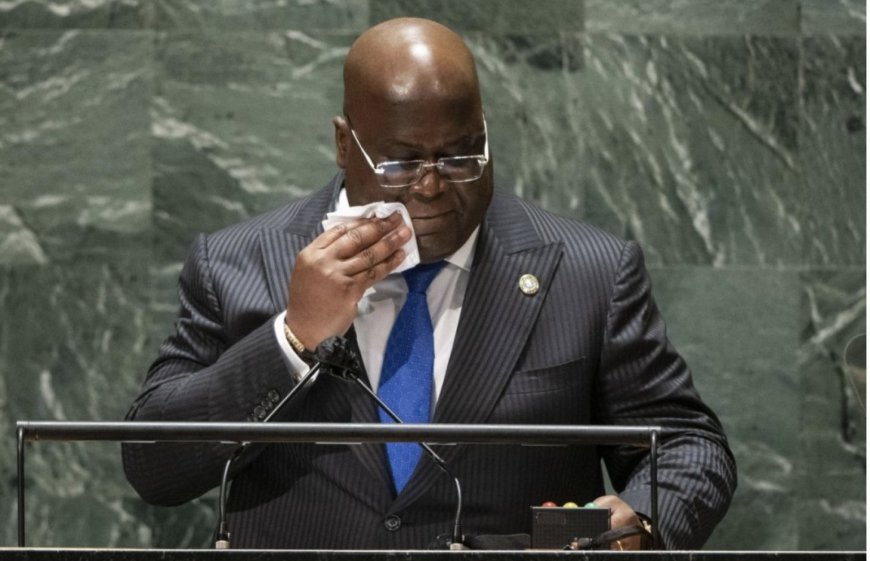
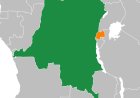
When the Democratic Republic of Congo (DRC) filed a case against Rwanda at the International Court of Justice, on June 26, President Félix Tshisekedi’s government framed the move as a long-overdue pursuit of justice. Kinshasa accused Rwanda of violating international conventions through its alleged role in the conflict in eastern DRC.
The allegations are serious and deserve judicial scrutiny. But so does the political strategy behind the case. By taking Rwanda to The Hague, Kinshasa is not only seeking legal redress; it is also shaping a narrative that places Rwanda at the centre of blame while drawing attention away from questions about its own role in the conflict, including its relationships with armed groups operating in eastern DRC.
The courtroom battle may therefore become more than a legal dispute. It is also a contest over responsibility, accountability and whose actions the international community chooses to examine.
The issue is not that DRC has gone to court. Every state has the right to seek legal redress.
The issue is the selective morality underpinning the case.
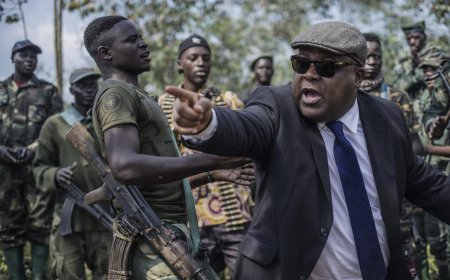
Kinshasa wants the world to examine allegations against Rwanda while ignoring its own alleged support for the genocidal FDLR militia and the various armed groups operating under the Wazalendo label.
FDLR is not an ordinary militia. It emerged from forces that fled Rwanda after masterminding and carrying out the 1994 genocide against the Tutsi, including members of the former Rwandan army and extremist Interahamwe militias implicated in the genocide. The group has since been involved in ethnically motivated killings, sexual violence, child recruitment and other grave abuses in eastern DRC. It has been sanctioned by both the United Nations and the United States.
Instead of treating FDLR as a security threat to be dismantled, Kinshasa has repeatedly treated it as a military asset.
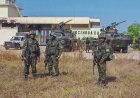
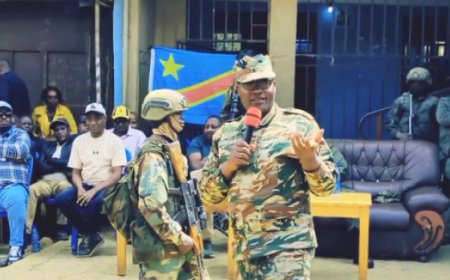
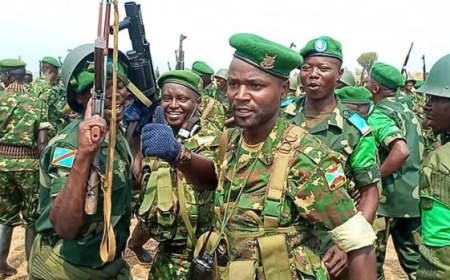
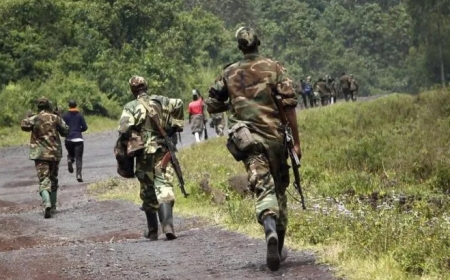
The December 2025 report of the UN Group of Experts on DRC found that the Congolese government continued to rely on Wazalendo groups as proxy forces and maintained cooperation with FDLR despite public commitments to neutralise the group. According to the report, FDLR fighters and Wazalendo combatants operated alongside the Congolese army on several front lines.
UN investigators documented arrangements to continue financial and logistical support to the militias, including hundreds of thousands of dollars reportedly channelled monthly through provincial structures. Congolese military helicopters delivered uniforms, weapons, ammunition and food, while the army provided air support during joint operations. Some government and military officials reportedly assured FDLR commanders that cooperation would continue because the group remained useful on the battlefield.
This is the contradiction at the centre of Kinshasa’s case.
A government invoking international law against alleged genocidal crimes abroad cannot credibly ignore a genocide-linked armed organisation within its own military coalition. A state cannot demand protection for Congolese civilians at The Hague while supporting forces accused of targeting sections of that same civilian population at home.
For Rwanda, the continued presence of FDLR near its borders is not an abstract diplomatic dispute. It is a security threat rooted in the history of the 1994 genocide and reinforced by the group’s ideology, leadership networks and record of violence. This makes Kinshasa’s decision to preserve FDLR as a battlefield partner reckless and deeply provocative.
The consequences have been particularly dangerous for Congolese Tutsi communities, who have increasingly been portrayed as foreigners, infiltrators or agents of Rwanda. Political rhetoric has blurred the distinction between Rwanda, the AFC/M23 rebellion, Congolese Tutsi civilians and anyone described as “Rwandophone.”
In 2023, former minister and parliamentarian Justin Bitakwira used television appearances to frame the conflict in racialised terms, portraying Tutsi and Banyamulenge communities as outsiders and enemies. UN experts warned that some of his statements amounted to incitement to discrimination, hostility and violence. UN reporting in 2026 described him as being involved in Wazalendo coordination and mobilisation.
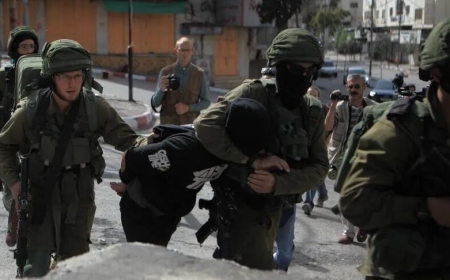
This rhetoric has also been accompanied by violence and displacement. UN investigators documented the flight of thousands of Tutsi civilians from areas affected by Wazalendo and FDLR operations. In one case, these armed groups burned the Tutsi village of Nturo in Masisi Territory of North Kivu Province, while videos circulated containing explicitly anti-Tutsi messages celebrating the destruction of Tutsi homes.
Human Rights Watch has separately documented killings, beatings, extortion and other abuses by Kinshasa-backed Wazalendo groups, carried out along ethnic lines. Amnesty International has warned that the Congolese government’s failure to confront escalating hate speech against Banyamulenge and other Congolese Tutsi communities has contributed to an environment where attacks become easier to justify and perpetrators expect few consequences.
The pattern has extended to the highest levels of the security establishment. In December 2025, the then army spokesperson, Maj. Gen. Sylvain Ekenge, used state television to make derogatory claims about Tutsi women, warning Congolese men against marrying them and presenting such marriages as a form of infiltration. The fact that such rhetoric could be broadcast by a senior officer on national television revealed how deeply ethnic suspicion had entered official discourse.
Hate speech is not a secondary issue in an active conflict. When officials repeatedly associate an ethnic community with treason, foreign invasion or national disloyalty, they create the political conditions for harassment, arbitrary detention, forced displacement and violence. When the same government arms militias operating in areas inhabited by those communities, incitement is reinforced by weapons, commanders and logistical supply lines.
Kinshasa’s ICJ strategy serves a useful domestic political purpose. It transforms a disastrous security record into a simplified narrative of foreign aggression. It allows the region to blame Rwanda for the continuation of the eastern conflict while avoiding more difficult questions about corruption, military dysfunction, failed governance, militia patronage and the deliberate mobilisation of ethnic resentment.
International law loses credibility when it is used as a political instrument rather than applied as a universal standard.
If Kinshasa genuinely seeks justice, it must begin by ending cooperation with FDLR, dismantling militia financing networks, prosecuting officials who incite ethnic hostility and protecting Congolese Tutsi citizens without treating their identity as evidence of disloyalty. It must also accept independent scrutiny of crimes allegedly committed by the FARDC and its Wazalendo allies.
Until then, the ICJ case risks being viewed not as an impartial search for justice but as a political diversion: a courtroom campaign designed to place Rwanda under international scrutiny while keeping Kinshasa’s proxies, hate networks and failures hidden from view.