










RDF is a people’s army deserving a Nobel Peace Prize, not sanctions
The United States on March 2 announced sanctions against the Rwanda Defence Force (RDF) and four of its senior officers for what it described as...

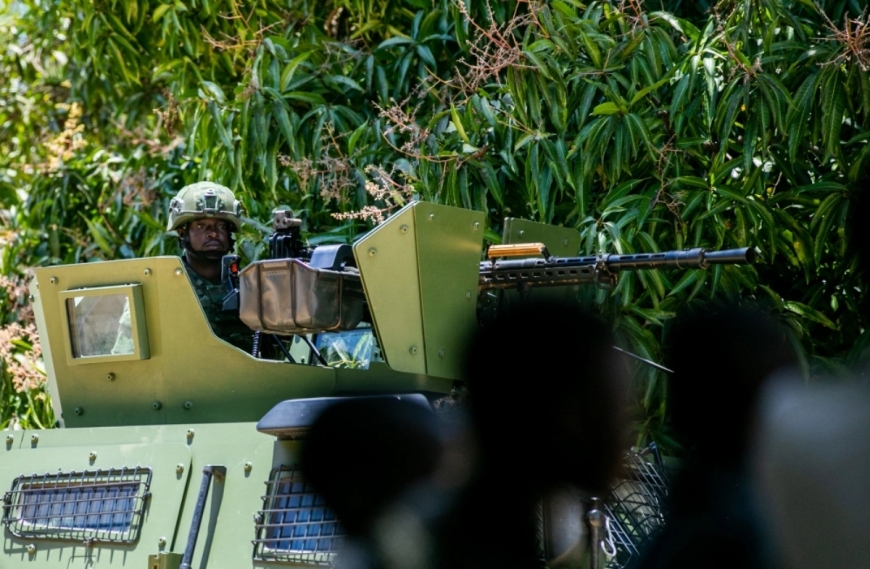
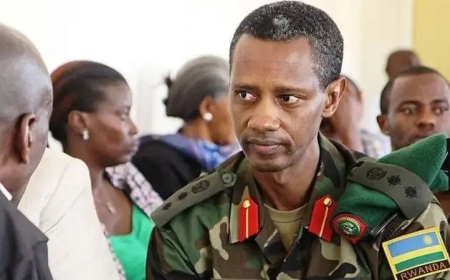
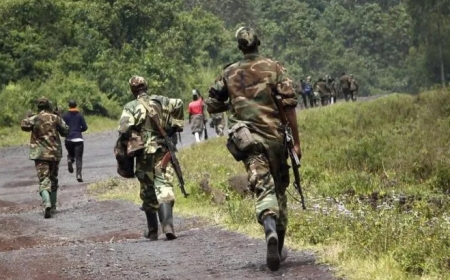
The United States on March 2 announced sanctions against the Rwanda Defence Force (RDF) and four of its senior officers for what it described as “violations of the Washington Accords” and “support for M23.”
Ordinarily, sanctions are imposed on rogue armies, armed groups, or terrorist organizations involved in human rights abuses. While realpolitik may drive these sanctions, their broader effect is to cast doubt on the widely acknowledged reputation, character, and achievements of the RDF.
Therefore, if you are among those unfamiliar with the history of the RDF and its consistent contribution to national, regional, and international peace and security, you may easily accept the underlying narrative behind these sanctions; that the RDF is somehow a discredited force. Likewise, if you had been living on Mars and just returned to Earth only to read about these sanctions, you would likely conclude that the RDF is a bad actor, undisciplined, or even immoral.
But is the RDF a legally and morally responsible military force? What has it contributed, or failed to contribute, to Rwanda and Rwandans? How has the region and Africa experienced its role? And what has been its contribution to the international community, of which the USA itself is a member?
Before answering these questions, it is important to remember that the RDF is the descendant of the Rwanda Patriotic Army (RPA) and is therefore rooted in the liberation struggle and ideology of its founding political movement; the Rwanda Patriotic Front (RPF). This means the RDF carries within it the DNA of the RPF’s historical mission: the total liberation of Rwanda.
Total liberation is a belief system that embraces a holistic approach to emancipating a people from political, social, economic, and psychological subjugation. This explains why the constitutional mandate of the RDF goes beyond protecting territorial integrity and sovereignty to also contributing to national development and social transformation.
Anyone who has objectively studied the thinking, operations, and conduct of the RDF over the last 36 years, from its origins as the Rwanda Patriotic Army (RPA) to its renaming in 2002, would agree that this force deserves a National Medal of Honour for what it has done for Rwanda, and a Nobel Peace Prize for what it has contributed to international peace and security.
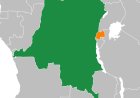
Before listing the deeds for which the RDF deserves a Nobel Peace Prize, it is important to note that although the sanctions concern RDF’s alleged presence in DR Congo, and while the Government of Rwanda maintains that it only adopted “defensive measures,” the real question is this: Does Rwanda have legitimate reasons to deploy in DR Congo?
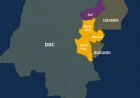
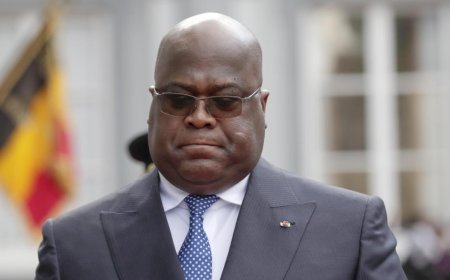
Beyond political rhetoric, no objective observer would argue that Rwanda is wrong to confront the Kinshasa-backed genocidal FDLR militia operating from Congolese territory. This is also why no one criticizes Uganda for deploying against its own security threat - the Islamic State-linked ADF - also based in President Félix Tshisekedi’s heavily militarized country.
Even the United States understands this logic. As Secretary of State Marco Rubio recently stated: “Only stupid countries don’t shoot back when they’re shot at. And we’re not a stupid country.” FDLR has threatened Rwanda for years, and it would amount to an abdication of constitutional responsibility if the RDF failed to act in defence of the country’s territorial integrity, security, and sovereignty.
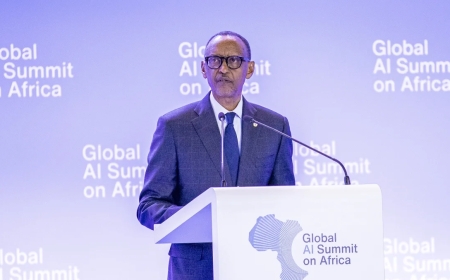
That is why President Paul Kagame told diplomats during a dinner on March 6 that it is “a badge of honour” that the RDF continues to fulfil its constitutional mandate regardless of external pressure.
In that same spirit, the sanctioned RDF officers are living heroes, men being punished for defending their country, just as hundreds of their comrades paid the ultimate price in the struggle to liberate Rwanda, stop the genocide, and keep the flame of “Never Again” burning.
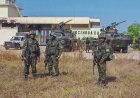
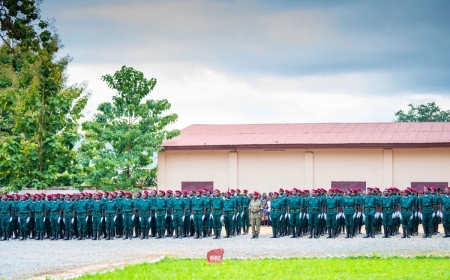
Beyond fulfilling its constitutional responsibilities, the RDF is ranked among the most disciplined militaries in the world and has been recognized by the United Nations as one of Africa’s finest.
Domestically, RDF is deeply respected and consistently ranked among the best public service institutions in Rwanda, according to the Rwanda Governance Board’s 2025 Scorecard. More than 90 percent of surveyed citizens expressed satisfaction with the services provided by the RDF and other security institutions, a trend that has remained consistent for over a decade.
Globally, the RDF is also recognized as one of the most respected, effective, and reliable militaries. The Global Firepower Index ranks Rwanda 93rd out of 145 militaries worldwide and 12th in Africa.
Beyond these quantitative indicators, there is substantial qualitative evidence showing that the RDF deserves a Nobel Peace Prize for ensuring “Never Again” in a context where the UN failed, participating in peacekeeping missions, and helping African states threatened by extremist armed groups survive and rebuild.
For the sake of posterity, below are 12 empirically verifiable deeds performed by the RDF that impartial observers would find compelling grounds for awarding it a Nobel Peace Prize.
The first deed was militarily defeating the genocide regime. This enabled its political leadership to establish a new impersonal state that replaced Juvénal Habyarimana’s ethnic state.
What would have happened had the then Rwanda Patriotic Army - today’s RDF - not defeated the genocidal regime and its criminal military apparatus?
It is this new impersonal state upon which hope and post-genocide reconstruction were built. In the immediate aftermath of the genocide, the army was involved in treating the sick, repairing bridges and roads, clearing bodies from public spaces, and carrying out administrative functions.
This history matters because, in the months following the genocide, many in the region and around the world doubted whether Rwanda could ever unite again under one flag, one leadership, and one common national destiny.
Some prominent leaders, including former Kenyan President Daniel arap Moi and former Ugandan President Godfrey Binaisa (RIP), even promoted the idea of partitioning Rwanda into separate ethnic homelands; one for the Hutu and another for the Tutsi.
In his book Peace and Stability in Rwanda and Burundi, respected Tanzanian writer Godfrey Mwakikagile quotes Moi in April 1998 saying: “The Hutu should have their country and the Tutsi also should have their own country in order to end conflicts between them.”
Today, Rwanda is united, reconciling, developing, transforming, and serving as a model in areas such as security and anti-corruption. Those unfamiliar with Rwanda’s history may assume this progress was inevitable. It was not. Nor is the role played by the army widely understood, despite the fact that it has always been central.
Does that not deserve a Nobel Peace Prize?
The second deed was stopping the genocide itself. What would have happened had the RPA/RDF failed to stop it? What kind of country would Rwanda be today, and what story would the world tell about Rwandans?
The third deed was the army leadership’s decision to criminalize revenge killings and punish those who engaged in them.
Many men and women in the liberation army lost family members during the genocide and returned home to find relatives murdered or missing. What would have happened if the military leadership had not taken a principled stand and enforced discipline?
The fourth deed was providing the foundation upon which national reconciliation was built and continues to stand.
What would have happened had the RPA/RDF failed to provide the security and administrative order necessary to arrest genocide perpetrators, prosecute them, and protect survivors?
It was on this foundation that Rwanda established the Gacaca courts, which tried 1,958,634 genocide suspects on a relatively modest budget of Rwf 29.7 billion, compared to the ICTR, which tried only 61 individuals at a cost of approximately Rwf 2.1 trillion.
The moral clarity with which the Rwanda army has acted was forged during the liberation struggle itself. In 1993, at Mukarange, then military leader Paul Kagame reportedly told RPA soldiers in Swahili: “Jeshi letu hili ndilo litakuwa msingi wa mabadiliko ambayo yatakuwepo kwa nchi yetu.”
Loosely translated, this means: “This army of ours will be the foundation upon which the transformation of our country will take place.”
The fifth deed was de-ethnicizing the military and building a truly national army.
Institutionally, both Juvénal Habyarimana and Grégoire Kayibanda had built ethnically defined militaries. More than any other institution in Rwanda, the military was the first to embrace unity and reconciliation by integrating former FAR members into its ranks.
For example, in January 1995, 1,011 ex-FAR soldiers, including senior officers, were integrated into the RPA. In 1998, another 1,200 were integrated.
Between 1997 and 2001, a total of 18,690 RPA soldiers were demobilized while 15,000 ex-FAR personnel were integrated. By 2004, 23,000 ex-FAR members had joined the newly renamed Rwanda Defence Force (RDF).
The sixth deed was, and remains, acting as the army of “Never Again.”
The RDF has repeatedly fulfilled this responsibility over the past 32 years. It fought and defeated insurgents known as Abacengezi operating from then-Zaire between 1996 and 1997 and has continued defending Rwanda against FDLR ever since.
What would have happened if the RDF had failed in this duty?
The seventh deed was enabling the return of Rwandan refugees, from the so-called “old-case refugees” of 1959, 1963, 1967, and the 1970s to the “new-case refugees” who fled after the genocide.
Holding Rwandan refugees hostage in camps, particularly in DR Congo, formed part of the broader strategy of genocide planners seeking to return to power through armed struggle.
The eighth deed is that the RDF has acted as a genuinely Pan-African army. On a bilateral basis, it has helped brotherly African countries such as the Central African Republic and Mozambique combat extremist armed groups.
Its assistance has made a measurable difference and has extended beyond combat to include military training and institutional capacity-building.
Regionally, the RDF has also been a pillar of the East African Standby Force (EASF), one of the five pillars of the African Standby Force, which may one day evolve into a continental army for peace and security.
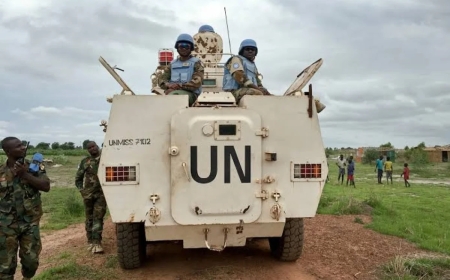
Globally, the RDF has participated effectively in UN peacekeeping missions and advanced the principle of Responsibility to Protect (R2P). Rwanda remains one of the largest troop contributors to UN peacekeeping operations worldwide.
Finally, the RDF and its leadership have been instrumental in restoring Rwanda’s dignity and status within the international community.
This achievement has been secured not only through military victories but also through the conduct, professionalism, and moral example set by its officers, including the leadership of its Commander-in-Chief. As a result, Rwandans travelling abroad today are no longer viewed with pity, as they often were in the aftermath of the genocide. Instead, they are increasingly asked how Rwanda managed to overcome such overwhelming odds and become a model in areas ranging from security to governance.
That is the truth about the RDF. It is also the story of this force and its predecessor, the RPA. It is a story of courage, ideological clarity, moral conviction, responsibility, professionalism, resilience, patriotic heroism, and sacrifice.
That is the fabric upon which the RDF’s reputation and character are built; a reputation too solid to be erased or rewritten by sanctions.
The writer is a researcher, consultant, educator, and commentator on national, regional, and global affairs.