









Tshisekedi Blames FARDC Weaknesses for Failed 2025 Rwanda Attack Plan
Congolese President Félix Tshisekedi’s May 6 press conference shattered years of denial about Kinshasa’s military ambitions toward Rwanda. In attempting...

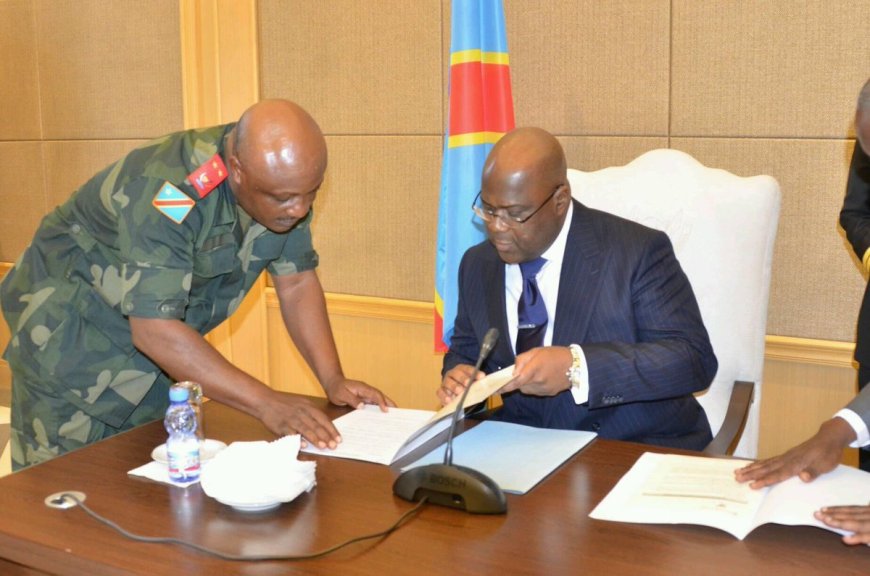
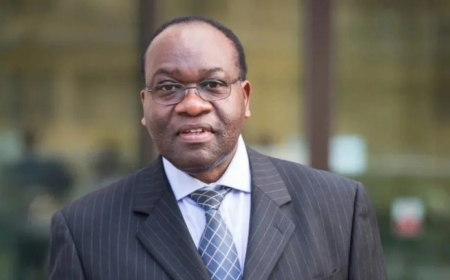
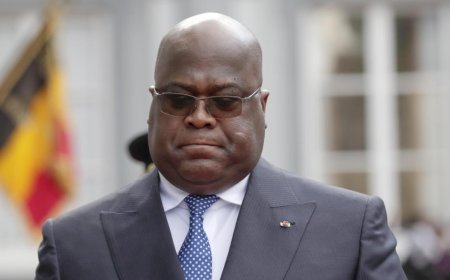
Congolese President Félix Tshisekedi’s May 6 press conference shattered years of denial about Kinshasa’s military ambitions toward Rwanda. In attempting to explain the collapse of his eastern DRC campaign, Tshisekedi admitted that the real problem was not the objective itself, but that he had been misled about the true condition of FARDC, an army he believed was capable of confronting Rwanda, but which proved disoriented, broken down, and deeply disorganized.
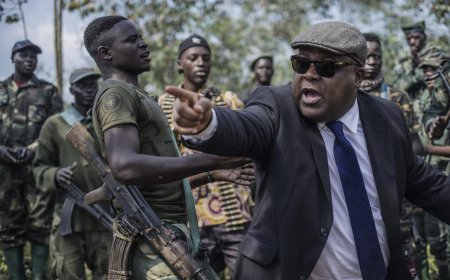
“I had received false information regarding our army,” Tshisekedi said, adding that one does not go to war with an army that is “désorientée, décomposée et désorganisée” — disoriented, broken down, and disorganized.
That was not an apology for warmongering. It was an explanation for failure. Tshisekedi did not say that war against Rwanda was wrong. He said the army he had counted on was not prepared for it. In other words, the obstacle was not principle, law, diplomacy, or regional stability. The obstacle was capacity.
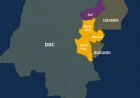
This admission gives new weight to reports about the aborted January 2025 plan to attack Rwanda, from Goma, the capital of North Kivu Province in eastern DRC.
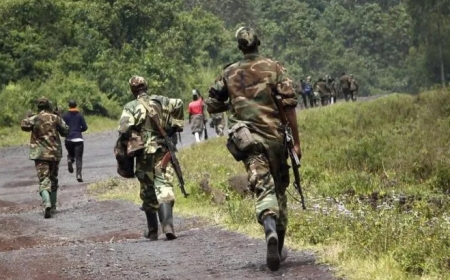
At least 60,000 Congolese army coalition fighters were assembled in Goma on January 26, 2025, awaiting orders, with Rwanda’s Rubavu District only a stone throw away.
The coalition built around FARDC included the FDLR, the Kinshasa-backed genocidal militia formed by perpetrators of the 1994 Genocide against the Tutsi in Rwanda, Wazalendo militias, Burundian troops, SADC forces, European mercenaries, and MONUSCO elements. Goma was their joint command center for intelligence sharing and military coordination. The collapse of that plan came when AFC/M23 rebels overran Goma on the night of January 26–27, forcing Kinshasa’s coalition to retreat in chaos.
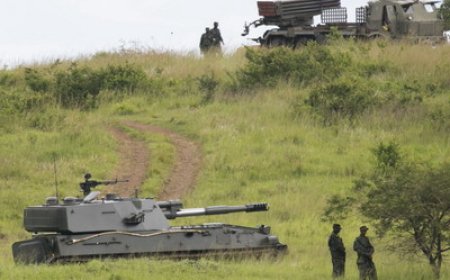
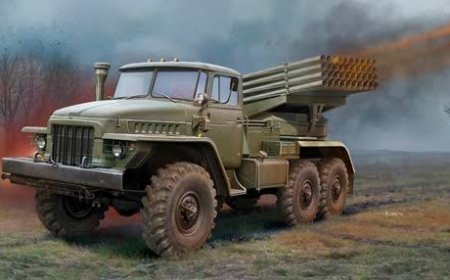
The defeated forces abandoned tanks, artillery, rocket launchers, drones, ammunition, and other heavy equipment.
The scale of the arsenal was so vast that it reinforced the argument long made in Kigali: these weapons were not assembled merely to fight a rebel movement; they were positioned for a broader confrontation with Rwanda.
Tshisekedi’s latest remarks now connect the dots.
When he says he had received false information about FARDC’s capabilities, he is not denying the existence of a military option against Rwanda. He is confirming that such an option depended on an illusion; the illusion that his coalition was strong, disciplined, and ready.
The problem, by his own account, was not that the project was reckless. The problem was that the army he hoped would carry it out was too weak, too infiltrated, and too disorganized.
Kigali has, for many years, warned that the real security threat on its western border is not simply Congolese instability, but the deliberate collaboration between FARDC and anti-Rwanda armed groups, especially the FDLR. Kigali has repeatedly described a military coalition in eastern DRC involving FARDC, the UN-sanctioned FDLR, Wazalendo militias, Burundian forces, SADC troops, and European mercenaries.
Rwanda’s foreign ministry said, in 2025, that evidence discovered in Goma showed that combat objectives were not limited to defeating AFC/M23, but also included attacks on Rwanda.
Kinshasa and its supporters dismissed those warnings as a pretext. But Tshisekedi’s own admission has weakened that denial.
If the Congolese president believed his army was strong enough to attack Kigali “at the slightest skirmish,” then Rwanda’s alarm was not paranoia. It was a reading of a threat openly advertised by Kinshasa’s political leadership and operationalized through a coalition that included FDLR.
This is where the issue ceases to be only about Rwanda. Tshisekedi has not merely mismanaged a war in eastern DRC; he has attempted to regionalize it. The presence of Burundian forces, SADC troops, mercenaries, and the FDLR points to a project far bigger than a domestic counterinsurgency campaign.
It is a regional security gamble, driven by a regime that has turned eastern DRC into a launchpad for proxy warfare while accusing Rwanda of inventing threats.
The regional dimension becomes even clearer when viewed alongside Burundi’s posture. Rwanda has accused President Évariste Ndayishimiye of using an African Union platform in Kinshasa to make inflammatory remarks, including calls encouraging young Rwandans to overthrow their government.
Tshisekedi, for his part, recurrently used regime-change language against Kigali, and once claimed he needed constitutional reform to gain enough time to “change the Rwandan regime.”
These are not isolated outbursts.
They form a pattern: political threats, military buildup, militia alliances, foreign deployments, and then excuses when the machinery collapses.
Had the FARDC coalition been as strong as Tshisekedi believed, there is little reason to think restraint would have prevailed. His own explanation suggests that the only thing that prevented escalation was the incompetence and disorder of the force he intended to rely on.
That is why the debate cannot be reduced to whether Rwanda should scale back its defensive measures while the same threat remains intact across the border.
No state can be expected to ignore an armed coalition that includes a genocidal militia committed to destabilizing it. Rwanda has consistently placed the neutralization of FDLR at the center of any durable peace framework, alongside the withdrawal of foreign forces and security guarantees along its border.
Tshisekedi’s press conference was therefore more than a domestic confession. It was a regional warning. He blamed his army because his gamble failed. He blamed disorder because his coalition collapsed. But in doing so, he confirmed the central point Rwanda has made all along: the threat exists, it is organized from eastern DRC, and Kinshasa’s problem is not a lack of intent - it is a lack of military competence.
A weak army prevented a wider war in January 2025. That should not be mistaken for peace.