



























Railway link with Tanzania would cut costs, ease trade — traders
Rwandan traders have welcomed the push by presidents Paul Kagame and Samia Suluhu Hassan of Tanzania to fast-track the Standard Gauge Railway (SGR)...

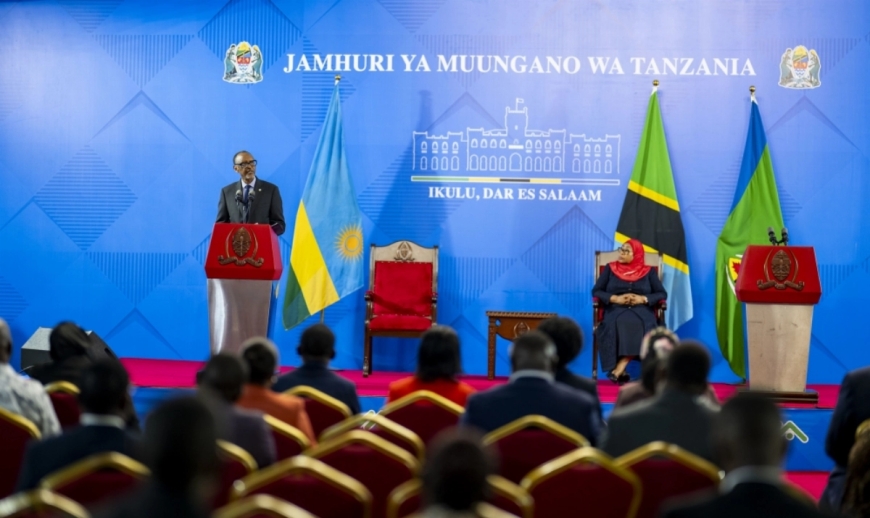
Rwandan traders have welcomed the push by presidents Paul Kagame and Samia Suluhu Hassan of Tanzania to fast-track the Standard Gauge Railway (SGR) connecting the two countries, saying the line would reduce transport costs, ease logistics bottlenecks, and open new business opportunities along the corridor.
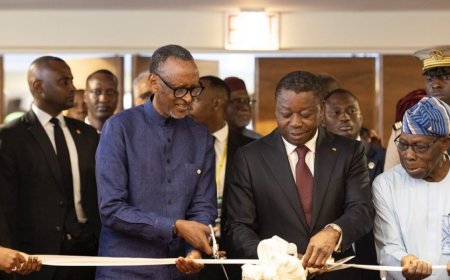
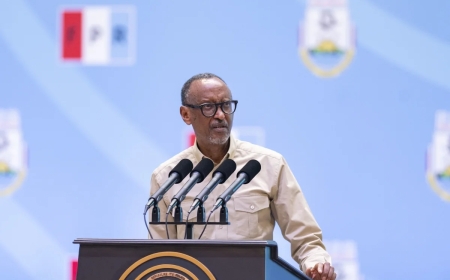
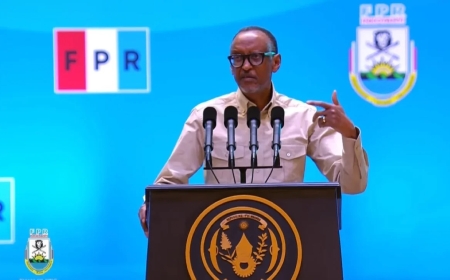
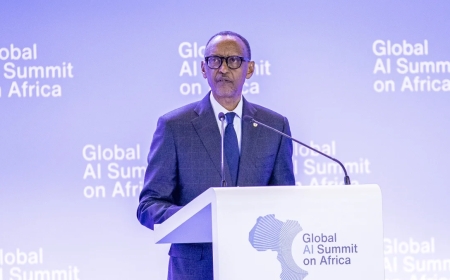
Kagame visited Dar es Salaam on May 3 for bilateral talks with Suluhu, during which the two leaders discussed advancing cooperation in trade and infrastructure, including the long-discussed Isaka-Kigali railway.
The 521-kilometre line, estimated to cost $2.5 billion, has been under discussion since at least 2007 but has not progressed to construction.
Robert Bafakurera, a local businessman, said the railway would reduce costs and complement existing road transport.
“The biggest advantage is that trains carry large volumes at once, which lowers costs. If cargo can move directly from Dar es Salaam to Kigali without requiring trucks midway, traders would save significantly,” he said.
He added that small-scale traders would benefit through shared container arrangements, noting that under Rwanda’s import regulations, containers are generally not required to be offloaded before reaching their destination and could travel directly on rail wagons.
Francine Havugimana, another local businesswoman, said current road transport through Dar es Salaam is marked by costly delays and unpredictable charges.
“When cargo is delayed, traders are charged for the number of days it stays there — storage fees, container charges, and if you had already signed supply agreements with clients specifying delivery dates, these delays can make you miss deadlines even when it is not your fault,” she said.
Havugimana highlighted that some traders had begun considering rerouting cargo through Mombasa because of those challenges, and that the SGR would reverse that trend.
Exporters
Grace Mbabazi, a honey exporter, also contends that if the railway line between the two countries is fast-tracked, it would ease transport.
“For people like us who export products abroad, the train would be the only affordable way to transport our goods to the port. Renting trucks is very expensive and exhausting,” she said.
The pressure on the Rwanda-Tanzania corridor is already visible with more than 600 trucks now crossing the Rusumo border daily, twice the number recorded three years ago. Rwanda imported goods worth $228.26 million from Tanzania in the fourth quarter of 2023 alone, second only to imports from China.
Transporting a 40-foot container between Kigali and Dar es Salaam currently costs around $5,000 by road. The SGR is expected to cut that cost by roughly half, according to earlier projections.
Ivan Muhizi, an urban mobility expert, cautioned that cost savings would not automatically benefit small traders unless supported by a redesigned freight distribution network, including urban consolidation centres near commercial zones such as Kimironko and Nyabugogo, scheduled freight movements, and micro-delivery systems for last-mile access.
Transportation engineering student Kevin Kamanda said route confirmation remains the most urgent prerequisite before any other planning can proceed, given Rwanda’s mountainous terrain.
He also identified three infrastructure requirements at Bugesera International Airport for the line to fulfil its cargo-to-air ambition: a dedicated rail spur into the airport, an intermodal transfer terminal, and direct airside access to the cargo apron.
Kamanda further said institutional coordination across the corridor needs to match physical infrastructure, pointing to the Rusumo One Stop Border Post as a model that could be scaled into a single clearance window covering the full Dar es Salaam-Kigali journey.
Tanzania’s Minister of Foreign Affairs, Mahmoud Thabit Kombo, said in July 2025 during the 16th Joint Permanent Commission in Kigali that the technical matters of feasibility and route planning were under consideration at ministerial level in Tanzania.