










Congolese opposition politicians condemn US sanctions on Kabila
Opposition politicians in DR Congo have called on the United States government to lift sanctions imposed on former Congolese President Joseph Kabila. The...

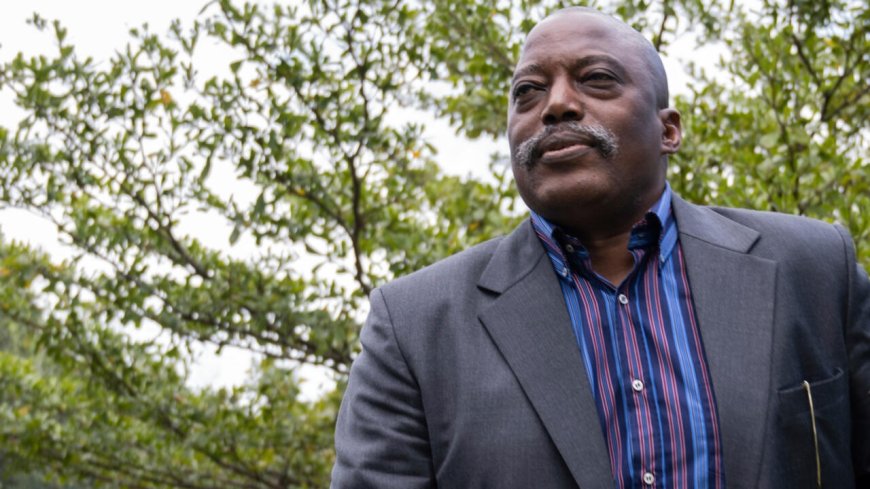
Opposition politicians in DR Congo have called on the United States government to lift sanctions imposed on former Congolese President Joseph Kabila.
The politicians, who are under the banner of the Mouvement Sauvons la RDC, which Kabila co-founded, describing the sanctions as “untimely and counterproductive” in the context of the country’s protracted crisis.
ALSO READ: Kabila says US sanctions on him ‘unjustified, politically motivated’
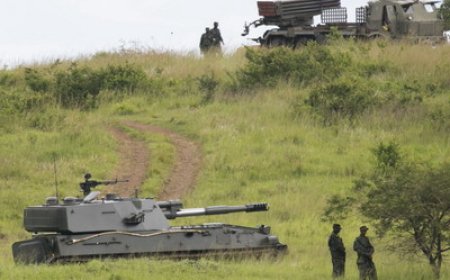
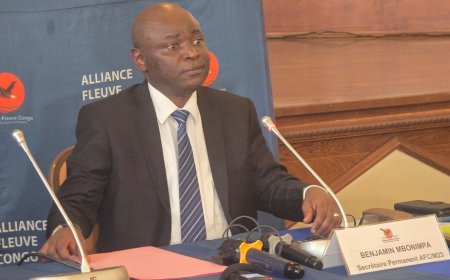
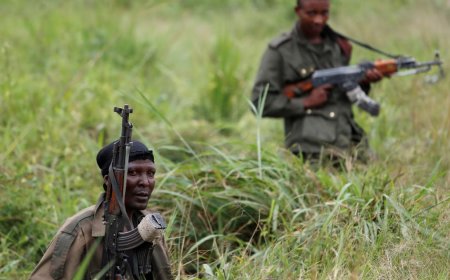
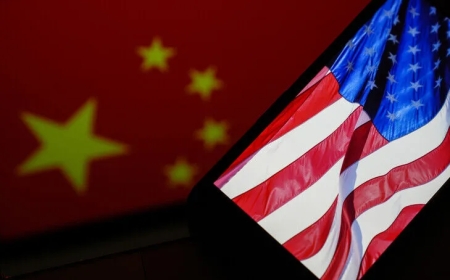
The petition follows a decision announced on April 30 by the U.S Department of the Treasury’s Office of Foreign Assets Control to place Kabila on its specially designated nationals list under the DR Congo sanctions programme. The US accused Kabila of having links to the AFC/M23 rebel movement operating in eastern DR Congo, claims the former president dismissed as politically motivated.
The designation entails freezing any assets under U.S. jurisdiction and barring transactions with American entities.
“The movement firmly condemns and outright rejects this decision, which it describes as arbitrary and unjustified, based on unsubstantiated allegations, accusations without evidence, and unfounded rumors,” the opposition figures said in a statement on Tuesday, May 6.
“It is furthermore scandalized that, to justify the unjustifiable, the U.S administration has adopted a false narrative constructed and widely disseminated by the illegitimate and corrupt government in Kinshasa, a narrative to which, in its great majority, the Congolese people... give no credibility,” it adds.
Signatories include Andre Claudel Lubaya, Franck Diongo, Jean-Claude Vuemba, Raymond Tshibanda, Augustin Matata Ponyo, Tharcisse Loseke, Floryd Mbakata, Filia Tshipasa, Albert Mukulubundu and Bienvenu Matumo.
Questions over mediation role
The opposition’s criticism comes against the backdrop of diplomatic processes aimed at addressing both the regional and internal dimensions of the conflict in eastern DR Congo.
At the regional level, the Washington peace agreement focuses on tensions between Kinshasa and Kigali. Central to this framework is the neutralisation of the FDLR, a militia composed in part of perpetrators of the 1994 Genocide against the Tutsi in Rwanda, which remains active in eastern DR Congo and has been linked to cross-border security threats.
The process is designed to address long-standing security concerns, paving the way for Rwanda to lift its defensive measures and contributing to broader regional stability.
Running in parallel, the Doha peace process, facilitated by Qatar, seeks to address the internal drivers of the conflict through direct talks between the Congolese government and the AFC/M23 movement.
The process focuses on resolving the root causes of the crisis, with the rebel group citing governance failures, exclusion, and entrenched divisionism as key factors behind its insurgency, alongside the continued presence and role of armed groups such as the FDLR.
The two tracks are complementary with the shared objective of ending the crisis in eastern DR Congo.
However, the Mouvement Sauvons la RDC argues that the U.S sanctions risk undermining these efforts.
“In any case, this decision does not contribute to resolving the crisis. On the contrary, it is manifestly inconsistent with the role of Mediator-Facilitator, by definition requiring neutrality and fairness, that the United States is supposed to uphold within the frameworks of the Washington, Doha, and Montreux processes,” the statement notes.
“Such a contradiction deeply calls into question the sincerity of the proclaimed will of that country to help restore peace through dialogue and negotiation.”
Broader political grievances
The opposition coalition also framed the sanctions within what it described as a broader pattern of political bias.
They argued that Washington, which had supported Kabila's peaceful transfer of power to incumbent President Felix Tshisekedi in 2019, is now targeting “the principal architect of that transfer” while overlooking governance shortcomings under the current administration.
The movement cites a range of concerns, including alleged human rights violations, arbitrary arrests, and restrictions on political opposition, as well as continued insecurity in the east.
It further accuses authorities of collaborating with armed groups such as the FDLR, despite international sanctions against the militia.
“Reducing [the crisis] to individual responsibility is not only an excessive simplification but also a biased reading that obscures its structural causes,” the statement adds, warning that sanctions rarely produce lasting solutions.
US ‘silence’ into question
The opposition places particular emphasis on what it describes as Washington’s silence on a series of critical developments affecting DR Congo’s political and security landscape.
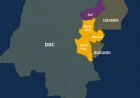
The group points to the period during which Kabila went into exile, noting that the United States did not publicly react. It also highlights what it calls a lack of response when the former president returned to the country through rebel-controlled North Kivu province and was subsequently tried for treason in absentia and sentenced to death.
“When President Kabila was forced into exile, the U.S Administration made no reaction... when he returned... and was sentenced to death in a parody of justice, the U.S Administration remained silent,” the politicians said.
“It also maintained the same silence following the recent drone assassination attempt against President Kabila, an operation whose instigator the U.S authorities cannot plausibly claim ignorance of.”
According to the coalition, these omissions have shaped public perception within the country.
“For the majority of Congolese, the sanctions decision... is perceived as a new stage in a process of political persecution initiated and carried out by Kinshasa’s regime, with which the U.S Administration has either become complicit or inadvertently associated.”
While acknowledging the complexity of the Congolese crisis, the opposition figures insist that the sanctions risk deepening divisions rather than fostering dialogue.
“In light of all the above, the movement calls on the U.S government to reconsider its decision and lift the sanction imposed against Joseph Kabila Kabange,” they said.
“Beyond being unjustified, this decision is untimely and counterproductive.”