



































AFCON 2027: East Africa’s moment of truth
Hosting a tournament as large and complex as the Africa Cup of Nations is never just about football, as the hosts of the next edition are learning. In...


Hosting a tournament as large and complex as the Africa Cup of Nations is never just about football, as the hosts of the next edition are learning. In fact, things may get worse before they get better.
It is an exercise in national coordination, political stability, infrastructure delivery, and international credibility.
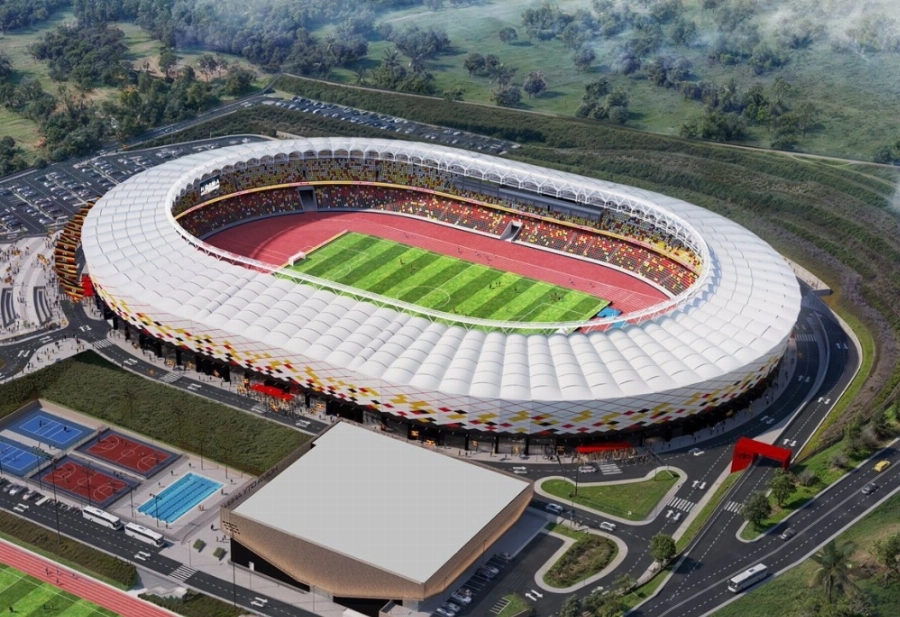
The current situation surrounding the 2027 AFCON, set to be co-hosted by Kenya, Tanzania, and Uganda under the “Pamoja” banner, shows just how fragile that balancing act can be.
On paper, the idea is compelling. A shared tournament across East Africa signals regional unity, distributes economic benefits, and reduces the burden on any single nation. But the reality, as highlighted by recent inspections from the Confederation of African Football (CAF), is far more complicated. As deadlines tighten and warnings grow louder, that promise now sits on uncertain ground.
According to a CAF inspection report, none of the proposed venues have yet met the required Category 4 standards, and timelines are tightening. The hosts are behind schedule. The core difficulty lies in coordination. One host country alone faces immense pressure to deliver stadiums, transport systems, accommodation, and security on time.
Multiply that across three countries - with different bureaucracies, budgets, and political climates - and the margin for error increases significantly. Ultimately, delays in one country can jeopardize the entire tournament. There is real concern about the preparedness of the Pamoja bid.
Uganda’s struggles with stadium compliance and supporting infrastructure, Kenya’s delayed Talanta Stadium project, and governance turmoil within the Football Kenya Federation all contribute to the growing uncertainty.
The involvement of FIFA in investigating leadership disputes within Kenya’s football federation highlights how off-field instability can spill into tournament readiness.
Hosting AFCON is not merely about building stadiums. It is about orchestrating a national - and in this case, regional - transformation. It requires a functioning, credible football administration capable of coordinating with continental and global bodies.
Without that, even completed infrastructure may not be enough. It’s that simple, at least from the outside. Somehow, someone within the local organizing structures ought to understand this.
Under “Pamoja,” the region recently hosted CHAN, but that was CHAN, understandably different. AFCON is a completely different ball game. It is the beast.
With AFCON, unlike CHAN, infrastructure must align with strict technical standards, transport systems must function seamlessly, and accommodation must meet international expectations. Each element depends on the other. A stadium without proper roads, airports, or hotels is effectively incomplete. This is where the Pamoja bid is currently faltering.
Things are running late, or being rushed, in Uganda and Kenya, in particular. In contrast, Tanzania appears to be the most stable pillar of the Pamoja bid. Its steady progress on stadium upgrades and new construction suggests that, if necessary, it could shoulder a larger share of hosting duties.
But even Tanzania cannot carry the entire tournament alone without significant adjustments. AFCON, after all, is designed to be a multi-city spectacle - now expanded to 24 teams - requiring a wide network of facilities.
So what happens if, God forbid, the tournament is moved?
Already, countries like South Africa or Algeria, both with relatively ready infrastructure, are being mentioned (quietly) as contingency options.
From a purely logistical standpoint, such a move would reduce risk. These nations have hosted major tournaments before and possess stadiums, training facilities, and hotels that already meet international standards.
Yet this is not my biggest concern. The cost of relocation would be more than logistical; it would be symbolic. That is the key word: symbolic.
Awarding AFCON 2027 to East Africa was a statement about expanding the geographical footprint of elite football on the continent. Moving it elsewhere would reinforce an uncomfortable pattern: that only a handful of countries are consistently “ready” to host, while others remain perpetual aspirants.
That has long-term implications for development and investment in less-established football regions.
The promise of AFCON 2027 was always bigger than football.
When CAF awarded the continent’s biggest football showpiece to Kenya, Tanzania, and Uganda, it marked an important shift, an effort to bring elite African football to a region that has long stood on the margins.
Economically, the stakes are high. Hosting AFCON can boost tourism, accelerate infrastructure projects, and create jobs, at least in the short term.
For East Africa, it is an opportunity to position itself as an emerging hub for sports and investment.
Losing the tournament would mean not only sunk costs in partially completed projects, but also a missed chance to elevate the region’s global profile.
Hosting AFCON would place East Africa at the center of a cultural moment, offering a sense of pride and belonging that transcends borders.
The Pamoja vision captures this perfectly; a shared identity, a shared ambition. If the tournament were moved, that vision would not disappear, but it would be undeniably weakened.
And yet, ambition alone will not satisfy CAF’s requirements or standards.
The governing body’s warnings are grounded in practical realities. Deadlines exist for a reason, and international tournaments cannot afford last-minute improvisation.
The planned August 2026 inspection will likely be decisive.
By then, progress must be visible. Not just in stadium construction, but in airports, roads, hotels, and governance structures.
In many ways, the current situation is a defining test for East Africa.
Success would signal a shift in the continent’s football geography, proving that new regions can rise to meet global standards. Failure, however, would reinforce caution and centralization, making it harder for emerging hosts to earn trust in the future.
The Pamoja vision remains powerful, and worth backing, but it now stands at a crossroads.
If Kenya, Tanzania, and Uganda can accelerate their efforts and align their execution, AFCON 2027 could become a landmark moment for East African football.
If not, and the tournament is shifted elsewhere, it will likely be efficiently organized, but stripped of the transformative impact that made this unprecedented three-nation bid so compelling in the first place.