







































Inside the surrogacy scandal behind Dr. Semwaga’s arrest
It has been over two weeks since reports emerged that Dr. Emmanuel Semwaga, a gynecologist who worked in private hospitals in Kigali, was arrested and is...

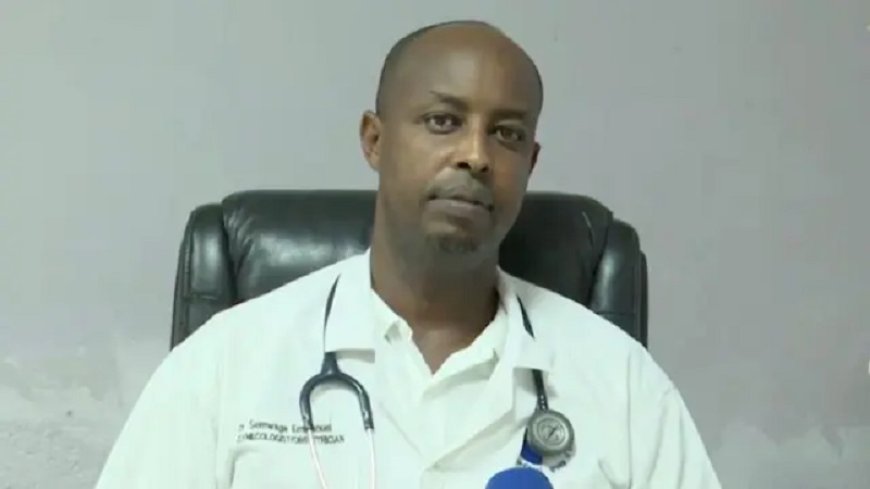
An investigation by IGIHE indicates that Dr. Semwaga’s case is connected to a private organization founded by Frederick Nsabimana. The organization allegedly connected infertile couples seeking children with women willing to act as surrogate mothers.
Nsabimana is said to have operated a residential facility where women who agreed to become surrogates were housed after embryo transfer procedures. They reportedly remained there until they gave birth.
Seven women were accommodated in this facility. They had reportedly agreed to act as surrogates for clients, including individuals based in the United States, Tanzania, and Uganda. Nsabimana is said to have promised each woman 5 million Rwandan francs, with an advance payment of 1 million francs.
Reliable sources indicate that from this advance, Nsabimana told the women that 500,000 francs would be deducted as commission, and 100,000 francs would be allocated to his wife, Géraldine Mukahigiro, to support the women during their stay.
Some of the women are reported to have spent up to eight months in the facility. However, they did not receive the conditions they were promised. Instead, they were subjected to poor living conditions, including inadequate food and limited financial support, despite payments having been made by intended parents.
Nsabimana is accused of engaging in human trafficking and exploiting individuals in vulnerable situations, particularly poverty, under the guise of fertility support services.
Reports further indicate that the women later confronted Nsabimana over unmet promises. He allegedly responded with threats, warning that he could have them killed “without physically touching them” if they continued speaking out. These allegations form part of the charges related to intimidation and threats.
His wife is accused of threatening the girls by telling them they could die after they complained that she was not taking care of them as promised. They also allege that she once told them their deaths would not affect her, saying that even when one of her livestock died, life simply went on.
It is further reported that the women were given injections and medication at Nsabimana’s residence. He claimed that a specialist doctor sent from a clinic administered the treatments.
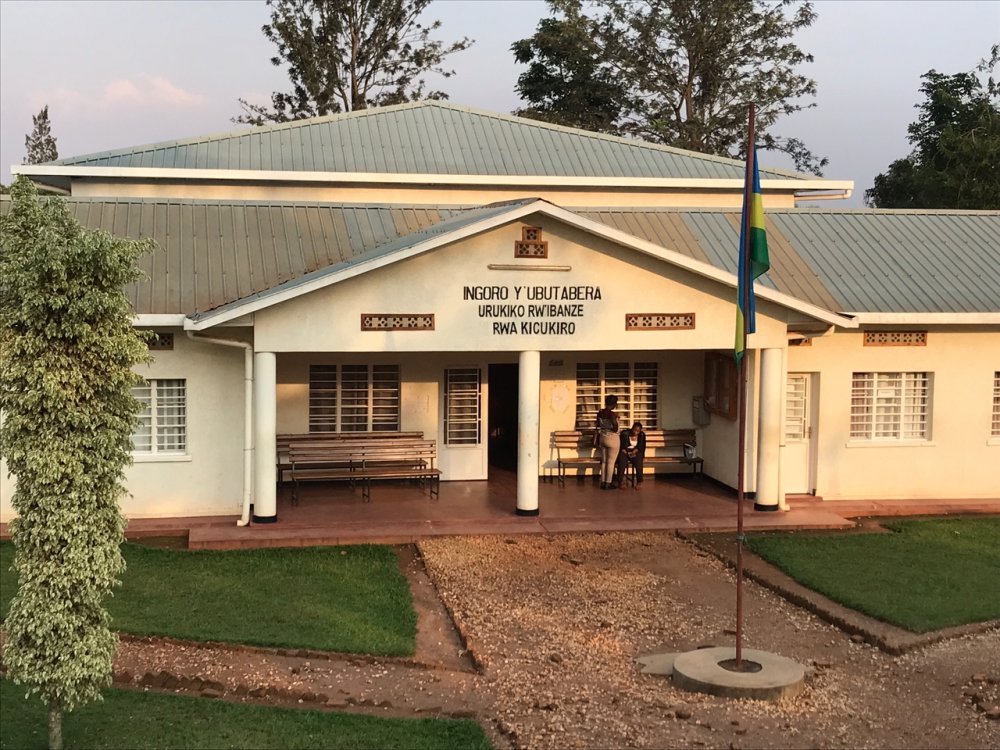
Local authorities stated that they were unaware of the existence of a residential facility housing surrogate mothers under such conditions. This discovery contributed to charges of unlawful detention and confinement.
According to reports, the women eventually reported their situation to authorities after experiencing severe hardship, including hunger. On April 29, 2026, officials visited the site and found that five of the women were already pregnant, while two were awaiting embryo implantation.
How Dr. Semwaga became involved
Dr. Semwaga has spent approximately eight years working in infertility treatment. He is now being investigated for several offenses, including document forgery, alteration and use of falsified documents, failure to report a serious crime, and complicity in human trafficking.
Nsabimana and Dr. Semwaga reportedly knew each other previously, as the doctor had once helped Nsabimana’s relative conceive, which later facilitated their cooperation in this arrangement involving the seven women.
Prosecutors allege that Dr. Semwaga agreed to perform embryo transfers on the women even when the intended parents were not physically present, in violation of medical regulations governing assisted reproduction.
Nsabimana, however, argues that he acted as a representative of the intended parents and had their authorization. He stated that it was impractical for clients living abroad to travel and remain present throughout the procedures.
Although he is alleged to have received payments on multiple occasions, including an advance of 3 million francs in February 2026, he claims his only benefit was charging each woman 50,000 francs per month for accommodation in his facility.
Dr. Semwaga is also accused of agreeing to carry out embryo transfers through Nsabimana due to the involvement of clients residing abroad.
Investigators allege that he benefited financially from the arrangement, including sending approximately 3 million francs to Nsabimana for the care of the women.
It is further alleged that without financial interest in Nsabimana’s operations, Dr. Semwaga would not have transferred funds, and would instead have provided standard medical care as an experienced gynecologist with over 15 years in practice.
Additional reports suggest that the women informed the doctor of their difficulties, including being denied promised payments, but he did not take action.
Dr. Semwaga, however, stated that he “lent” Nsabimana money after being informed that the intended parents had not yet transferred funds. He argued that without this assistance, both the pregnant women and unborn babies could have suffered due to lack of basic necessities.
He also claims that Nsabimana later repaid the money.
He is further accused of falsifying and altering documents by assigning identification “codes” to unborn babies linked to intended parents who had never directly met the surrogates, attributing this system to the hospital where he worked.
In his defense, it is argued that these codes were used solely to prevent confusion at birth and are a standard administrative practice in medical settings.
Dr. Semwaga, his wife, and Nsabimana are all currently in detention. On May 26, 2026, the Kicukiro Primary Court rejected their request for provisional release, ruling that they remain in custody pending investigation.

They had requested release on the grounds that they would not flee justice, would not interfere with the investigation, and wished to care for the women who are close to delivery. Dr. Semwaga also reportedly offered bail of 20 million Rwandan francs.
*What Rwanda’s medical law prohibits*
On September 18, 2025, Rwanda enacted a law regulating medical services, including provisions governing surrogacy through assisted reproductive technology.
The law states that a surrogate mother must be between 21 and 40 years old and must undergo comprehensive medical and reproductive health screening confirming she is fit to carry a pregnancy.
Individuals aged 18 to 20 may donate reproductive material only with a written justification submitted to the Minister of Health.
The law requires that surrogacy arrangements be formalized through a written contract between parties, signed before a notary prior to any medical procedures.
Intended parents must also provide medical certification from a specialist confirming infertility or medical conditions that make pregnancy impossible or dangerous.
The law prohibits medical professionals from implanting embryos or reproductive materials that do not meet legal requirements, as well as from using non-human material or engaging in unauthorized import or export of reproductive material.
It also criminalizes procedures performed without full identification of donors or involving reproductive material from closely related individuals.
In addition, the law prohibits assisted reproduction procedures intended for
genetic manipulation or sex selection.
Penalties vary depending on the severity of the offense, ranging from six months’ imprisonment and fines of 2 million Rwandan francs for minor violations to up to 25 years in prison and fines of 50 million francs for serious offenses, along with possible suspension from medical practice.