
























Why Rwanda chooses sanctions over prematurely lifting its defensive measures

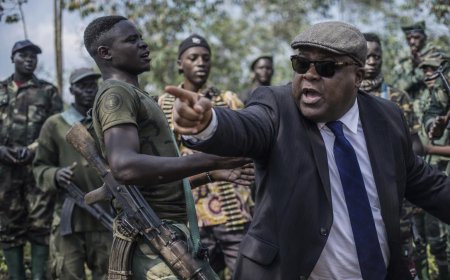
Rwanda has increasingly faced sanctions, diplomatic pressure, and political condemnation from the United States and several European countries over the conflict in eastern DRC. Yet Kigali maintains a firm position: it will not scale back its defensive measures until the security threat it attributes to the Kinshasa-backed genocidal FDLR militia is decisively eliminated.
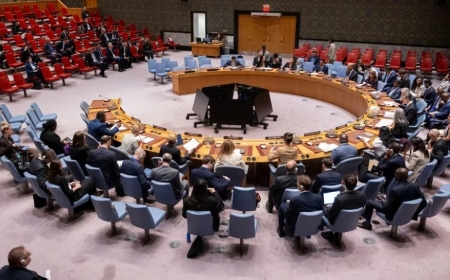
This standoff highlights a deep disagreement between Rwanda and its Western partners over what constitutes the real source of instability in the region—and when, or whether, it is safe for Rwanda to stand down.
While Washington and several European capitals have imposed sanctions on Rwandan officials and repeatedly demanded the removal of Rwanda’s defensive posture, they have simultaneously acknowledged that FDLR remains a dangerous armed group. Yet there has been no comparable political or economic pressure on the Congolese government over cooperation between its security forces and FDLR—an issue repeatedly documented by UN experts and recognized as a major regional security concern.
From Kigali’s perspective, this is not merely inconsistent diplomacy; it is a dangerous misreading of Rwanda’s security realities.
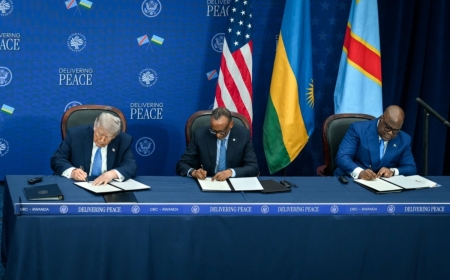
The peace agreement signed in Washington, D.C., in June 2025 reflected precisely this reality. The accord required not only security arrangements involving Rwanda but also committed DRC to ending support for FDLR and facilitating its neutralization through a joint security mechanism.
In other words, the agreement recognized that durable peace depends on addressing both Rwanda’s security concerns and the wider instability in eastern DRC, rather than focusing exclusively on Rwanda’s military posture.
Nevertheless, much of the international pressure has continued to concentrate on Rwanda.
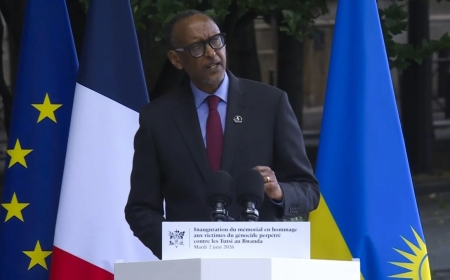
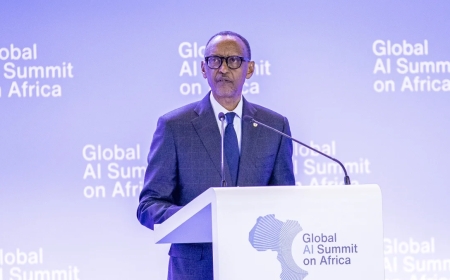
President Paul Kagame has repeatedly argued that Rwanda cannot reasonably be expected to dismantle its defensive measures while the threat that prompted them remains intact.
Speaking in Kigali on July 4, 2025, one week after the Washington peace agreement was signed, Kagame reaffirmed Rwanda’s commitment to implementing the accord. However, he warned that implementation also depends on DRC fulfilling its obligation to neutralize FDLR.
He cautioned that if Kinshasa “plays tricks” and fails to honor its commitments, Rwanda will continue addressing the security threat as it has done previously.
His message reflects a broader strategic calculation rather than a tactical negotiating position. Kigali argues that defensive measures are not bargaining chips to be exchanged for diplomatic goodwill. Instead, they are security necessities that can only be lifted once the conditions that justified them no longer exist.
Foreign affairs minister Olivier Nduhungirehe has voiced similar criticism of Western policy.
Following US sanctions announced in early 2025 and subsequent European measures, Nduhungirehe argued that sanctions neither resolve the underlying conflict nor address the root causes of insecurity in eastern DRC.
In interviews and public statements throughout 2025, he maintained that international partners were focusing overwhelmingly on Rwanda while paying insufficient attention to the continued existence of the FDLR and the obligations placed on the DRC under regional and international peace initiatives.
This criticism centers on what Kigali describes as selective accountability.
Western governments have repeatedly cited allegations that Rwanda supports the AFC/M23 rebellion—allegations that Rwanda consistently denies.
Rwanda argues that the Congolese government’s relationship with FDLR has not attracted comparable consequences, despite repeated international concern over the militia’s continued presence and influence in eastern DRC.
For Rwanda, the issue extends far beyond contemporary regional politics. It is inseparable from the country’s historical experience.
FDLR traces its origins to former Rwandan government forces and militias responsible for the 1994 genocide against the Tutsi. The genocidal organization’s long-standing objective is the violent overthrow of the current government and the revival of genocidal ideology in Rwanda.
For Rwanda, however, history leaves no room for complacency.
No country that experienced a genocide would be expected to ignore an armed organization rooted in that history, particularly when it continues to operate across an insecure border. Kigali therefore argues that waiting until an attack occurs would represent a failure of state responsibility rather than prudent restraint.
This historical memory explains why sanctions carry less political weight in Kigali than security guarantees.
Economic penalties may impose costs, and diplomatic isolation may complicate international relations. Yet Kigali appears convinced that these consequences remain preferable to accepting what it sees as an unacceptable security risk.
That calculation has been consistently articulated by President Kagame: no external pressure can persuade Rwanda to compromise on what it considers the safety of its citizens.
The Washington agreement itself reinforces this logic. By explicitly including commitments to dismantle FDLR alongside broader security arrangements, the accord implicitly recognizes that Rwanda’s security concerns cannot simply be dismissed as rhetorical justification. Instead, they form part of the architecture required for any sustainable peace settlement.
If the international community acknowledges that FDLR represents a regional security threat, why has international pressure appeared far more focused on compelling Rwanda to alter its security posture than on ensuring the complete neutralization of the militia itself?
For Kigali, sanctions, diplomatic criticism, and political isolation may be costly, but they are temporary. National security, by contrast, is permanent.
Given Rwanda’s history, its leaders argue that accepting international punishment is a lesser risk than prematurely abandoning defensive measures while the threat they were designed to address remains unresolved.
Whether one agrees with Rwanda’s approach or not, its calculation follows a clear strategic logic: no government that believes an existential threat persists will willingly dismantle its own defenses before that threat has been effectively neutralized.