



















Rwanda Cuts Planned Nuclear Science Centre Cost to $500 Million, RAEB Announces
Rwanda has reduced the estimated cost of its planned Nuclear Science and Technology Centre to $500 million following feasibility studies and an IAEA review.

Rwanda Atomic Energy Board (RAEB) has revised down the estimated cost of its planned Centre for Nuclear Science and Technology (CNST) to about $500 million, down from an earlier estimate of $800 million.
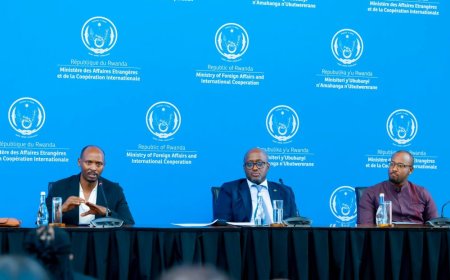
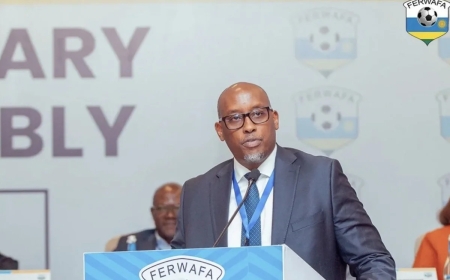
Fidele Ndahayo, CEO of RAEB, provided the update on July 22 during the conclusion of the International Atomic Energy Agency (IAEA) Integrated Nuclear Infrastructure Review mission for Research Reactors (INIR-RR), conducted from July 13-21, to assess Rwanda’s preparedness to develop its first research reactor project.
The mission followed an INIR assessment conducted in March that reviewed Rwanda’s preparedness for a nuclear power programme.
Unlike the earlier review, which focused on infrastructure for nuclear electricity generation, the INIR-RR mission assessed Rwanda’s readiness to establish a research reactor to support applications in healthcare, agriculture, industry, education and scientific research.
Both reviews were conducted using the IAEA’s Milestones Approach and assessed 19 nuclear infrastructure areas, including legal frameworks, safety, regulatory capacity, human resources and financing arrangements.
“Normally, after a feasibility study is conducted, the estimated funds required to implement the project are provided. The study showed that the cost could reach $800 million for the entire centre to be developed. However, after further discussions and benchmarking, we found that the cost could be reduced to around $500 million,” Ndahayo said.
He added that the facility would not be built at once but would instead be implemented in phases.
The estimated cost covers the broader centre which will include facilities supporting research reactor operations, training, laboratories and others.
The CNST is expected to host Rwanda’s planned research reactor and support the application of nuclear science in sectors including healthcare, agriculture, industry, mining, education and scientific research.
During the IAEA mission, experts visited a proposed site in Gashora, Bugesera District, alongside RAEB officials and representatives from other institutions involved in Rwanda’s nuclear programme.
“What is remaining actually is to secure the source of funds and then set up a roadmap for implementing this project. The site is also there, the government owns the land and there is no need for expropriation. There is no one residing there,” Ndahayo added.
Mikhail Chudakov, IAEA Deputy Director General and Head of the Department of Nuclear Energy, said research reactors provide countries with an opportunity to develop the skills and expertise required for wider nuclear applications.
“Most important, research reactors help in education, developing capacity and then promoting the use of other manpower, nuclear science and technology such as nuclear energy,” he said.
He added that Rwanda’s planned facility could support regional scientific cooperation by providing training opportunities for students and researchers beyond the country.
Research reactors can produce radioisotopes used in medical diagnosis and treatment, support agricultural research and food security initiatives, and enable industrial testing, quality control and materials analysis, he added.