











Burundi’s expanding role in the eastern DRC war: A regional flashpoint?

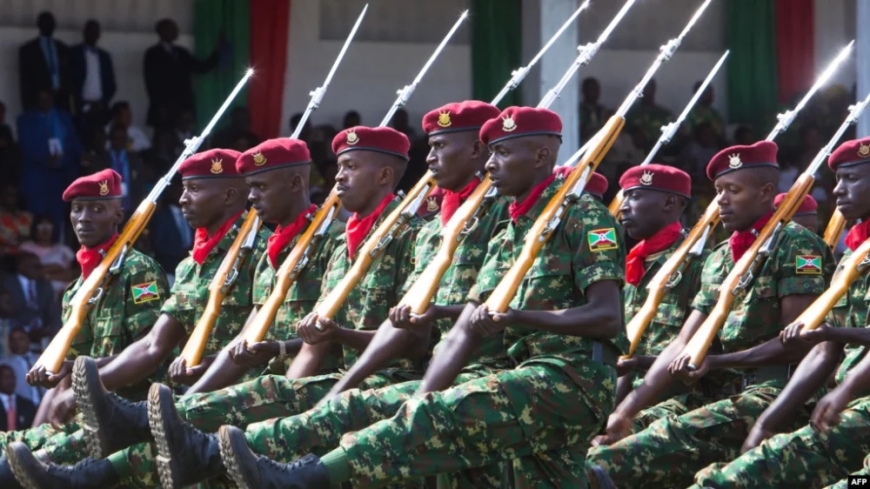
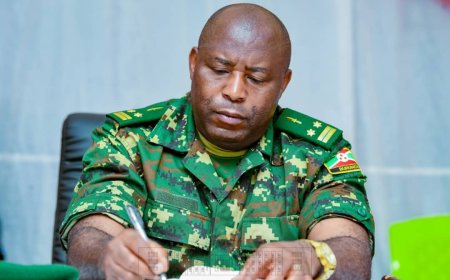
Burundi President Evariste Ndayishimiye has long warned that the escalating conflict in eastern DRC could spill across Congolese borders. The question now confronting the Great Lakes region is whether Burundi has transformed this conflict from a localized rebellion into a broader regional crisis.
Recent troop deployments, threatening rhetoric toward Rwanda, and alliances with the Rwandan genocidal militia FDLR suggest that Burundi is playing a catalytic role in fuelling the region’s security crisis.
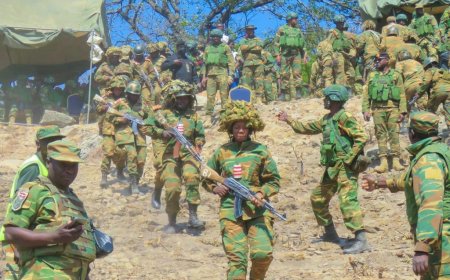
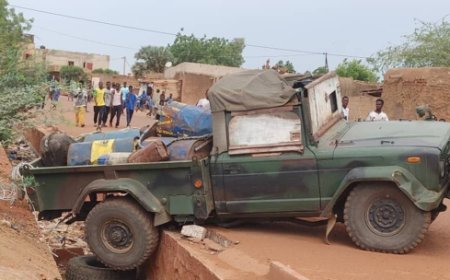
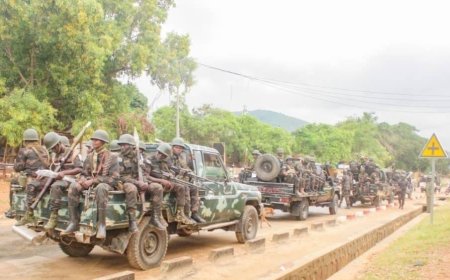
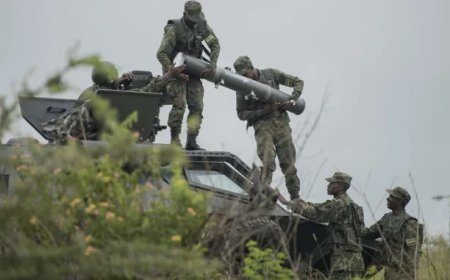
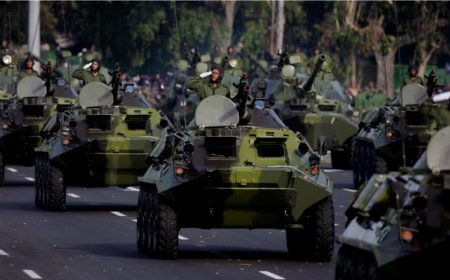
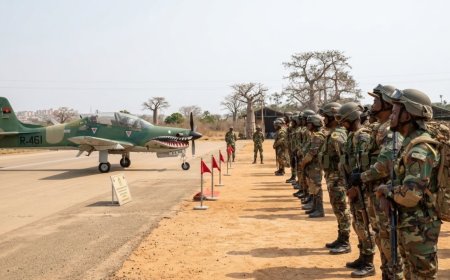
Throughout late 2025 and early 2026, there has been a marked uptick in Burundian military activity both inside DRC and along its borders with Rwanda. Sources say Burundian forces reinforced positions near the Rwandan border, including in Cibitoke and Muyinga, while also redeploying to strategic conflict zones in neighboring South Kivu’s Uvira and Fizi territories in eastern DRC.
Security sources report troop movements and artillery deployments into frontier areas, fuelling local anxiety about security and potential spillover.
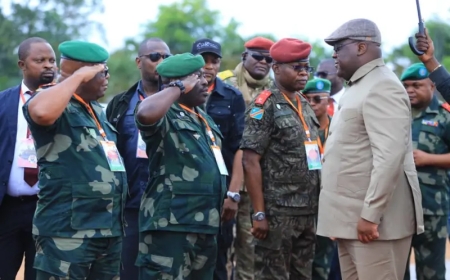
These deployments have not been limited to static border posts. Burundian units are actively engaged alongside the Congolese army (FARDC), Wazalendo militias, and FDLR in fighting AFC/M23 rebels in eastern DRC.
The scale of this engagement—over 20,000 Burundian troops currently in eastern DRC—underscores how Ndayishimiye has intertwined his politico-economic interests with DRC’s broader conflict, pushing the war’s footprint closer to the borders of Rwanda, Burundi, and Tanzania.
Threats, enemy narratives, and “defensive” war
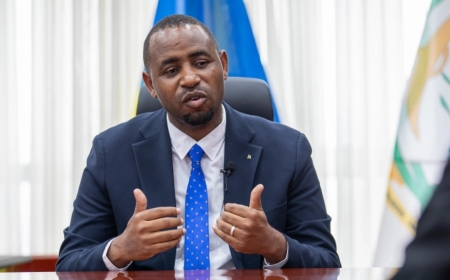
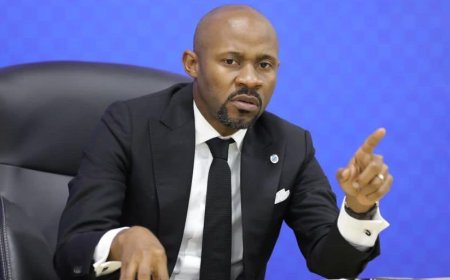
Ndayishimiye has repeatedly framed regional security through the lens of “threat,” particularly with regard to Rwanda. In March 2025, in an interview with the BBC, he claimed to have “credible intelligence” that Rwanda was planning an attack on Burundi from eastern DRC—a charge Kigali swiftly dismissed as “unfortunate” and counterproductive to de-escalation efforts.
Beyond accusations of an imminent assault, he has publicly labeled Rwanda a “bad neighbor” and warned that “the one that is going to attack us, we will ourselves attack”—language that moves beyond diplomatic posturing into the realm of open hostility.
While Ndayishimiye insists he has intelligence that Kigali is backing RED-Tabara rebels to invade Burundi from eastern DRC, there is no evidence that Kigali expressed intent to attack Burundi or deploy forces against it.
Rwanda repeatedly called for diplomatic de-escalation and dialogue to resolve grievances, even as it rejects allegations of backing AFC/M23 rebels.
Alliance with FDLR
One of the most contentious aspects of Burundi’s evolving role in the DRC conflict has been its alignment of convenience with armed groups operating inside eastern DRC, including FDLR. While Gitega’s official rhetoric blames Rwanda for regional instability, Burundian forces have long operated alongside FLN and FDLR fighters—a UN- and US-sanctioned armed group founded by perpetrators of the 1994 Genocide against the Tutsi in Rwanda.
Asked why the Burundian army cooperates with these genocidal forces, Ndayishimiye said that “the enemy of my enemy is my friend.”
Such cooperation is deeply provocative in Kigali, where FDLR is viewed as an existential threat. Rwanda has consistently called upon both DRC and Burundi to withdraw support for such militias and to promote dialogue instead of hate speech and armed confrontation.
The regime in Kinshasa under President Félix Tshisekedi, which Ndayishimiye supports militarily and diplomatically, has used increasingly confrontational language in accusing Rwanda of playing a role in the DRC conflict—charges Rwanda denies. During the 2023 presidential campaign, Tshisekedi declared preparations to wage war on Rwanda and reiterated this position in campaign rallies and media appearances.
On January 26, 2025, at least 60,000 fighters were reportedly positioned in Goma, the capital of North Kivu Province. Heavily armed and awaiting orders from Tshisekedi, the Congolese coalition forces—largely guided by the FDLR—were allegedly poised to advance toward Rwanda through Rubavu, a border city located five kilometers from their encampments.
Tshisekedi had sought to launch a war against Rwanda, accusing Kigali of backing the AFC/M23 rebels, who had been advancing toward Goma with the stated objective of “silencing the guns at the source.”
Following intense clashes in and around Goma, AFC/M23 defeated Kinshasa’s coalition forces, forcing them to retreat in disarray. The rebels took full control of the city on the night of January 26–27, 2025, effectively aborting Tshisekedi’s alleged plan to invade Rwanda.
Like Tshisekedi—who attempted to move beyond rhetoric to military action, albeit unsuccessfully—Ndayishimiye appears to be following a similar path, deploying additional weapons and battalions to areas bordering Rwanda.
Rwanda’s stance
Rwanda maintained that it does not seek conflict with its neighbors. Kigali officially denies backing AFC/M23 and RED-Tabara and has emphasized that its actions along the DRC border are defensive, focused on neutralizing threats from armed groups rooted in the genocide era. It has repeatedly called for dialogue with DRC and Burundi as the most reliable path to de-escalation.
Rwandan government statements and diplomatic engagements have stressed restraint and negotiation, and Kigali has publicly rejected claims that it plans aggression against Burundi.
Burundi’s troop deployments to fight Congolese rebels such as AFC/M23, its hardline rhetoric toward Kigali, and its cooperation with FLN and FDLR militias to destabilize Rwanda reflect a strategic choice to regionalize the DRC war. These actions have exacerbated regional insecurity and transformed what was once a localized rebellion into a conflict with dangerous cross-border implications.
What is clear is that Burundi’s actions and rhetoric—notably its troop commitments and anti-Rwanda discourse—are playing a significant role in widening the conflict’s regional footprint. Whether this represents a deliberate strategy to destabilize Rwanda or a defensive response to perceived threats, the net effect is the same: increasing volatility and the profound risk that the DRC war will continue to engulf neighboring states, with severe humanitarian, political, and security consequences.
Ndayishimiye’s personalization of the conflict reportedly began when he secretly signed a military pact with Tshisekedi in August 2023, under which Burundi deployed over 10,000 troops as mercenaries to fight AFC/M23 rebels.
Tshisekedi allegedly paid Ndayishimiye USD 2 million as a reward for the military support, a move said to have angered Burundian military officials who believed the arrangement served the president’s personal interests.
Kinshasa reportedly pays an additional USD 5,000 for every Burundian soldier fighting AFC/M23 rebels. However, the funds are diverted to Ndayishimiye personally, while soldiers continue to receive only their regular salaries.
Since late 2025, Kinshasa has reportedly been bribing media personalities and outlets to conduct interviews with Burundian officials, including Ndayishimiye, Foreign Affairs Minister Edouard Bizimana, ruling party CNDD-FDD Secretary-General Révérien Ndikuriyo, and army spokesperson Gaspard Baratuza.
These interviews focus on accusing Rwanda of “destabilizing” DRC, while avoiding discussion of Burundi’s escalating socio-economic crisis, mass youth emigration, and increasing army desertions by soldiers unwilling to fight in DRC and fearful of execution for refusing deployment.