


















Why Rwanda won’t lift its defenses—and shouldn’t

There is a stubborn habit in Western diplomacy regarding the crisis in eastern DRC: treat Rwanda’s security concerns as an allegation, but treat obligations imposed on the country as a given.
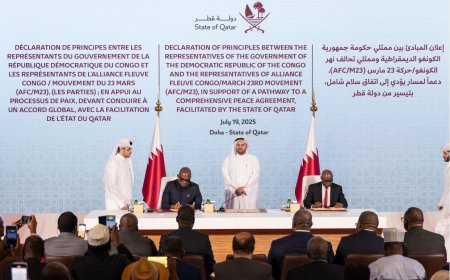
That position is increasingly difficult to defend, especially since the same peace framework invoked by Western capitals recognizes that the Kinshasa-backed FDLR genocidal militia must be neutralized—and that Rwanda’s defensive measures are tied to that process.
The Washington Accords linked the “neutralization” of FDLR—a terrorist militia group formed by remnants of the perpetrators of the 1994 genocide against the Tutsi in Rwanda—to the “lifting of defensive measures by Rwanda.” Yet implementation has stalled due to disputes over sequencing, responsibility, and continued collaboration between Congolese forces and the genocidal militia.
Rwanda does not believe the threat has been removed. That is why the phrase “lift your defensive measures” rings hollow in Kigali. If those measures had been sufficient in any lasting sense, the FDLR issue would already be resolved.
Rwanda would not still be waiting for DRC to fulfill commitments that UN reporting says remain unmet. It would not still be hearing that FDLR is simultaneously dangerous enough to be named in peace agreements, yet insignificant enough to be downplayed in public diplomacy.
It would not still be counting attacks, civilian deaths, damaged property, and the persistence of genocidal ideology just across its border.
Rwanda could have chosen to eliminate the threat unilaterally, without seeking permission or entering into peace agreements—just as the United States eliminated al-Qaeda leader Osama bin Laden without external consent.
The FDLR consists of terrorists and genocidal forces that warrant elimination. Yet Rwanda went as far as accepting their integration—an extraordinary concession.
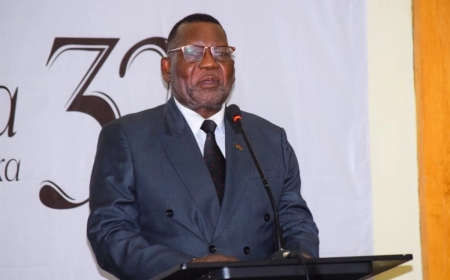
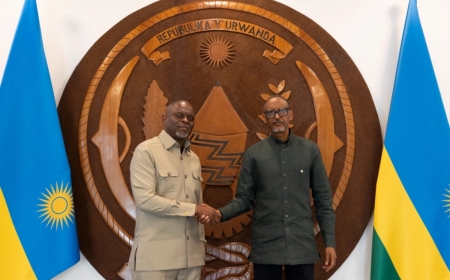
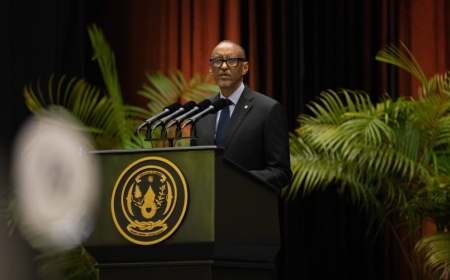
In his address at the start of the 32nd commemoration of the 1994 genocide against the Tutsi, on April 7, President Paul Kagame stated that Rwanda will not die twice; that before anyone destroys his country, “Rwanda will defend itself”; that after genocidal forces fled into eastern DRC in 1994 and continued attacks, Rwanda “took measures to prevent any repetition”; and that partners should fight extremism alongside Rwanda, not punish it for defending itself.
He warned that genocide ideology persists in the region, and that minimizing warning signs is precisely how mass violence is enabled. This is not abstract memory politics. It is a direct assertion that Rwanda views the threat from eastern DRC as unfinished genocide, not ordinary border insecurity.
President Kagame reiterated this logic in his early April interview with Jeune Afrique. He said Rwanda is “only defending” itself against a threat operating from a neighboring country with that government’s support; that Rwanda’s defensive measures may include equipment, troop deployment, and operations – five, 10, or even 20 kilometers beyond the border if required; and that Rwanda should not be expected to lift those measures while the underlying threat remains unaddressed.
Kagame also emphasized that the issue is not merely FDLR’s size, but “what they represent, their ideology, and the fact that they benefit from the support of the government of DRC.”
That last point matters because much external commentary still treats FDLR as an aging remnant rather than an active security threat.
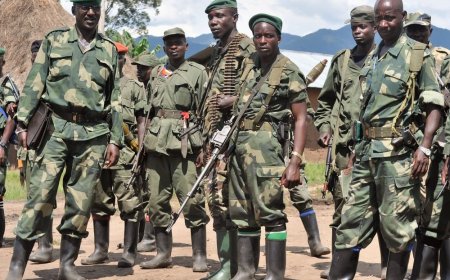
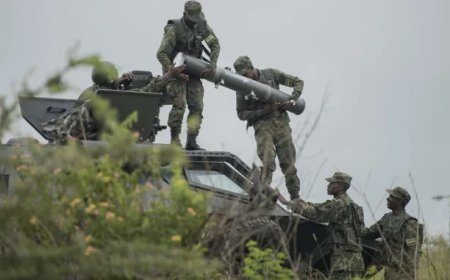
The FDLR has carried out at least 20 attacks on Rwandan territory. It was involved in shelling Rwanda in June 2022 and is now embedded within the Congolese army as a strategic ally. Hundreds of FDLR dependents, especially children, women and old tired men, continue streaming into Rwanda where they are well treated, rehabilitated and reintegrated into society but the bulk of their strong men remain in DRC. There is a reason for that.
Rwanda’s border posture is a response to real security threats—threats that materialized again in the January 26, 2025 attack on Rubavu, which caused 16 deaths and 177 civilian casualties.
On November 27, 2012, FDLR fighters attacked three border villages. Five days later, another incursion struck a game warden camp in Musanze, killing one warden and injuring another. The attackers used small arms, machine guns, RPGs, and 60mm mortars before retreating back into DRC.
In December 2018, another FDLR attack occurred in Rubavu. In May 2022, Rwanda’s defense ministry reported that FARDC shelling hit the Kinigi and Nyange sectors in Musanze district, injuring civilians and damaging property.
In January 2025, Congolese shelling again killed 16 people and injured 177 civilians in Rubavu. Yet even now, the FDLR threat is routinely minimized in international messaging.
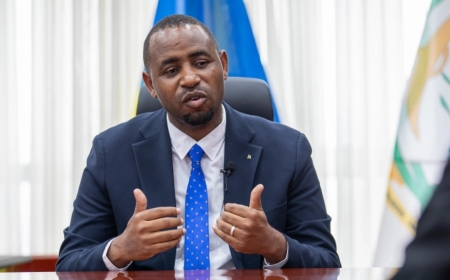
Rwanda’s deputy permanent representative to the UN, Robert Kayinamura, told the Security Council in mid-April that there can be “no credible path to peace” without the FDLR’s “effective and irreversible neutralization.” He warned that legitimizing or accommodating the group only prolongs the conflict and deepens regional instability.
This is not an isolated Rwandan position—it aligns with the terms of the peace process itself.
Collaboration between FARDC and the FDLR against AFC/M23 has continued, according to UN and Congolese security sources.
The UN Group of Experts’ 2025 midterm report states that FARDC “continued to rely on the operational support” of the FDLR and aligned groups, and further notes that the Congolese government “continued to cooperate” with the FDLR despite its stated commitment to neutralize it.
The same report confirms that responsibility for neutralizing the FDLR was assigned exclusively to Congolese authorities.
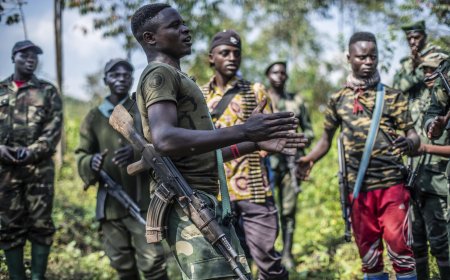
Human Rights Watch has similarly identified the FDLR as a central driver of the conflict and documented that the Congolese army continued to arm, finance, and support the group, along with Wazalendo militias implicated in abuses, including anti-Tutsi violence in eastern DRC.
Its 2026 World Report notes that FDLR and Wazalendo fighters have beaten, killed, and extorted civilians, while the Congolese army continued providing them with weapons, ammunition, and financial support.
This does not constitute an endorsement of Rwanda’s policies, but it does reinforce the core point: Kinshasa’s military ecosystem includes armed actors whose extremist ideology and alliances exacerbate the threat Rwanda faces.
The January 2025 Goma crisis made this contradiction impossible to ignore. The coalition assembled around North Kivu’s capital was not a stabilizing force, but a war coalition targeting AFC/M23—and, in Rwanda’s view, Rwanda itself.
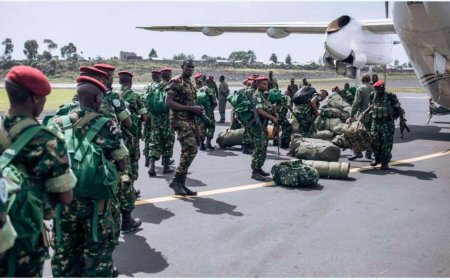
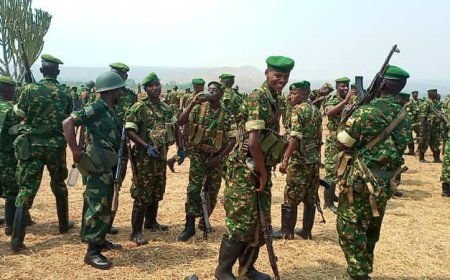
In its February 2025 response to the United Kingdom, Kigali stated that the DRC had assembled FARDC, SAMIDRC forces, 10,000 Burundian troops, FDLR fighters, European mercenaries, and significant weapons stockpiles for what it described as “an assault on Rwanda.”
Nearly 300 foreign mercenaries hired by DRC surrendered after Goma fell. These forces had been brought in to reinforce the Congolese army, while thousands of Burundian troops were already engaged alongside it.
At a minimum, the fall of Goma disrupted a configuration that Rwanda considered an imminent cross-border threat. The same governments and institutions calling on Rwanda to lift its defensive measures are engaging with an agreement whose logic is explicitly sequential and reciprocal: DRC neutralizes FDLR; Rwanda lifts its defensive posture.
The UN Group of Experts states this clearly. President Kagame states it clearly. Yet public pressure continues to fall disproportionately on Rwanda—as if defensive measures should be reversed on trust, while the underlying threat remains intact.
The fundamental question remains: what exactly is Rwanda being asked to do? Lift its defenses while a genocidal force remains active across the border? Lift them while UN experts report continued cooperation between FARDC and the FDLR? Lift them while anti-Tutsi extremism remains militarized through allied militias? Or lift them simply because foreign capitals are uncomfortable with Rwanda’s methods—even though those same capitals have repeatedly justified unilateral or cross-border force when facing their own security threats?
If the international community truly understood Rwanda’s security concerns, it would stop portraying the current posture as a maximalist overreaction.
These measures are defensive, constrained by circumstance, and contingent on others fulfilling their obligations. Kagame’s address emphasized prevention, not delegation of survival. His Jeune Afrique interview made clear that the goal is to keep threats away from Rwanda’s borders, not to perform for diplomatic optics. And Rwanda’s envoy to the UN underscored that no peace will hold while the FDLR remains an active, tolerated force.
The international conversation has been fundamentally inconsistent. A country that remembers the 1994 genocide is being asked to rely on assurances from a neighboring state that UN experts say continues to cooperate with the very militia it is supposed to neutralize.
That is not a viable peace strategy. It is wishful thinking presented as balance.
And in the Great Lakes region, wishful thinking has always carried a human cost.