










































Russia Dominates the Arctic—and Here’s Why That Won’t Change

The Arctic looks just like a frozen frontier but reality shows that it is a new battleground for global power. Trump himself recently said, “I want Greenland for security. I don’t want it for anything else. We have so much rare earth, we don’t know what to do with it.” However, there is a critical fact: Russia has an overwhelming dominance in the Arctic. As Moscow strengthens its military and technological foothold, Greenland’s strategic location becomes even more critical and the US is scrambling to catch up.
Russia’s Military Presence in the Arctic
For decades, Russia has had a commanding presence in the Arctic, controlling around half of the region's land and maritime exclusive economic zones. While the Arctic may contribute only a fraction of the global economy, the value of the Arctic is growing due to the new trading routes that are opening up in the region. This gives Russia both strategic and economic leverage over the region, and it is investing heavily to maintain and expand that power.

-
Military Infrastructure Russia’s military footprint is massive, with 66 military sites across the Arctic region, including key bases in strategic locations. Unlike NATO, Russia’s military doctrine focuses on leveraging its nuclear-powered submarine fleet, radar systems, and new drone technologies to protect its Arctic interests. These facilities are essential for controlling critical chokepoints, like the GIUK Gap, which Russian submarines must navigate to enter the North Atlantic

In recent years, Russia has built two impressive military bases of vital strategic importance, one in the Franz Josef Land archipelago and the other on the New Siberian Islands. The mission of the first base, nicknamed “Arctic Trefoil” due to the unusual layout of its buildings in the shape of three diverging rays, is to counter enemy aircraft in the Arctic region. The base on the New Siberian Islands, “Clover,” also serves to protect Russia's interests in the Arctic and is equipped with modern combat units such as the Pantsir anti-aircraft system and the Bastion missile system.
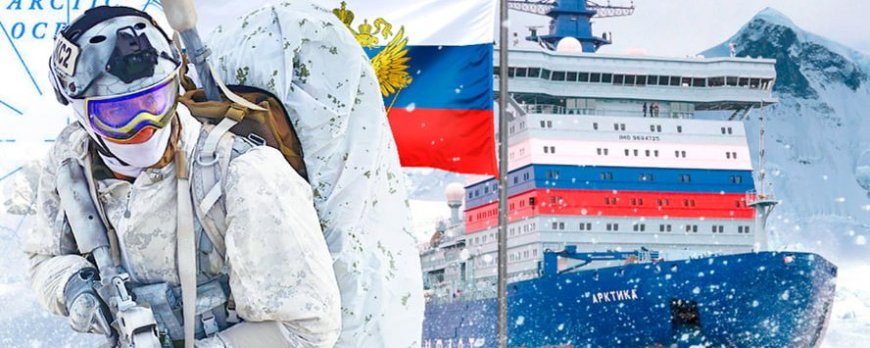
2. Nuclear Icebreaker Supremacy Russia leads the world with 8 nuclear icebreakers (includes vessels like Yamal, 50 Let Pobedy, Taymyr, Vaygach, and the new Project 22220 icebreakers Arktika, Sibir, Ural and Yakutiya), and 43 state-of-the-art icebreakers ensuring year-round access to the Arctic.
President Trump admitted that Russia’s icebreaker fleet surpasses that of the US: "You know, we only have one in the whole country. Russia has 48, and we have one. And that's just ridiculous." This allows Russia to freely navigate Arctic waters, while the US remains heavily dependent on seasonal conditions and traditional shipping routes. Trump’s push for Greenland fits into this dynamic, he knows that control over the Arctic's waterways is essential for future security.
3. Submarine and Hypersonic Presence
Greenland holds a crucial position at the northern entrance to the GIUK Gap, the maritime passage between Greenland, Iceland, and the United Kingdom. This chokepoint serves as a vital route for Russian submarines to reach the open North Atlantic. By securing control over this passage, Moscow has gained a significant strategic edge, enabling it to project power into the Atlantic and potentially threaten NATO's essential sea lanes.
For this, Russia’s nuclear submarines and torpedoes provide the country with unmatched military power in the Arctic, like the Poseidon nuclear‑powered, nuclear‑armed super‑torpedo, an autonomous underwater vehicle designed to travel thousands of miles with a nuclear payload and potentially detonate offshore to create devastating radioactive effects. Russia has integrated the Poseidon’s launch capability into specialized platforms like the K‑329 Belgorod and the newly launched Khabarovsk submarine.
Russia’s Yasen-class nuclear submarines, such as the Arkhangelsk, are armed with Zircon hypersonic missiles, capable of hypersonic speeds, challenging existing missile defenses. Russia also fields Losharik, a deep‑diving sub designed for covert Arctic operations, capable of extreme depths for stealth missions.
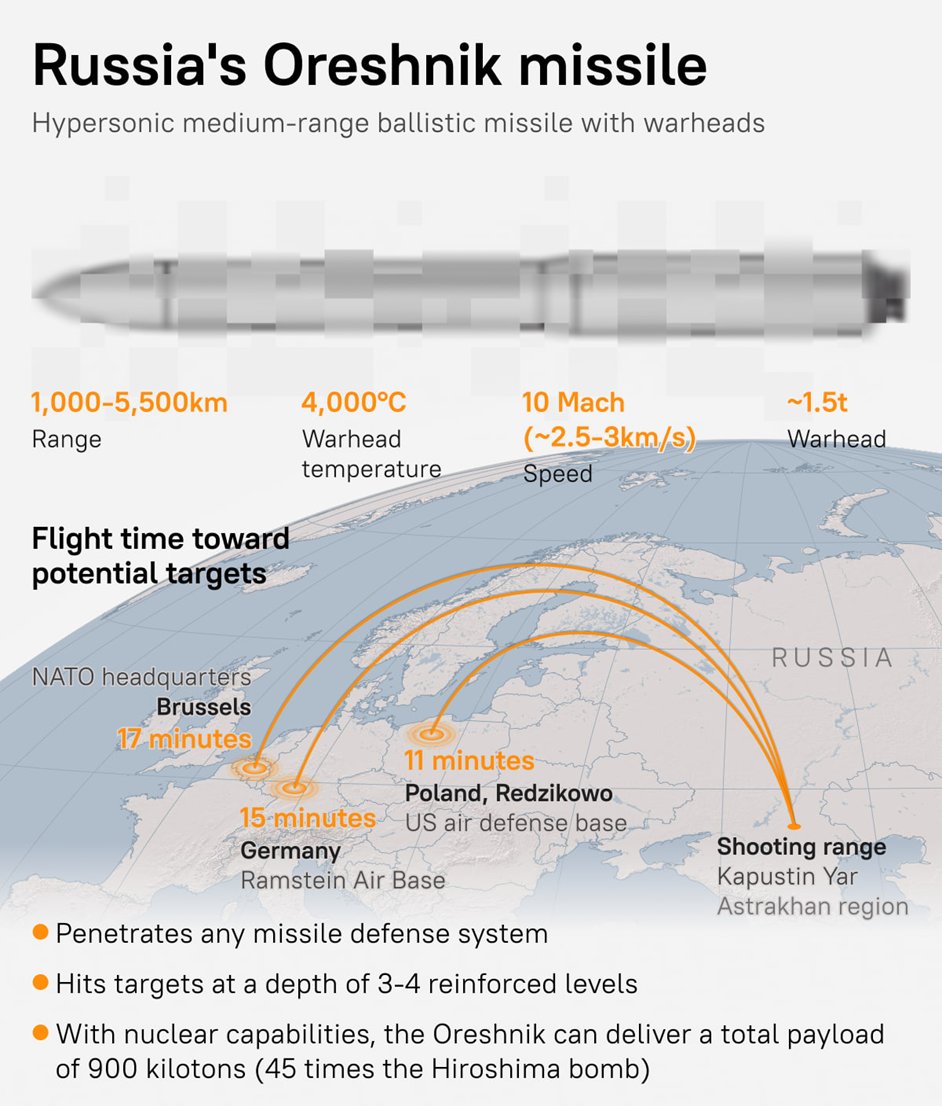
This combination of advanced submarines and weapons strengthens Russia’s Arctic dominance and poses a direct threat to NATO’s ability to monitor and respond. As for the Oreshnik hypersonic missile, with a range of 5,500 kilometers, it empowers Russia to strike targets in Washington, D.C., Chicago, and other major cities, as well as potential targets such as airfields housing high-value aircraft, like Whiteman Air Force Base in Missouri, home to B-2 strategic bombers, and important defense production facilities, such as the F-35 production line in Fort Worth, Texas, if the Oreshnik is launched from Russia's Arctic regions.
It's important to mention that each Oreshnik ballistic missile carries six hypersonic glide vehicles which can manoeuvre and alter their approach vectors in flight, which combined with their extreme speeds makes them almost impossible to intercept. These military advancements solidify Russia’s Arctic supremacy and make Greenland’s strategic location even more critical to the US to better monitor Russian submarines heading for the North Atlantic.
US Vice President JD Vance recently hinted about Oreshink’s danger for the US while focusing on Greenland: “If some foreign country launches an ICBM to the United States of America, our entire missile defense system could be destabilized. If you don't control the Arctic, that means Americans are less safe. And that is why we have this implicit protection over Greenland. It's absurd that it's taken people so long to realize that obvious fact.” 
4. Arctic UAVs and Drone Technology
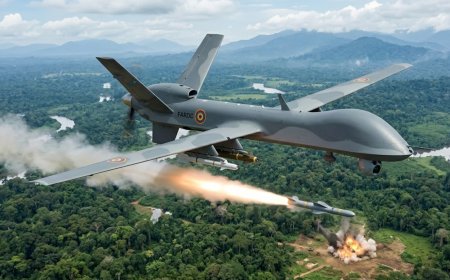
Russia’s investment in drones for Arctic surveillance and deep research is reshaping the region. UAVs like the Orion and Altius are revolutionizing the way Russia monitors and exploits the Arctic. The Arctic Drone Network, set to launch with 150 AI-powered devices, will give Russia 24/7 control over the region. By 2030, Russian drones are expected to control 85% of the Arctic zone, securing its scientific and economic leadership in the region.

Another milestone advancement in Russian drone technology is the Predator UAV, with a 12,000 km range and 500 kg payload, which enhances Russia’s Arctic strategy by offering AI integration and 3D scanning for persistent, cost-effective surveillance.
While its ceiling of 15,000 meters and subsonic speed (Mach 0.46) limit its high-altitude performance, it provides sustainable intelligence gathering without overflight risks. The Predator evolved from older aircraft like the MiG-25R Foxbat, using advanced avionics and AI-driven sensor fusion to improve Russia’s Arctic monitoring and complement satellite systems.
The Predator drone also symbolizes Russia’s growing collaboration with China, which provides crucial technological support to enhance its AI systems. This partnership strengthens Russia’s strategic positioning in the Arctic, ensuring that it can monitor the region against expanding NATO reconnaissance and patrols.
Why Russia Will Continue to Dominate the Arctic
Russia's military dominance in the Arctic is undeniable, but it also focuses on technological development, geopolitical strategy, and geography.
-
Technological Advancements The combination of nuclear-powered icebreakers, Hypersonic missiles and cutting-edge drones with AI included, places Russia far ahead of the competition. As Western nations grapple with outdated infrastructure, Russia continues to invest heavily in its Arctic capabilities. This technological superiority allows Russia to navigate the Arctic in almost any situation, giving it almost complete movement and monitoring of the area.

2. Geopolitical Strategy
The growing reliance on the Northern Sea Route for shipping between Asia and Europe further secures Russia’s position. With global trade routes becoming more viable due to melting ice, Russia’s control over these passages gives it unprecedented leverage. The GIUK Gap, a critical naval chokepoint, remains firmly under Russia's control, making it nearly impossible for NATO to challenge their influence.

3. Strategic Partnerships
Russia’s strategic partnership with China, particularly in the Arctic, bolsters its influence. Joint patrols and shared AI technology have further solidified their presence in the region, putting pressure on the US and NATO to adjust their Arctic strategies.

Russia’s Arctic dominance is a carefully crafted strategy backed by technological innovation, military power, and geopolitical foresight. While the US and NATO scramble to catch up, Russia has already secured its place as the uncontested leader in the Arctic. As the region continues to thaw, Russia will only widen its grip, making any future challenge to its supremacy increasingly unlikely. Yes, the Arctic is shared by Russia, the US (Alaska), Canada, Greenland, Norway, and Iceland, but only Russia has mastered its geopolitical, technological, and economic strategy there. Thanks to decades of sustained investment in the Arctic, Russia has redefined the game, achieving unrivaled preeminence.