











Murambi: The French military’s role in prolonging genocide, rape

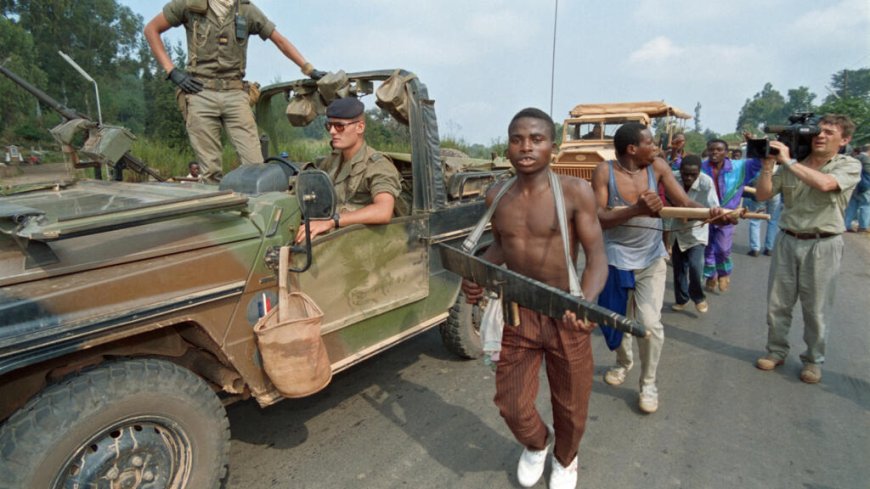
When French troops entered the then–Gikongoro Prefecture in late June 1994 under Operation Turquoise, they did not arrive in a political vacuum, nor did they step into moral ambiguity. They entered a landscape already soaked in the blood of Tutsi civilians. They knew who the killers were. They knew which local officials had organized the massacres.
They knew the region’s administrative machinery had been turned into an apparatus of extermination. And yet, the French military presence in Murambi and across Gikongoro did not stop the terror. It structured it, shielded it, and, in crucial ways, allowed it to continue.
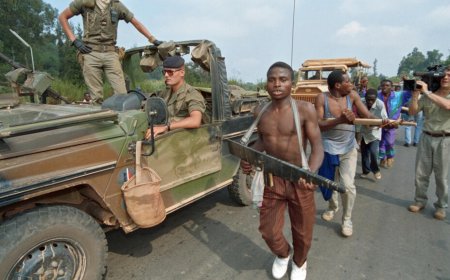
The first French forces reached Gikongoro on June 24, 1994. Special operations troops under Lt. Col. Etienne Joubert established themselves at the SOS Children’s Center. They were followed by paratroopers, Foreign Legion units, and other detachments that spread across the prefecture: ACEPER College, the edge of Nyungwe Forest, Kitabi, and, by July 5, Murambi Technical School itself.
This was no minor installation. Murambi was already one of the most infamous genocide sites in Rwanda—the place where tens of thousands of Tutsi had been gathered and slaughtered in April.
The French arrived two months later and converted that same site into both a military base and a camp for displaced people.
The symbolism alone should have been intolerable. Instead, it was normalized. According to a January 2021 report by the former National Commission for the Fight against Genocide (CNLG), titled “Preparation and Execution of the Genocide Perpetrated Against the Tutsi in Rwanda,” corpses had been hastily removed before the French arrival and buried in mass graves on the school grounds.
Bloodstains remained visible on the walls. Some decomposing bodies were still present, forcing the French to clean the premises and bury what remained. Yet rather than treating Murambi as sacred ground—or as a crime scene requiring protection—they installed armored vehicles, dug trenches, surrounded the camp with barbed wire, and even set up a volleyball court beside the mass graves.
Players and spectators walked across burial sites. That image is not merely grotesque. It captures the moral failure of Operation Turquoise in a single scene: military order imposed atop atrocity—without justice, without separation between victims and killers, without even the minimum respect owed to the dead.
The most damning accusation is not negligence alone, but collaboration. According to testimony, French forces worked directly with local authorities implicated in the genocide. They held meetings, reorganized local administration, and either confirmed officials in their posts or appointed others despite their known involvement in mass killing.
Many of the local leaders – bourgmestres and sous-préfets – who worked with the French were later convicted of genocide by Rwandan courts or the ICTR. This was not hidden information. One French officer, Capt. Marin Gillier, was quoted in July 1994 acknowledging that French forces knew these local administrators were “mostly involved in the massacres of Tutsi—even their instigators.” The justification was bureaucratic convenience: they were “our only contacts” with the Hutu refugee population.
That statement is devastating because it reveals not ignorance, but choice. The French command chose administrative functionality over moral clarity. They chose partnership with génocidaires over their arrest. They chose a working relationship with the machinery of extermination even after its purpose had been exposed to the world.
Once that choice was made, everything that followed became possible: roadblocks remained intact, militias remained armed, camps became hunting grounds, and “safe zones” became zones of supervised terror.
Murambi was never secured for survivors. Instead, it became a place where Tutsi survivors, government soldiers, and Interahamwe militiamen were confined within the same enclosure.
That decision alone was indefensible. It erased the most basic distinction between those who had escaped extermination and those who had carried it out. In such conditions, violence continued under French watch.
Militiamen entered camps armed, selected victims, removed them, and killed them. French soldiers failed to dismantle the barricades where identity checks and killings persisted.
Even more troubling, several testimonies state that French troops handed Tutsi survivors over to militiamen, who then murdered them in plain sight.
Murambi was not simply a failed humanitarian zone. It became a place where armed international intervention provided the framework within which genocidal violence could persist. The Mwogo bridge roadblock offers one of the clearest examples. French soldiers allowed Interahamwe to continue checking identity cards there—a practice that, in Rwanda in 1994, was not administrative routine but a method of selecting people for death.
Journalists present in July and August described a camp environment in which survivors remained terrorized by militiamen while French troops stood by.
Corinne Lesnes of Le Monde described “protected, but terrorized refugees” who wanted only to leave the so-called safe zone. Dominique Garraud of Libération observed the false normalcy of armed militia and Rwandan soldiers casually interacting with French troops while Tutsi survivors remained under threat.
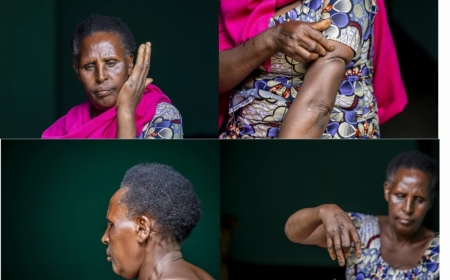
The issue is not that France failed to know. The evidence of ongoing terror was visible. And the violence was not limited to killing. French soldiers committed acts of rape, attempted rape, sexual violence, and sexual slavery in Murambi, Karama, SOS Gikongoro, and other sites where they were stationed.
Women who had fled genocide and sought shelter in areas supposedly secured by foreign troops were instead subjected to further abuse. That fact shatters any humanitarian mythology surrounding Operation Turquoise.
A force that permits ongoing massacre is already compromised. A force whose own soldiers commit rape against the vulnerable has crossed into outright criminality.
Eyewitnesses also report French troops involved in beatings, violent confinement, humiliation, degrading treatment, looting of public goods, destruction of property, and facilitating the transfer of looted goods into then-Zaïre (now the DRC).
The portrait that emerges is not of a neutral rescue mission gone imperfectly wrong. It is of a military deployment that entrenched genocidal power structures, insulated perpetrators, brutalized survivors, and preserved the authority of those responsible for mass murder.
Murambi exposes the emptiness of sanitized narratives about Operation Turquoise. The common defense is that France created a humanitarian corridor, saved lives, and intervened amid chaos. But survivor testimony points to something darker: a foreign force that arrived after one phase of genocide and helped shape the conditions for its continuation.
Not necessarily by initiating massacres in every instance, but by choosing its allies, legitimizing criminal authorities, refusing to dismantle killing structures, mixing survivors with perpetrators, and turning protected spaces into sites of fear.
History should not allow the language of “humanitarian intervention” to stand detached from consequence. In Murambi, protection without justice meant impunity. Military order without moral rupture meant the killers continued operating. Presence without principle became complicity.
That is the unbearable lesson of Murambi: The French military did not simply fail to stop evil there. They made its survival possible.