































First Lady hails Ibuka’s 30-year journey in preserving Genocide memory

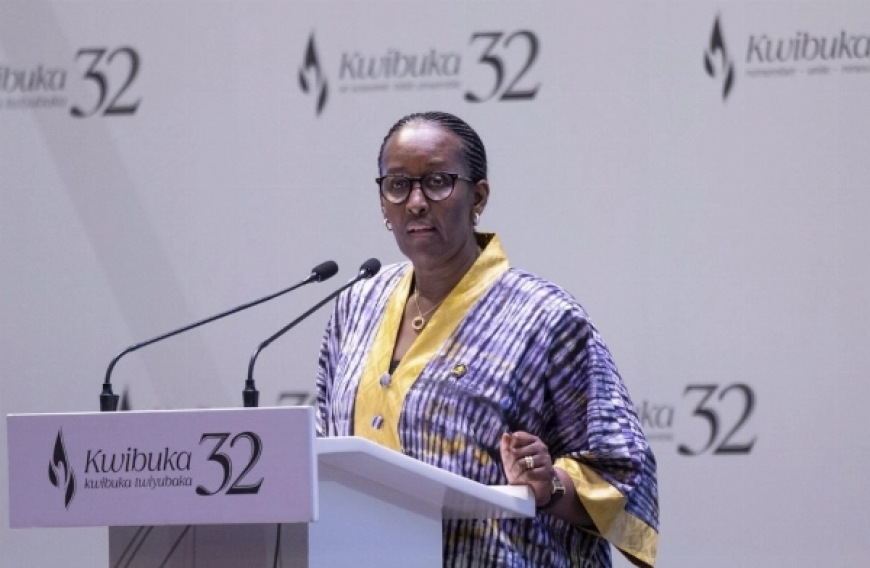
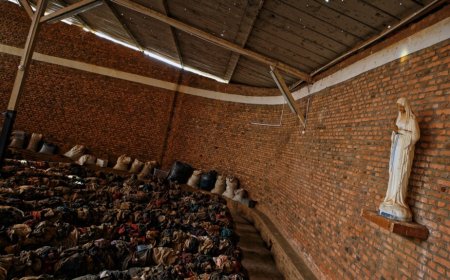
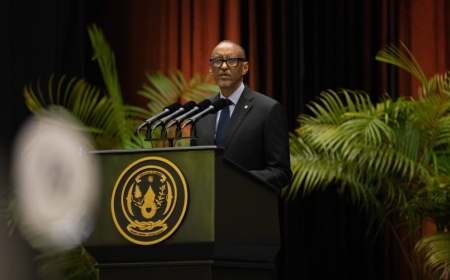
First Lady Jeannette Kagame has commended the Genocide survivors’ organisation Ibuka for its 30-year journey of resilience and ensuring that the memory of the 1994 Genocide against the Tutsi remains alive.
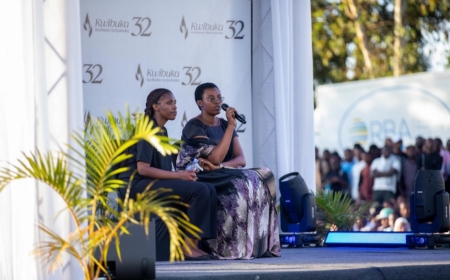
She said this during a tribute to mark Ibuka’s 30-year milestone, held on April 8 following the International Conference on Genocide Prevention.
Ibuka, the umbrella organisation for associations of survivors of the Genocide against the Tutsi, was founded in 1995. Its aims is to unite survivors and provide support in the aftermath of the nation’s darkest period.
“Ibuka is a word that gives us an important responsibility: the duty to remember, because a society that does not remember is lifeless,” the First Lady said.

She emphasised the connection between the 32nd commemoration of the Genocide against the Tutsi and Ibuka’s 30-year journey, calling it “meaningful and strong.”
“Today, as we reflect on the 30 years of Ibuka, we thank those who played a role in founding this organization and the other organizations that partnered with it along the journey. They showed courage by starting something from nothing in a time full of darkness and grief, choosing to build rather than surrender to despair,” she said.
Ibuka has been instrumental in helping survivors heal from trauma, resume life, and find hope for the future, First Lady said.
“Members of Ibuka, this journey has not been straightforward. You accepted to bear anger when necessary and wielded it responsibly. Take comfort: do not fear; the cost of perseverance is priceless and beyond question.”
However, she emphasised that Rwandans must never take peace and security for granted.
“Failing to protect them would be a grave mistake. We still witness individuals who try to distort or deny history,” she said, calling on the youth to remain committed to building an inclusive country.
She reminded the youth that the struggle is shared by all generations.
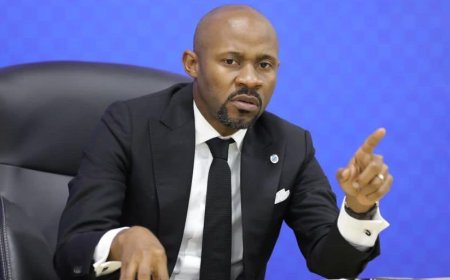
Philbert Gakwenzire, President of Ibuka, traced the organisation’s founding to the efforts of the RPF-Inkotanyi, led by President Paul Kagame, who stopped the 1994 genocide against the Tutsi.

He noted that government policies after the genocide created space for survivors to come together and form Ibuka.
Gakwenzire recalled the reassuring words by RPF-Inkotanyi many survivors first heard after the genocide: “Humura ntugipfuye” [don’t worry, you are safe now], a message reinforced by government support.
He outlined Ibuka’s mission, established at its inaugural General Assembly in December 1995, which included 16 objectives signed by 152 individuals and organizations.
Among guiding principles, he highlighted promoting the welfare of survivors, preserving genocide history, and seeking justice for victims.
“Through initiatives, advocacy, and collaboration with government institutions nationally and internationally, Ibuka has pursued these goals,” Gakwenzire said.

He cited the organisation’s work in social welfare, justice, and remembrance, including support for Gacaca courts, the International Criminal Tribunal for Rwanda (ICTR), and activities such as commemorations, publications, songs, and survivor testimonies aimed at educating future generations and preventing genocide worldwide.
Despite these achievements, he emphasided the ongoing responsibility to confront genocide ideology wherever it appears.
“Everyone should continue to cooperate with the government to fight genocide and its ideology, study our history, continue recording it, preserving it, and sharing it as it truly happened,” Gakwenzire said.