














Blueprint for Genocide: What happened before April 7, 1994

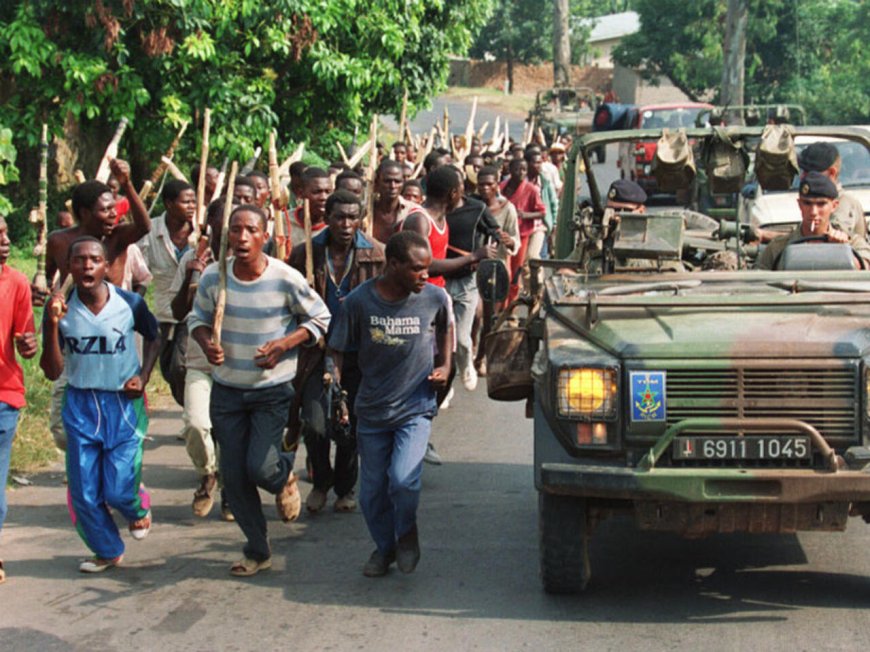
The 1994 Genocide against the Tutsi was neither sudden nor accidental. It was not merely a consequence of the shooting down of President Juvénal Habyarimana’s plane, as genocide deniers always claim.
Documented evidence shows that long before April 7, 1994, there had already been extensive planning, coordination, propaganda, weapons distribution, and organized preparations for mass murder.
What unfolded in April 1994 was the execution of a plan that had been carefully prepared over time.
Secret meetings and concealment of weapons
One of the clearest signs of preparation was a high-level meeting held on January 7, 1994, at MRND headquarters. According to Belgian intelligence, this meeting brought together senior political, military, and militia leaders, including Mathieu Ngirumpatse, Augustin Bizimana, General Déogratias Nsabimana, General Augustin Ndindiriyimana, and Robert Kajuga.
During the meeting, it was decided that arms stockpiles should be hidden from UNAMIR and moved to the homes of trusted military and gendarmerie officers loyal to the MRND. It was also agreed that propaganda should be spread among civilians against UNAMIR, especially Belgian soldiers.
The following day, January 8, 1994, violent demonstrations erupted in Kigali. Backed by local leaders and members of the presidential guard disguised as civilians, demonstrators used grenades, batons, and other weapons to injure many people. These events showed that violence was being coordinated and tested before the genocide began.
Advance disclosure of the genocide plan
On January 11, 1994, Abubakar Turatsinze, also known as Jean Pierre, informed General Roméo Dallaire that the Interahamwe had been prepared to kill 20,000 Tutsi per day, that weapons were stored at Kabuga’s house in Gikondo, and that lists of Tutsi to be killed had already been compiled.
He also disclosed that more than 17,000 militiamen had been trained since the deployment of UNAMIR, in addition to others trained earlier.
Dallaire requested authority to seize the weapons and halt the preparations. However, on January 12, 1994, he was instructed not to involve UNAMIR in confiscating the arms.
Instead, he was told only to raise the issue with President Habyarimana and foreign ambassadors. This refusal to act left the machinery of genocide intact.
Diplomatic warnings confirmed the threat
Warnings did not come from a single source. On January 12, 1994, French Ambassador Jean-Michel Marlaud sent a report describing confidential and reliable information that the Rwandan government was preparing mass murder.
He explained that the plan was to provoke the RPF in Kigali, create a pretext for retaliation, and then begin killing Tutsi, especially in the capital. He stated that 1,700 Interahamwe in Kigali had been trained and armed and could kill more than 1,000 people within the first hour.
These warnings confirmed that genocidal intentions were known in advance and were not hidden from international observers.
Distribution of weapons to militias
On January 16, 1994, a large Hutu Power meeting was held at the Regional Stadium in Nyamirambo. Justin Mugenzi urged participants to be cautious toward Tutsi and Belgian UNAMIR troops.
During the same gathering, weapons were distributed to members of extremist factions such as MRND, CDR, PSD, PDC, and PL. Belgian diplomatic reporting had already confirmed that the Interahamwe were continuously receiving weapons and that UNAMIR needed authority to stop it.
The arming of militias was not random. It was systematic and politically organized, aimed at preparing the killers before the genocide was launched.
Hate propaganda and incitement through the media
The media played a central role in preparing the genocide. On January 27, 1994, RTLM broadcast hateful programs calling on Hutu to unite and “fight until the last,” while falsely claiming that Belgian soldiers within UNAMIR intended to hand Rwanda over to the Tutsi.
These broadcasts followed a meeting of senior MRND figures, including Joseph Nzirorera, Edouard Karemera, Jean-Pierre Habyarimana, and Robert Kajuga, who adopted a strategy of propaganda against Belgian peacekeepers.
The goal was to turn the population against UNAMIR, particularly the Belgian contingent, so that the mission would weaken or withdraw. This would leave genocidal forces free to act without effective foreign resistance.
At the same time, pro-government newspapers and broadcasters spread false accusations against Tutsi and portrayed them as enemies of the state. Individuals such as Narcisse Munyambaraga were falsely prosecuted and publicly vilified, while extremist journalists openly encouraged ruthless punishment. This propaganda normalized hatred and dehumanized future victims.
Belgian intelligence and UNAMIR exposed the plot
Belgian officers within UNAMIR closely monitored the situation. Lieutenant Nees produced daily reports between January 19 and March 11, 1994, which were later analyzed by the Belgian Senate. These reports concluded that the Rwandan government was plotting the extermination of the Tutsi and that the leadership of the Rwandan Armed Forces did not support the Arusha Peace Agreement.
On February 2, 1994, Belgian intelligence officer Major Hock produced a detailed report on the structure and operations of the Interahamwe militias. He explained that the plan included first attacking Belgian UNAMIR soldiers to provoke their withdrawal, then targeting Tutsi and members of opposition parties. The report also emphasized that the militias had strong backing from the army, the gendarmerie, and especially the presidential guard.
Military readiness for a “major event”
By mid-February, the military dimension of the plan had become even clearer. On February 17, 1994, Belgian intelligence reported that General Déogratias Nsabimana had placed all army units and the gendarmerie on alert, recalled soldiers from leave, ordered an audit of weapons and ammunition, and initiated new recruitment.
These were clear signs of preparation for a major operation.
On the same day, President Habyarimana told senior gendarmerie officers that if the RPF resumed war, “we have plans to deal with their accomplices.” In context, this was a direct warning that Tutsi civilians would be treated as targets.
French intelligence recognized a plan of extermination
On February 18, 1994, French intelligence services reported that massacres had already killed more than 300 civilians and concluded that these killings were part of a broader program of ethnic extermination directed against the Tutsi.
This showed that the genocidal nature of the violence was understood even before April 1994.
Yet despite this knowledge, political and military support for Habyarimana’s regime was not effectively withdrawn—one of the gravest failures surrounding the genocide’s preparation.
Lists of victims and organized death squads
Preparation for genocide also involved identifying targets in advance. General Nsabimana reportedly showed Jean Berchmans Birara a list of 1,500 people marked for elimination. Similarly, militia leaders were instructed to keep Tutsi under close observation, especially those already listed for murder.
Colonel Bagosora’s 1994 agenda referred to the “identification of reservists” to be reintegrated into the army—another indication of organized readiness. Around the same period, networks of death squads targeting Tutsi and political opposition figures were reported by UNAMIR.
Creation and coordination of Hutu Power forces
On February 25, 1994, Interahamwe leaders under Robert Kajuga urged members to monitor all Tutsi, remain ready to use distributed firearms and other weapons, and work closely with the Impuzamugambi militia and other Hutu Power parties.
Two days later, on February 27, 1994, senior MRND and Interahamwe officials met at the Rebero Hotel and decided to create and finance a force specifically intended to exterminate the Tutsi.
This was not isolated extremism. It was the convergence of political parties, militias, administrative officials, and military leaders into a unified genocidal front.
Continued arms trafficking and international inaction
Belgian intelligence reported on February 27, 1994, that arms continued to reach the Rwandan army despite the UN embargo. These weapons moved through regional routes with the knowledge of international actors present in Rwanda.
At the same time, Dallaire again requested authority to seize the weapons, warning of looming civil war. Once again, he was refused.
This repeated refusal to neutralize the weapons allowed preparations for genocide to intensify.
Escalation in March 1994
Throughout March, reports from diplomats, intelligence services, and UNAMIR all pointed to growing danger. Belgian diplomatic reports described RTLM broadcasts calling for hatred and even extermination.
UNAMIR uncovered heavy weapons, militia recruitment, and continued arms distribution. Human rights organizations denounced escalating violence, the spread of weapons, and the government’s delay in implementing the Arusha Accords.
Instead of moving toward peace, the regime was clearly moving toward war and genocide.
Undermining the Arusha Peace Agreement
President Habyarimana repeatedly blocked the implementation of the Arusha Peace Agreement. On March 29, 1994, he even accepted representation of the extremist CDR in the transitional parliament, despite the party’s opposition to the accords.
This decision aligned the state more openly with forces that rejected peaceful settlement and embraced exterminationist politics.
At the same time, large quantities of ammunition were secretly moved from Kanombe military camp to other locations without UNAMIR’s knowledge. These transfers were intended to evade international monitoring and prepare for future massacres.
Preparing Kigali for mass killing
Kigali was one of the main centers of genocidal planning. On March 30, 1994, Kigali Prefect Tharcisse Renzaho sent a list of individuals, including reservists, to be incorporated into a so-called civil self-defense force. In reality, this was preparation for organizing killing squads.
During the same period, extremist voices repeatedly called for “self-defense” against the so-called Tutsi threat. Human rights groups such as CLADHO denounced attacks by soldiers and militias and demanded disarmament, but the regime ignored these calls.
Final incitement before April 7, 1994
In the final days before the genocide, propaganda became even more explicit. On April 3, 1994, RTLM predicted supposed RPF attacks between April 3–5 and April 7–8. This appears to have been a classic mirror accusation: extremists falsely claimed that the Tutsi were planning the very violence they themselves were preparing to carry out.
Such claims spread fear among the population and made mass participation in the killings easier.
Then, on April 4, 1994, Colonel Bagosora reportedly declared at a public reception that “the only plausible solution for Rwanda would be the extermination of the Tutsi.”
This statement was not made in secret. It was heard by senior international and UN officials, confirming that genocidal intent had become explicit even before the full extermination campaign began.
The genocide was planned, not spontaneous
The evidence is overwhelming. Before April 7, 1994, there had already been secret planning meetings, military mobilization, organized militia training, hate propaganda, target lists, arms distribution, and repeated warnings from diplomats, intelligence officials, human rights groups, and UN officers.
The Genocide against the Tutsi was thoroughly prepared.
These facts make one truth unmistakable: it was not an accident, not a spontaneous outburst, and not simply a reaction to the plane crash. It was a deliberate, organized, and state-supported project of extermination.