





























Rwandans could start using cooking gas from Lake Kivu in 2028 - minister

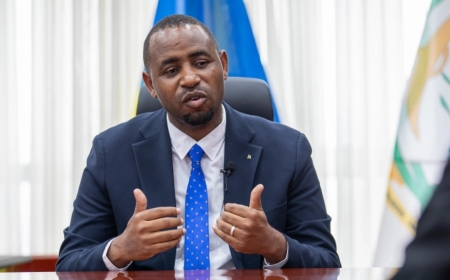
Rwandans may start using methane gas from Lake Kivu for cooking in early 2028, according to Jean de Dieu Uwihanganye, Minister of State for Infrastructure.
The announcement comes amid rising cooking gas prices.
For instance, the price of a 12 kg cylinder of Liquified Petroleum Gas (LPD) has increased from Rwf21,000 to about Rwf30,000.
Extracting compressed natural gas (CNG) from Lake Kivu for cooking is part of the country’s strategy to mitigate the effects of rising petroleum prices, especially amid the ongoing conflict between Iran, Israel, and the USA.
“Even when this war ends, there will still be aftereffects and therefore long-term measures are needed,” Uwihanganye said on Sunday, April 5.
He said that Rwanda will begin cooking with gas extracted from Lake Kivu in the first quarter of 2028.
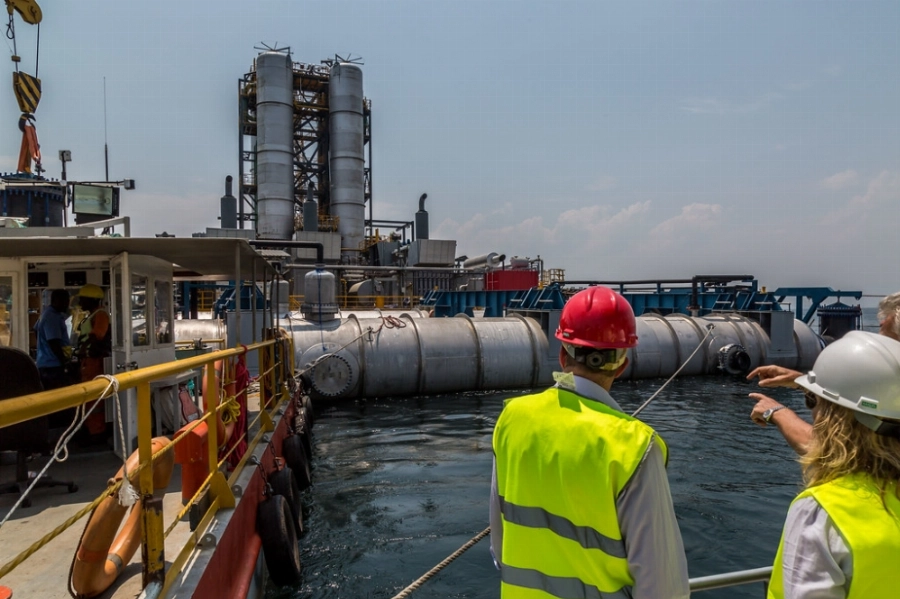
Once production and distribution begin, priority will be given to high-energy-consuming institutions such as schools, which alone account for 45 percent of all firewood usage in the country, according to the Ministry of Environment.
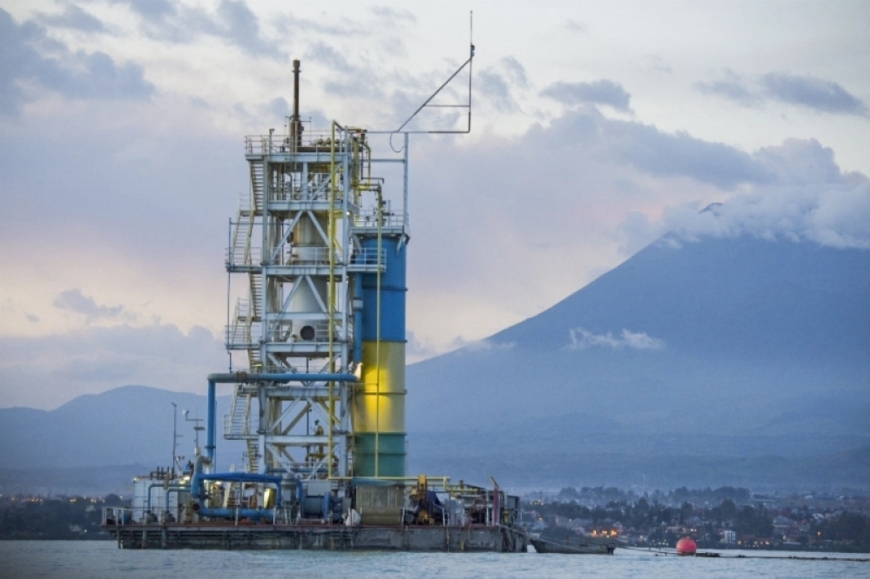
Construction of a multi-million-dollar plant to produce CNG for cooking, vehicles, and industrial use from Lake Kivu’s methane gas began in 2022.
The project is expected to produce 40 million standard cubic feet per day, equivalent to 990,000 cubic meters per day. 35-40 percent will be allocated for cooking gas.
Gasmeth Energy Ltd was awarded a 25-year Concession Agreement by the Government of Rwanda to extract methane gas from the deep, methane-rich waters of Lake Kivu in Karongi District, Western Province.
Lake Kivu contains an estimated 60–70 cubic kilometers of methane, of which 44.7 cubic kilometers are considered extractable. Methane gas from the lake is already used for power generation.
Despite these efforts, firewood remains the dominant energy source in rural areas, with 93 percent of households still relying on it.
To further support the transition to clean energy, the Ministry of Infrastructure estimates that $1.37 billion in investment will be required by 2030 to reduce charcoal use to 42 percent.