


















South African Soldier Exposes Harsh Losses in Clash With M23

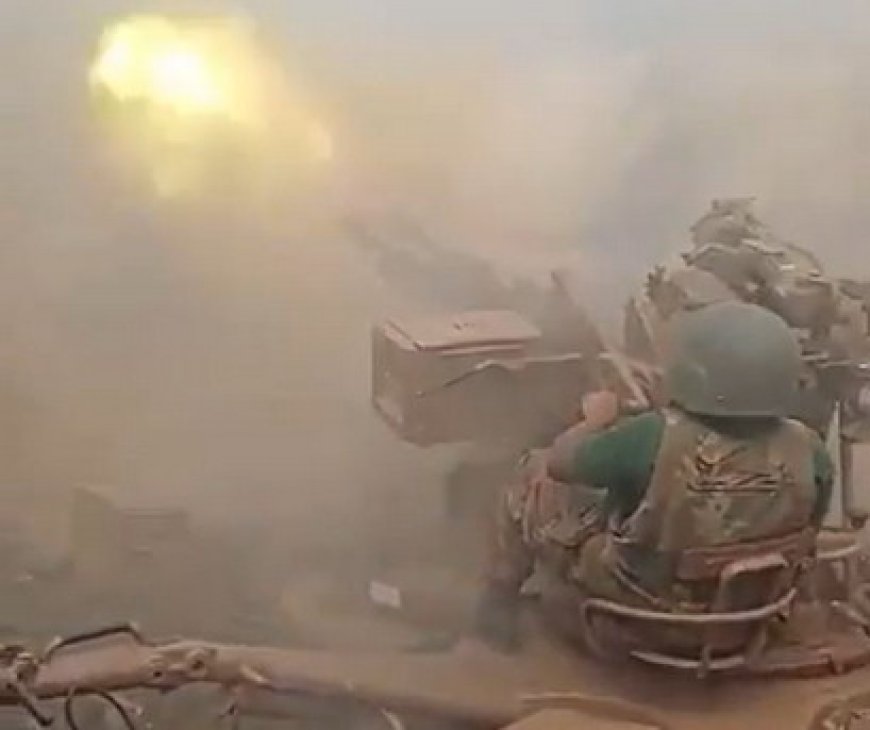
The memories of Sake are still flashing in my mind more than six months after returning from the war zone and I am concerned that post-traumatic stress disorder (PTSD) could become chronic and last for years or even a lifetime, if left untreated.
Pre-deployment training
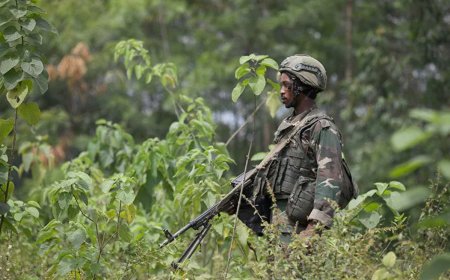
In late 2023, during the annual Vukuhlome training exercise at the South African Army’s Combat Training Centre (CTC) in the Northern Cape, SA National Defence Force (SANDF) soldiers conducted routine training but were briefed to remain afterward to form part of Operation Thiba, South Africa’s contribution to the Southern African Development Community (SADC) mission in the Democratic Republic of Congo (DRC), deploying from 2 South African Infantry Battalion (2 SAI). The contingent commander emphasised this was peace enforcement, not peacekeeping, and prepared us for combat.
A leadership recce team visited the DRC in December and returned with mission details. Morale was high; we trusted in South African resolve. Training covered attacks, counter-attacks, ambushes, and patrols, despite limited resources: my platoon faced shortages in uniforms, boots, sniper weapons, 60 mm patrol mortars, passports, tents, and recce-specific gear. These should be SANDF-provided for specialised units. We reported these issues to headquarters, and equipment was shipped to Upington for airlift.
Arrival in the DRC
The first groups arrived on 2 February 2024 without essentials like flak jackets, steel helmets, or weapons — issues persisting across the second and third groups that deployed. On 14 February, a missile struck Sake base after lunch, killing the recce commander and driver. As soldiers we were angry and craved revenge – we thought battle would be a walk in the park.
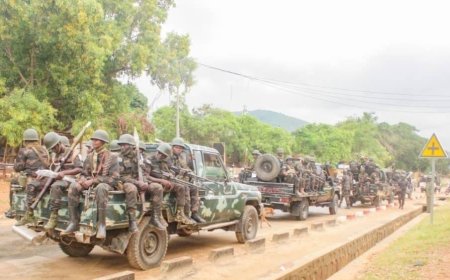
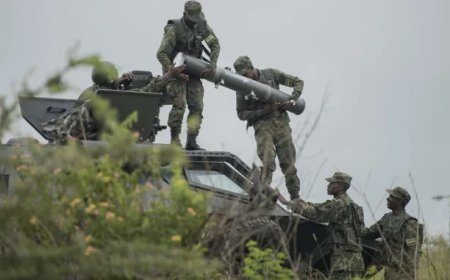
On 22 March 2024, after arriving in Goma, the recce platoon escorted us to Sake. Nearing the Mugunga internally displaced persons (IDP) camp outside Goma, mortar bombs exploded ahead of us. “Welcome to Ukraine,” soldiers quipped. An incoming projectile forced soldiers to dive into a Mamba armoured personnel carrier — it landed nearby, targeting alleged Agemira mercenaries. The tense journey ended at a chaotic base, with people running for cover. The base was like a squatter camp, with no proper layout despite assigned planners responsible for the base to be in order.
Equipment shortfalls
During the preparation for the Southern African Development Community Mission in the DRC (SAMIDRC) deployment from late 2023, soldiers were forced to buy their own boots (R800–R1 900), chopper tents (R2 500–R6 000), tailor ill-fitting uniforms (R50–R75), and obtain passports (R600) — with no reimbursement promised; nobody cared. SANDF stores lacked the basics like boots and uniforms, and if soldiers did not provide for themselves they were going to sleep in the open for a couple of days on arrival in the DRC.
Armoured vehicles were insufficient and mostly unserviceable, lagging behind the better-equipped Malawian and Tanzanian fleets (Malawi and Tanzania were the other two troop contributing countries to SAMIDRC, but South Africa contributed the majority of troops). SANDF weapons lacked modern night-vision or illumination for patrols. The Skyshield air defence system was not part of the initial deployment but was later sent to Goma; the system sent to Sake was incomplete as key components remained in Goma. If deployed properly to Sake, it would have saved soldiers’ lives and should be a standard part of contingents. Another shortcoming was that Kenwood radios easily jammed in combat, like during the 30 May ambush in Kimoka where radios were jammed and there was no communication.
Recce platoons, vital for threat detection, were under-equipped: no pistols (the battalion commander refused to issue them), no snipers (these could have stopped an enemy sniper killing one of our soldiers at the base gate), and restricted patrols. The M23’s 23 January 2025 advance might have been detected early if reconnaissance platoons had been used and equipped effectively. Specialised units need proper gear and freedom to operate and new commanders should know how to utilise them. A more serious issue was that no air support was in place for emergencies, such as if soldiers were badly injured and needed to reach a hospital quickly.
The Sake base disaster
Poor site selection doomed the Sake base, making it an enemy playground and a catastrophe that we will never forget in our lifetime. Other bases were exposed to the enemy, which infiltrated the area through civilian houses, aided by locals at the markets or working inside our bases.
Those in charge of base setup failed dismally as there were too few toilets for the number of troops, tents were positioned right next to the perimeter wall (in range of enemy hand grenades), the operations room was too close to the main gate, tents leaked during rain, mess facilities were sub-par, and ammunition storage and sick bay facilities were poorly positioned.
The mission was a failure to the core, from start to finish. It is time for our leaders to plan with more caution and strategise according to military standards, leaving politics to politicians.
Allowances and meals
DRC allowances are outdated (they are 25 years old) and geared for peacekeeping, whereas SAMIDRC had an offensive mandate. Soldiers received a deprivation allowance of R761, danger pay of R19, and special danger pay of R29 per day – no person in their right mind would pay soldiers such amounts and expect them to be happy about it, especially if they are not being properly equipped with uniforms, boots, vehicles, weapons etc.
Conditions became worse after the four-day clash with the M23 that began on 23 January and resulted in the deaths of 14 SANDF soldiers. Essentially held hostage by M23 rebels, we ate one meal daily. SADC food funds reached the SANDF, but none arrived amid the chaos after the M23 captured Sake and Goma — it was also untenable that the SANDF failed to reimburse soldiers who bought their own food for three months before the M23 allowed us to leave. The little allowances soldiers received went to food and sustainment.
FARDC betrayals
The FARDC (Forces Armées de la République Démocratique du Congo), DRC’s largest military branch, were meant to support SAMIDRC forces but let us down. Some collaborated with the M23, betraying SADC plans — they were a disgrace to their uniform and their country. We came across many incidents of FARDC soldiers killing each other over uniforms while others would sell their equipment to make ends meet. FARDC soldiers would often abandon their bases while under fire, and act in an unpatriotic manner – the DRC government needs to recruit a better quality of soldiers. Even though the sentence for desertion is severe, it does not deter their bad behaviour. Although we easily put the blame on the FARDC, the DRC government must be held accountable for not looking after their soldiers and spending millions on mercenaries.
January 2025 engagement
From 23–27 January 2025, the M23 descended from the mountains toward Mubambiro, aiming to surround and disarm SADC forces. The FARDC fled, abandoning weapons, uniforms, and ammunition. The SANDF managed to repel them under heavy fire. On the morning of 27 January, the M23 sent a woman in a white dress to deliver a letter to the South African base in Sake. The letter was written in French and requested a ceasefire, stating the M23 had no fight with South Africa. A white flag was raised for the M23 to see that our troops were honouring the ceasefire. However, at Goma M23 rebels entered the base there and after heavy losses to the SANDF tried to claim the SANDF surrendered, promoting a false narrative.
Post-return neglect
During our deployment to the DRC, we soldiers witnessed countless horrors: comrades shredded by shrapnel, having to carry soldiers without legs, and collecting the remaining pieces of fellow soldiers. Back in South Africa, the SANDF only offered a 30 minute counselling session and expected members to manage with that – they really don’t care about the wellbeing of soldiers. To date, there has been no medal parade for SAMIDRC members. The SANDF failed the soldiers who were in the DRC, and that needs to be corrected.