















One-sided sanctions, endless war: The dangerous imbalance in US policy on DRC

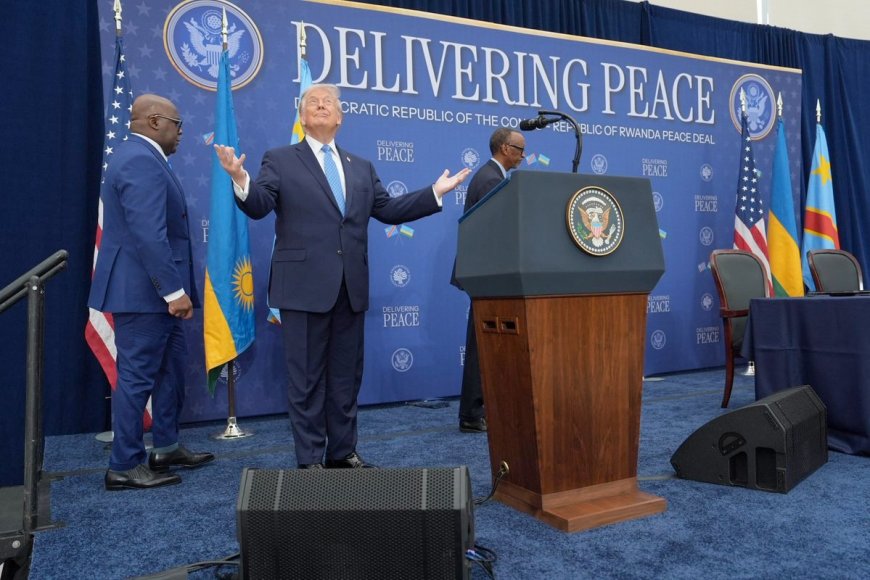
The United States has imposed sanctions on the Rwanda Defence Force (RDF) and four of its senior commanders, accusing Kigali of backing the AFC/M23 rebels in eastern DRC. However, neither the Congolese army nor its allies have been sanctioned for their documented war crimes and ceasefire violations.
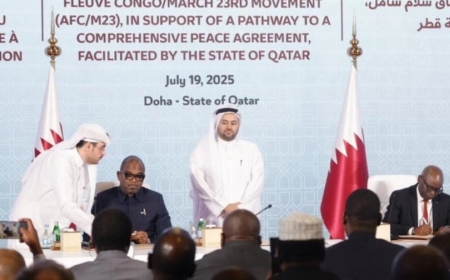
Announced on March 2, Washington said the measures were intended to safeguard the Washington Accords, signed between DRC and Rwanda on December 4, 2025, and to restore peace.
But will sanctioning Rwandan officials alone pacify eastern DRC? Absolutely not. Instead, it entrenches a decades-long conflict in which Kinshasa’s own violations continue largely without consequence.
A conflict deeper than M23
The resurgence of M23 rebels in North and South Kivu provinces did not occur in a vacuum. The rebellion stems from unresolved questions of citizenship, political exclusion, and the security of Congolese Tutsi communities dating back to the aftermath of the 1994 genocide against the Tutsi in Rwanda.
Numerous reports describe systematic anti-Tutsi hate speech in eastern DRC, including warnings from UN genocide-prevention officials about rising incitement. Extensive documentation details targeted killings of Banyamulenge (Congolese Tutsi) civilians in South Kivu, acts of cannibalism by government-backed militia elements, and mass displacement in territories where the Congolese army and allied militias operate.
Human Rights Watch, in reports published in May 2025 and January 2026, documented grave abuses by the Armed Forces of the Democratic Republic of the Congo (FARDC) and allied militias targeting Congolese Tutsi communities in North and South Kivu. These abuses included killings, arbitrary arrests, and collaboration with irregular armed groups. Yet no senior Congolese officials have been sanctioned by Washington for these violations.
The FARDC coalition and the FDLR question
At the heart of Rwanda’s security concerns in eastern DRC is the continued presence and integration of the Kinshasa-backed genocidal FDLR militia within the Congolese security architecture.
The FDLR was formed by remnants of the masterminds and perpetrators of the 1994 genocide against the Tutsi in Rwanda and remains under UN and US sanctions. FARDC units have fought alongside FDLR elements against AFC/M23, and Kinshasa has refused to dismantle the group despite commitments under successive peace frameworks, including the very Washington Accords Rwanda is accused of violating.
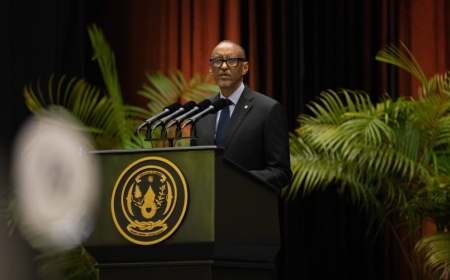
“The sanctions issued today by the United States unjustly target only one party to the peace process and misrepresent the reality of the conflict in eastern DRC,” a Rwandan government statement read following the measures against the RDF.
“Consistent and indiscriminate drone attacks and ground offensives constitute clear violations of ceasefire agreements by the DRC and continue to cost many lives. Protecting Rwanda is a badge of honour which the Rwanda Defence Force carries proudly.”
Rwanda maintains that its security coordination with AFC/M23 is aimed at preventing FDLR’s cross-border threat, which it considers existential.
The Washington Accords stipulate that the DRC must neutralize the FDLR, after which Rwanda would lift its defensive measures.
Yet despite the FDLR’s sanctioned status, the United States has imposed no sanctions on the DRC for continued cooperation with and integration of the group into FARDC ranks.
Mercenaries and escalating hate speech
Another contentious issue is the DRC’s hiring of foreign mercenaries, including Latin American and Eastern European fighters, to reinforce its campaign in the east. Reports describe foreign contractors assisting FARDC operations against AFC/M23—a move that contravenes the spirit, if not the letter, of African Union and UN norms prohibiting the use of mercenaries.
At the same time, continued drone strikes in South Kivu conducted by the FARDC-led coalition—from Bujumbura, Burundi—have caused civilian casualties, particularly among the Banyamulenge in Minembwe. Such strikes may amount to violations of international humanitarian law. Yet again, no Congolese decision-makers have faced targeted sanctions over these alleged abuses.
In 2022, President Félix Tshisekedi publicly endorsed the mobilization of “Wazalendo” local self-defense militias to reinforce the national armed forces. Rights groups have reported that these militias committed killings, persecution, and other abuses against Congolese Tutsi communities.
Reports indicate that the FARDC-aligned coalition, including Wazalendo and the Burundian army, killed more than 100 Banyamulenge civilians in South Kivu between January 16 and February 8.
No DRC official was sanctioned.
UN genocide-prevention officials have warned about escalating hate speech targeting Tutsi populations in the DRC. Despite these warnings and documented evidence, no Congolese political or military leader has been designated under US sanctions regimes for such conduct.
The rhetoric escalated further when the then Congolese army spokesperson, Gen. Sylvain Ekenge, delivered inflammatory remarks on December 27, 2025. Speaking on national television (RTNC), Ekenge portrayed Tutsi women as tools of “infiltration,” suggesting they were part of a broader effort to preserve alleged racial “superiority.”
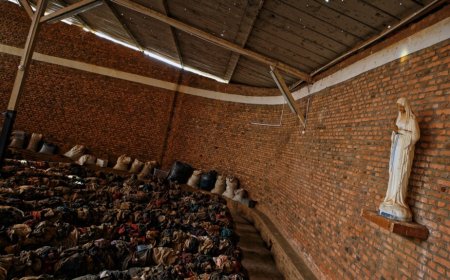
This language echoes propaganda that preceded the 1994 genocide against the Tutsi in Rwanda—a rhetoric that paved the way for the extermination of more than one million people in 100 days. Yet there was no sanction or even formal condemnation from the United States in its role as mediator in the DRC peace process.
Peace processes repeatedly breached
From the Nairobi and Luanda tracks to the Doha talks and, most recently, the Washington Accords, eastern DRC has seen a succession of ceasefires and political frameworks.
Nairobi and Luanda hosted earlier mediation efforts that collapsed amid mutual accusations of non-compliance. Kinshasa repeatedly failed to implement commitments—including FDLR neutralization and provisions for political dialogue—while simultaneously pursuing military escalation.
The Doha talks now appear to be faltering in similar fashion. Sanctioning Rwanda alone, just days after the Washington signing ceremony, reinforces perceptions in Kigali that Kinshasa can violate ceasefires without consequence.
Minerals and geopolitics
Eastern DRC’s vast reserves of coltan, cobalt, and gold remain central to global supply chains.
Kinshasa’s strategic mineral leverage has shielded it from punitive measures by major powers eager to secure access to these resources.
Tshisekedi has openly courted Western and Gulf investors, at times framing the DRC’s mineral wealth as leverage for political and security backing. This dynamic creates a moral hazard: external support without corresponding accountability.
Sanctions won’t solve the problem
African civil society voices and regional leaders argue that sanctions targeting only Rwanda harden positions rather than advance peace. They call instead for an inclusive inter-Congolese dialogue addressing governance deficits, armed-group proliferation, and identity-based persecution.
AFC/M23 took up arms claiming to protect Congolese Tutsi communities from extermination and exclusion.
Whether or not one accepts that rationale, ignoring documented hate speech, targeted killings, and militia abuses leaves a core driver of the conflict unaddressed.
A question of balance
The US Treasury maintains that sanctions are intended to change behavior, not to punish. Yet by designating the RDF and its commanders—while leaving untouched Congolese officials implicated in multiple reports of grave violations—Washington risks reinforcing perceptions of selective accountability.
Sanctioning Rwandan officials alone may offer short-term diplomatic signaling, but it does not dismantle FDLR, demobilize Wazalendo militias, halt FARDC abuses, or resolve DRC’s internal political fractures.
After three decades of war in the Great Lakes region, peace in eastern DRC may depend less on punitive measures against a single external actor and more on confronting the entrenched internal drivers of violence—through credible accountability, dismantling genocidal networks, and pursuing a genuinely inclusive Congolese political settlement.