
















How genocide ideology is being normalized in eastern DRC

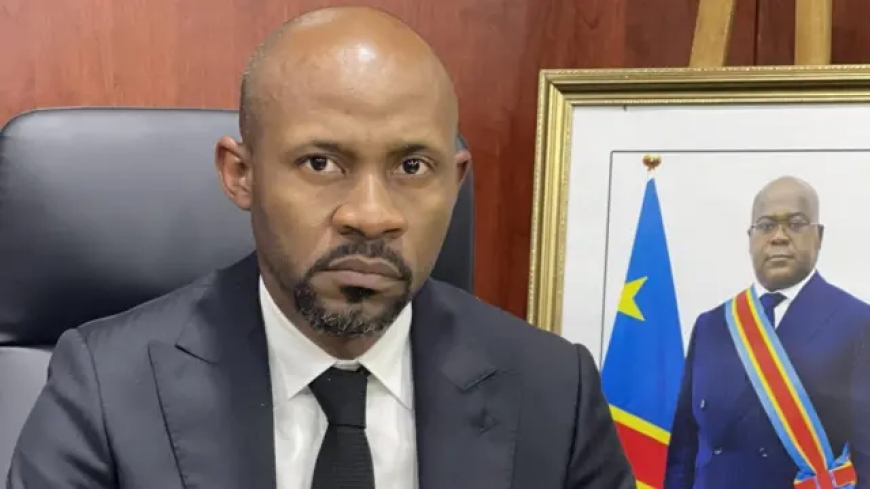
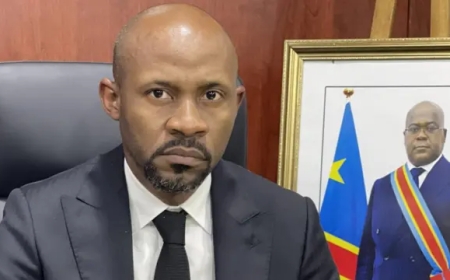
Congolese government spokesperson Patrick Muyaya wants the world to believe that the violence consuming eastern DRC was simply “exported” from Rwanda after 1996. That formulation is not just dishonest—it is politically useful. It shifts responsibility away from Kinshasa, obscures the identity of those who carried genocidal violence across the border in 1994, and recasts perpetrators as mere fallout from someone else’s history.
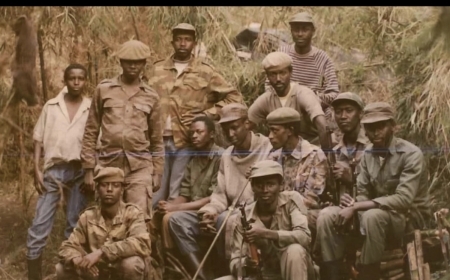
But the record is far clearer than Muyaya’s rhetoric suggests: what crossed into DRC after the 1994 genocide against the Tutsi in Rwanda was not an abstract contagion called “Rwandan violence.” It was a defeated genocidal apparatus that fled intact—armed, organized, and ideologically committed.
Once inside DRC, these genocidal forces reorganized and later formed FDLR, which has systematically targeted and killed Congolese Tutsi.
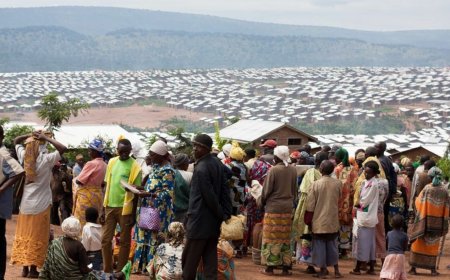
The machinery of genocide did not disappear; it crossed eastern DRC’s border with Rwanda, regrouped in camps around Goma, Bukavu, and Uvira, and launched incursions back into Rwanda.
To speak of “Rwandan violence” being exported is to erase who did what in 1994. It flattens the distinction between a state and society that were attacked by genocide and the forces that carried it out.
It also sanitizes the afterlife of Juvénal Habyarimana’s politics. Hutu Power - an extremist political ideology that emerged in Rwanda in the late 20th century - did not die with Habyarimana. Its networks, myths, and hatreds survived in exile and found space to mutate in eastern DRC.
Human Rights Watch has long documented that some FDLR leaders participated in the 1994 genocide, that the movement’s current structure was consolidated in 2000, and that it has remained a major source of atrocities against Congolese civilians—especially the Tutsi.
The Congolese state has not merely failed to dismantle that legacy. It has, at times, worked with it.
The UN Group of Experts’ 2024 final report found that the Congolese government “continued to use Wazalendo groups and FDLR as proxies” against AFC/M23 rebels, and that instructions by the FARDC chief of staff to end collaboration with FDLR “were not heeded.”
A subsequent UN report in 2025 went further, stating that despite diplomatic commitments, the FARDC “continued to rely on operational support from the FDLR and FDLR-aligned groups.”
Human Rights Watch has similarly reported that Congolese army units backed coalitions that included FDLR and that army personnel provided ammunition to FDLR fighters. This is not incidental contact. It is collaboration.
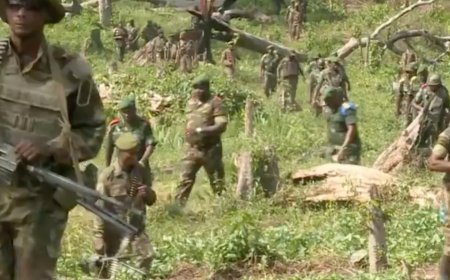
The same pattern extends to Wazalendo militias. Human Rights Watch reported in 2025 that the Congolese government supported these groups, which committed beatings, killings, and extortion—at times on an ethnic basis—while receiving military supplies from the state.
In its World Report 2026, Human Rights Watch was even more explicit: Wazalendo fighters targeted the Banyamulenge—South Kivu’s Congolese Tutsi—killing civilians, attacking villages, looting property, and threatening residents, while the Congolese army continued to supply them with weapons, ammunition, and financial support.
When a state arms and politically shelters militias that target a vulnerable minority on ethnic grounds, it cannot claim innocence.
The victims of this deadly cynicism are Congolese Tutsi—especially Banyamulenge communities—who have been harassed, threatened, abducted, dispossessed, and killed, often while being branded rebel collaborators or foreigners.
In Uvira, South Kivu, Human Rights Watch documented threats and movement restrictions imposed by Wazalendo militias on Banyamulenge residents following AFC/M23’s withdrawal in January 2026. The organization warned that Banyamulenge civilians feared reprisal attacks and recorded widespread looting of their property.
Throughout 2025, Human Rights Watch reported, Congolese soldiers and Wazalendo fighters summarily executed civilians and committed acts of sexual violence in South Kivu.
None of this occurs in a rhetorical vacuum. In 2022, the UN High Commissioner for Human Rights and the UN Special Adviser on the Prevention of Genocide warned of escalating hate speech and incitement to discrimination, hostility, and violence in DRC—specifically targeting Congolese Tutsi.
They stressed that such rhetoric heightens the risk of atrocity crimes and must be unequivocally condemned by the highest national authorities. That warning described a political climate in which identity is weaponized, citizenship is contested, and violence against Tutsi communities is rationalized as patriotism.
This is where Muyaya’s narrative becomes especially dangerous. By recasting the post-1994 crisis as something Rwanda simply “exported,” he performs a classic act of ideological laundering. He obscures the role of genocidaires who fled into DRC. He conceals the reality that FDLR is not a phantom conjured for propaganda, but an armed movement rooted in the remnants of the genocide—with leaders tied to that crime and a long record of atrocities in DRC itself.
And he distracts from the central scandal of the present moment: Kinshasa has, at various times, tolerated, instrumentalized, or directly supported forces that carry this ideological inheritance.
There have also been instances in which actors in DRC facilitated links between Juvénal Habyarimana’s son, Jean-Luc, and FDLR elements in efforts aimed at destabilizing Rwanda and reviving Hutu Power ideology.
Yet Muyaya has publicly described Jean-Luc Habyarimana as a friend of DRC. How can a state claim neutrality while aligning itself, even rhetorically, with figures associated with genocidal ideology?
To advocate, excuse, or normalize Habyarimana’s legacy while Congolese Tutsi are hunted in broad daylight is not only morally indefensible—it is regionally reckless.
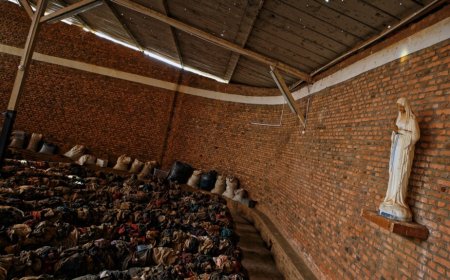
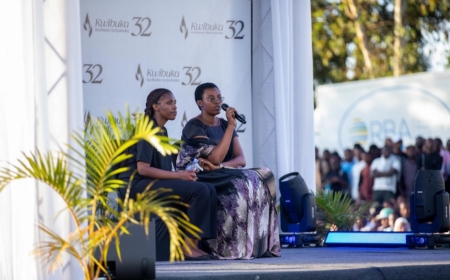
The Great Lakes region is not confronting a distant or settled past. It is grappling with the unfinished consequences of a genocide that took place just 32 years ago, and with the persistence of forces that should have been dismantled long ago.
When those forces are repackaged as useful auxiliaries, when anti-Tutsi hatred is woven into official discourse, and when those marked as suspect are left exposed to state-supported militias, genocide ideology is no longer confined to the margins. It is being normalized in plain sight.
Kinshasa must stop pretending this is merely a communication problem. It is a political and moral crisis. A government cannot invoke sovereignty while subcontracting violence to the heirs of genocidal politics.
It cannot condemn ethnic hatred while arming militias that target Congolese Tutsi. And it cannot claim to defend national unity while recycling narratives that obscure the identity of perpetrators of the 1994 genocide and trivialize the danger posed by their ideological successors.
In a region where the cost of ignoring dehumanization is written in blood, the normalization of genocide ideology is not merely irresponsible. It is catastrophic.