




































Rwanda reaches 2.5-Tonne monthly Gold Production

Rwanda’s mining industry – one of the country’s oldest economic activities – has evolved dramatically over the past 96 years, becoming a key pillar of national development. The sector now employs more than 92,000 people and contributes 3% to the national GDP. Export revenues have also surged, rising from $373 million in 2017 to $1.7 billion last year, driven by expanding production and new value-addition initiatives.
From gold to the increasingly in-demand lithium, Rwanda has intensified efforts to ensure its mineral wealth directly benefits citizens. The country currently mines wolfram, cassiterite, coltan, gold, sapphire, lithium and several other minerals, producing between 8,000 and 10,000 tonnes of tungsten, tin and tantalum metals annually. Exploration for new deposits is ongoing.
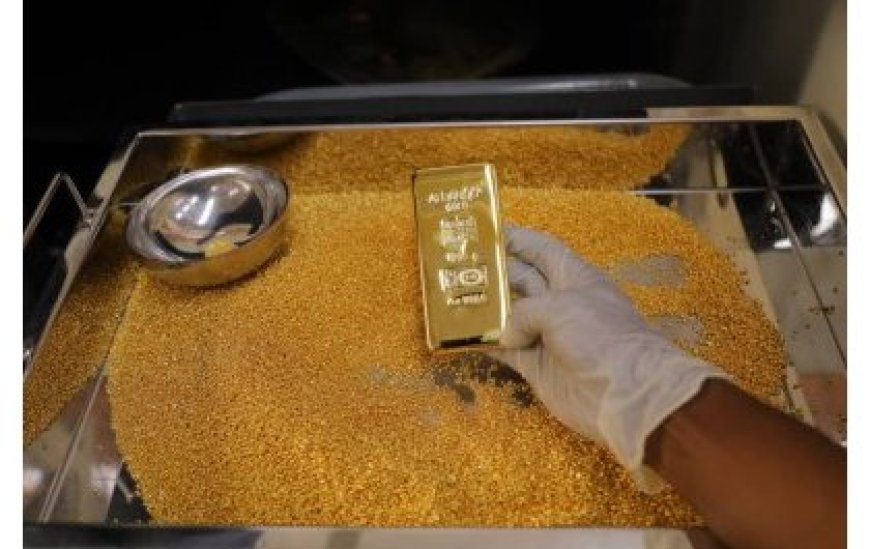
 The gold processed by Gasabo Gold Refinery has reached 22 tonnes per year.
Refineries Boost Local Value Addition
Rwanda’s commitment to processing its own minerals has led to the establishment of multiple refining plants, now key drivers of increased export earnings.
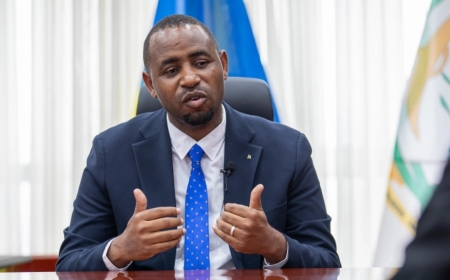
One of the flagship facilities is Gasabo Gold Refinery, operating for six years and capable of processing 96 tonnes of gold annually. CEO Kayobotsi Bosco says the refinery is rapidly scaling up, currently operating at 30% capacity – equivalent to 28.8 tonnes a year.
“We started with roughly 600 kilos per month; now we’re at 2.5 tonnes,” he said. “The numbers kept growing from 600 kg to 800, then 1,200, 1,500, and now where we are.”
The refinery processes gold not only from Rwanda but also from six African countries that regularly export their ore to Kigali due to Rwanda’s security, connectivity, and reputation for compliance.
Refining adds substantial value: raw gold mixed with silver is purchased at significantly lower prices. While refined gold sells for over $134,000 per kilogram, unprocessed ore may fetch only about $120,000, with silver — worth over $1,800 per kilogram when refined — often excluded from the valuation.
The refinery now employs 42 Rwandans, up from earlier years, and aims to reach 50% capacity next year, equivalent to four tonnes per month.
 LuNa Smelter, the tin-processing plant, has the capacity to smelt 360 tonnes per month.
Tin Smelting Also Expands
Value addition has also advanced at LuNa Smelter, Rwanda’s major tin-processing plant. Since launching in 2018/19 with a capacity of 100 tonnes per month, the plant now smelts over 250 tonnes of tin monthly.
Acting Operations Manager Parfait Udakemwa says LuNa Smelter aims to reach 320 tonnes per month next year, producing tin refined to 99.95% purity — an internationally recognized high grade. The plant employs 161 workers and processes cassiterite from all mining sites across Rwanda.
In the next five years, LuNa plans to expand further, targeting 600 tonnes per month, alongside new mining concessions and upgraded industrial infrastructure.
Robotics Set to Transform Rwanda’s Mines
The future of Rwanda’s mining sector is increasingly tied to technology. After moving from hand tools like hammers and picks to mechanized operations and data-driven exploration, Rwanda is now preparing to introduce robotic mine inspection systems.
For nearly a year, the government has been in talks with Zora Robotics, a company operating more than 60 robots in various sectors. The goal is to deploy robots into underground tunnels before human workers, significantly reducing the risks of accidents.
The robots will assess tunnel stability, gas levels and types, worker presence, and safety conditions, transmitting real-time data via 5G connectivity. They will also monitor workers’ time spent underground and detect irregularities.
Zora Robotics CEO Benjamin Karenzi said the technology will enhance safety and efficiency:
“Before anyone enters a mine, we will send in the robot. It will tell us if the ground is stable, if there is dangerous gas, and whether the environment is safe. It will also track how long workers stay inside and alert us when limits are exceeded.”
The system has already shown success in South Africa, reducing accidents and boosting investor confidence by ensuring ethical and compliant mining.
Implementing these robotics systems, however, will require substantial investment — about 120 million Rwandan francs per mine, according to the company.
Investors have welcomed the innovation. Ray Power, a UK investor behind Power Resources International in Bugesera — which processes 120 tonnes of coltan per month — says high-tech solutions are essential for boosting productivity while lowering operational costs.
“When you enhance safety for your workers, clients gain confidence,” he noted. “If we use robotic systems, clients will appreciate it and continue to invest.”
Ambitious National Targets
Rwanda aims to increase mining revenue to $2.2 billion by 2029, while raising mineral traceability and collection from 40% to 80%. In May 2025, the country unveiled 13,454 hectares of newly identified mineral-rich zones, with more expected to be announced as exploration continues.
 Zora Robotics is set to use robots in mining