










Mozambique: If Rwanda leaves Cabo Delgado, who holds the line?

What if Rwanda withdraws its army from Cabo Delgado?
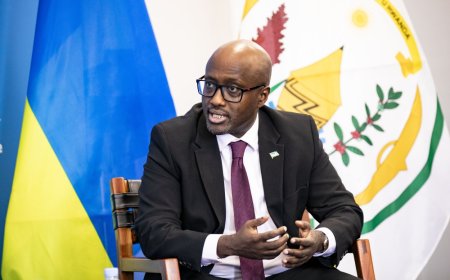
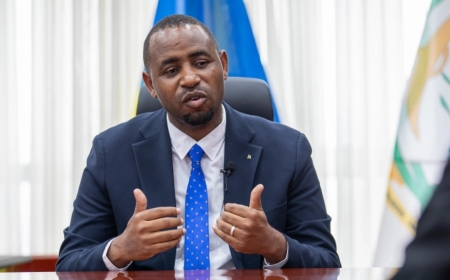
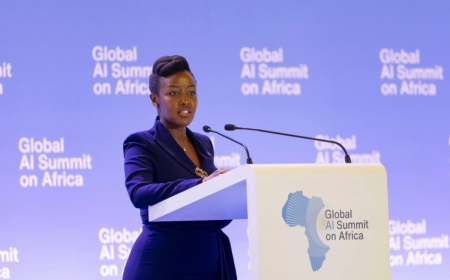
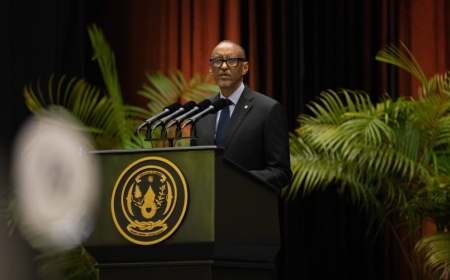
This question came to mind after Yolande Makolo, the spokesperson for the Government of Rwanda, said that if the Rwanda Defence Force command concludes that the work carried out by Rwandan security forces in Cabo Delgado Province is not appreciated, it would be justified in advising the government to end the bilateral counterterrorism arrangement and withdraw.
Rwanda’s warning should not be dismissed as diplomatic posturing. Kigali has now made its position with unusual clarity: this is not merely about the possibility of withdrawal, but about the likelihood of it if sustainable funding for the counterterrorism mission in northern Mozambique is not secured.
That matters because Cabo Delgado is not a marginal theater. It is the epicenter of an Islamist insurgency that has killed thousands, displaced vast civilian populations, and once forced TotalEnergies to suspend its $20 billion LNG project in one of Africa’s most strategically important energy corridors.
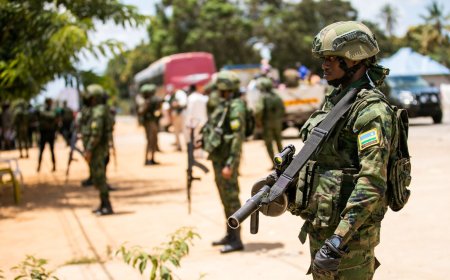
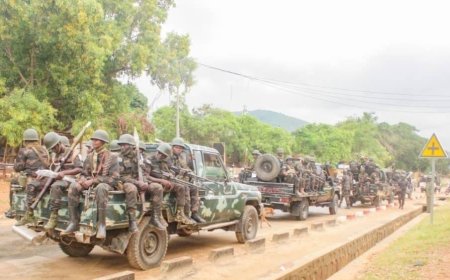
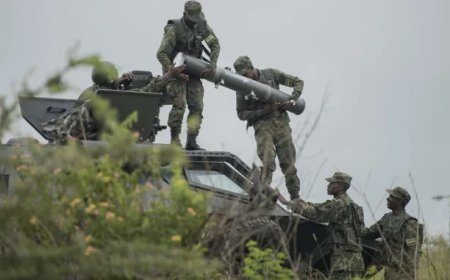
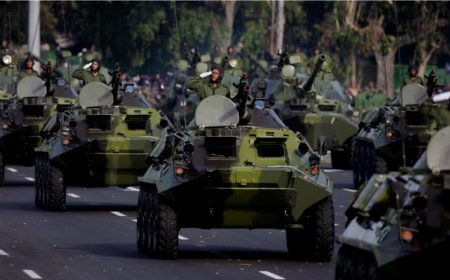
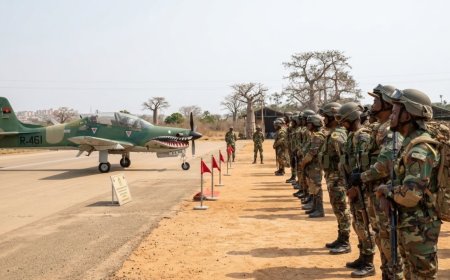
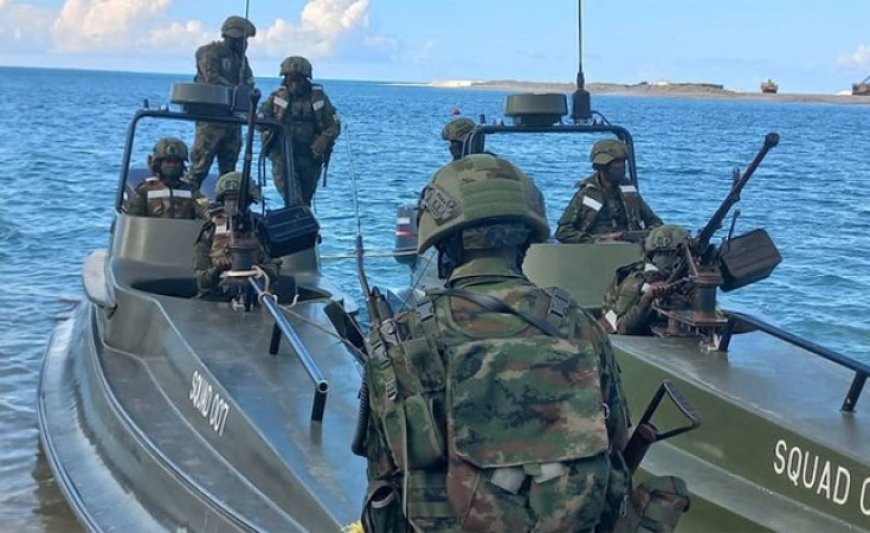
Rwandan forces entered Mozambique in July 2021 at the request of the Mozambican government under a bilateral arrangement aimed at combating terrorism, stabilizing Cabo Delgado, and restoring state authority in areas where insurgents had pushed back government control.
What followed was one of the insurgency’s most significant battlefield setbacks since it erupted in 2017. Joint Mozambican–Rwandan forces recaptured Mocímboa da Praia, the strategic port town that had served as a key insurgent stronghold, and pushed militants out of critical areas around Palma and Mocímboa da Praia districts.
The deployment helped stabilize regions that had previously been overrun by insurgents. In areas where Rwandan forces operated, about 25,000 displaced people had already returned home by September 2021.
More than 300,000 internally displaced people have since returned to their villages in northern Mozambique following successful joint operations by Rwandan security forces and the Mozambique Armed Defence Forces, which pushed Islamic State–linked insurgents out of key strongholds in Cabo Delgado.
Today, businesses have reopened, children have returned to school, and farmers are cultivating fields that had long been abandoned in the Palma and Mocímboa da Praia districts—areas once synonymous with terror.
That record matters because the insurgency has been weakened. Recent reporting shows that armed violence continues to simmer in Cabo Delgado. The February, conflict monitor from the Armed Conflict Location and Event Data Project recorded fresh clashes involving Islamic State Mozambique and the Mozambique–Rwanda coalition along the N380 highway, as well as an attack on a military base on the outskirts of Mocímboa da Praia.
The Institute for Security Studies has warned that the threat remains serious. Attacks have spread beyond Cabo Delgado into neighboring provinces, and the conflict has already caused more than 6,200 deaths and displaced over 1.1 million people.
After the Southern African Development Community mission began withdrawing in 2024, analysts warned that insurgents were regaining momentum and operational space.
This is why a Rwandan withdrawal would be dangerous in the most immediate sense: it would create a security vacuum precisely where one of the most effective counterinsurgency buffers has been holding.
In November 2024, the European Union said the presence of Rwandan troops was instrumental and remained essential, particularly after the withdrawal of the Southern African Development Community Mission in Mozambique. That assessment did not come from Kigali but from Brussels.
If the force most closely associated with the recovery of Palma, Mocímboa da Praia, and the protection of the Afungi zone withdraws before Mozambican forces can fully consolidate those gains, insurgents will inevitably test the gap. Experience in Cabo Delgado suggests that every vacuum is quickly exploited.
The people who would suffer first are Mozambican civilians. The return of families to liberated areas has always depended on one assumption: that security will hold. Once that assumption collapses, displacement resumes, schools close, commerce dries up, and fear returns far more quickly than development ever arrives.
Humanitarian reporting has repeatedly documented large-scale returns to Cabo Delgado over the past two years, particularly to Palma and Mocímboa da Praia. But these returns remain fragile because they depend on sustained security rather than declarations of victory. A Rwandan withdrawal would therefore not be an abstract geopolitical shift; it would risk undoing the very conditions that made civilian returns possible.
The consequences would not stop at Mozambique’s borders. The insurgency in Cabo Delgado has long been viewed as a regional threat, with analysts warning that extremist groups seek safe havens from which to project violence across Mozambique and the wider region.
Reporting has previously shown that southern African leaders feared the insurgency could destabilize neighboring countries. The Institute for Security Studies has warned that the violence could become a platform for regional attacks.
If Rwanda withdraws and militants regain operational depth, neighboring states such as Tanzania—and the broader southern African region—would face increased pressure from a conflict that has never been purely local.
Europe also has a direct stake in the outcome. TotalEnergies formally resumed construction of the Mozambique LNG project in January after a suspension that lasted nearly five years. Reporting has indicated that security improvements around the Afungi site were closely linked to the presence of Rwandan forces and the stabilization that followed the devastating Palma attack (2021).
A Rwandan withdrawal would therefore threaten not only Mozambican livelihoods but also one of Europe’s most significant corporate and energy investments in Africa. The European Union cannot celebrate the reopening of Cabo Delgado’s LNG corridor while ignoring the force that helped make that recovery possible.
The EU approved a €20 million assistance package for Rwanda’s deployment in 2022 and added another €20 million top-up in 2024, largely to cover equipment and strategic airlift.
Makolo says only about €20 million has actually been disbursed so far, while the real cost borne by Rwanda is at least 10 times higher, not including the loss of soldiers’ lives.
Whether one agrees with every political argument made by Kigali or not, the imbalance is clear.
Rwanda has delivered tangible security outcomes at a cost it says far exceeds the support it has received. That effort deserves recognition.
Rwanda has also built an outsized peace-support profile beyond Cabo Delgado. In January, the country ranked third globally in UN peacekeeping contributions, with 4,201 uniformed personnel serving in UN operations.
In the Central African Republic, Rwanda operates both under MINUSCA and through a bilateral defense agreement. UN peacekeeping officials have publicly recognized Rwanda’s role there in protecting civilians, securing strategic sites, and supporting stabilization efforts.
For a country of Rwanda’s size, this is an exceptional record. A more accurate formulation is not that Rwanda is the only country that contributes to peacekeeping, but that very few countries of similar size have matched its willingness to deploy quickly, absorb costs, and remain in difficult theaters where others hesitate.
So, what if Rwanda withdraws from Cabo Delgado? The answer is sobering.
Mozambican civilians would face renewed insecurity. Returnees could once again be displaced. TotalEnergies’ revived LNG project would confront fresh uncertainty. Southern Africa would inherit a wider terrorist threat. And Europe might discover—too late—that security in Cabo Delgado cannot be sustained on rhetoric alone.
If Kigali leaves before a credible replacement is in place, Cabo Delgado will not simply lose troops. It could lose the fragile peace that made recovery possible in the first place.