





















Top 10 Arms Importers in Sub-Saharan Africa
Even though arms imports by states have decreased in the African continent by -41%, according to the Stockholm International Peace Research Institute...

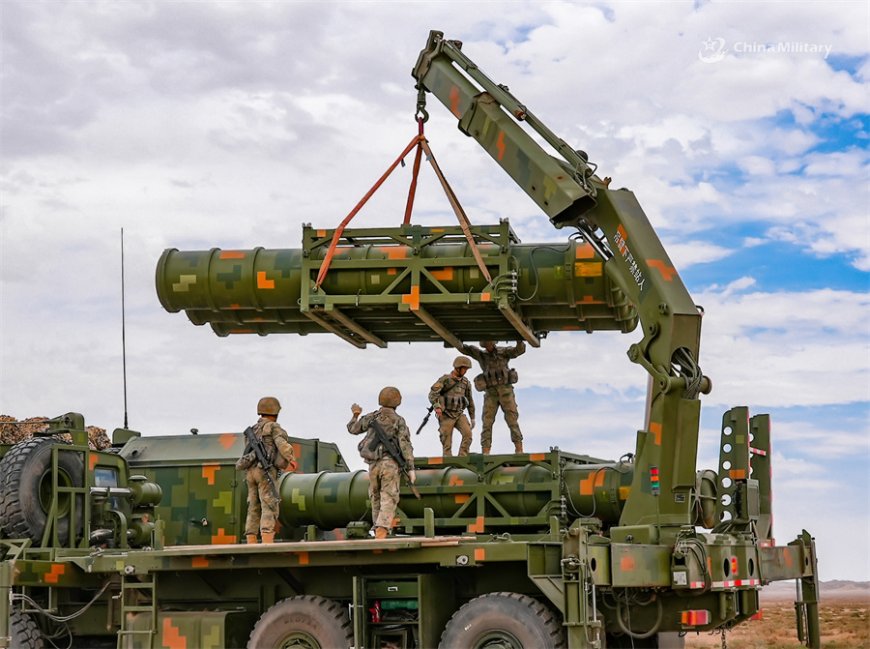
Even though arms imports by states have decreased in the African continent by -41%, according to the Stockholm International Peace Research Institute (SIPRI) report, updated on March 9, sub-Saharan Africa is a dynamic region in the arms race.
Here are the top 10 importing countries from sub-Saharan Africa out of the 42 on the SIPRI list.
In sub-Saharan Africa, Nigeria, Senegal and Mali are among the largest arms importers, bringing the regional share to 13%, according to SIPRI.
The top 10 is established on the basis of the answers provided by expert Dr Mathew George, Director of the Arms Transfers Programme at SIPRI.
The values are based on the TIV indicators (in millions) from the SIPRI report "Trends in International Arms Transfers" (2021–2025).
1. Nigeria
Nigeria is considered the undisputed leader of the sub-region, accounting for 16% of the region's imports, estimated at 532.4 million indicator values (TIV). Its imports are dominated by fighter jets, helicopters, armored vehicles, anti-tank missiles, ships, and drones.
Nigeria benefits from a highly diversified supplier base, including Turkey, South Korea, China, the Netherlands, France, Italy, Brazil, the United States, Russia, South Africa, Pakistan, Canada, Saudi Arabia, Austria, and Malaysia. It accounts for one-sixth of sub-Saharan African imports.
2. Senegal
Senegal has seen a clear progression in its rise to power with an investment of 298.46 million indicator values (TIV), of the order of 8.8% of imports from sub-Saharan African countries.
It becomes the second largest regional importer with acquisitions of naval fleets (missile ships, patrol boats) intended for maritime surveillance with the exploitation of offshore gas and oil, and aircraft for airspace surveillance, as part of the rise in security issues.
Senegal has also acquired anti-ship missiles, armored vehicles and artillery.
Senegal's main suppliers are France, Bulgaria, China, South Africa, Indonesia, Denmark, Italy, Germany, the United States, Turkey, Spain and Canada.
3. Mali
The Malian Armed Forces (FAMA) have also experienced very rapid growth since 2020. This increase in power is the result of several factors related to the war against armed groups. This commitment makes Mali the third largest arms importer in sub-Saharan Africa, with an investment of 272.17 million indicator values (TIV), representing 8% of African arms imports.
It should be noted that Mali has also chosen to change its military partners, allying itself with Russia after its falling out with France.
Mali has imported armored vehicles, troop transport vehicles, aircraft, drones, heavy artillery, missiles, etc. The country is armed by Canada, Spain, Russia, China, Turkey, and South Africa.
4. Ethiopia
Due to internal tensions related to the Tigray conflict, Ethiopia is increasingly relying on drones and heavy systems. It has acquired various weapons, including warplanes, drones, artillery, armored vehicles, armored personnel carriers, and training and combat aircraft, among others.
Ethiopia imports its weapons from Russia, Turkey, China, Iran, the United Arab Emirates, and Bosnia, with a total value of 172.85 million indicator values (TIV).
5. Angola
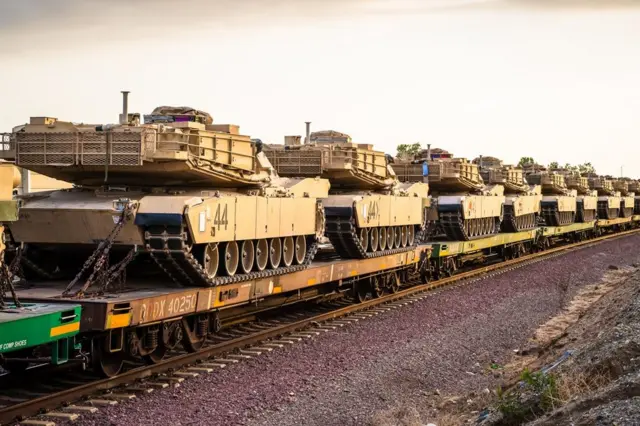
Photo credit,Getty Images
Angola, a country long mired in war, has frequently made cyclical arms purchases over the past five years. With imports estimated at around 4.7%, Angola prioritizes maritime surveillance and airspace control.
Angola has purchased maritime patrol vessels, aircraft engines, and landing craft, with a total value of 160.3 million indicator values (TIV). The country is supplied by Spain, Belarus, France, and Canada.
6. Kenya
With a mixed security situation, Kenya faces a persistent security threat near its borders, with a resurgence of crime and the Al-Shabaab armed group, primarily in the northeast, the coastal area, and Nairobi. To address this, the country has imported an estimated 4.10% of its arms, with a total value of 140.62 million indicator values (IVs).
It has acquired armored personnel carriers, aircraft, long-range air-to-air missiles, Bayraktar TB-2 drones, and various types of helicopters, including Hughes-500Ds. Kenya's arms suppliers are the United Arab Emirates, Germany, Israel, Turkey, the United States, and South Korea.
7. Mauritania
Although Mauritania is among the relatively stable countries of the Sahel, it faces a terrorist threat on its northern and eastern borders, between Algeria and Mali. Mauritania imported arms representing an estimated 3.90% of regional imports, with a total value of 134.36 million indicator values (TIV).
It has acquired anti-tank missiles, troop transport vehicles, fire support vehicles, a mobile surface-to-air missile system, air defense systems, reconnaissance drones and armored reconnaissance or fire support vehicles.
8. Burkina Faso
Burkina Faso has been facing repeated attacks by jihadist groups for several years, causing numerous civilian and military losses, as well as significant population movements, in the north of the country.
Faced with this security instability, Burkina Faso has acquired bombs, missiles, armored personnel carriers, armored vehicles, automatic cannons, aircraft, combat helicopters, artillery, Bayraktar TB-2 drones, multiple rocket launchers, armored personnel carriers, with a total value of 127.64 million indicator values (TIV).
China, Canada, Egypt, the United Arab Emirates, Turkey, the United States, Spain, Bulgaria and South Africa are the main suppliers to Burkina Faso.
9. Ivory Coast
Despite a stable security situation in the south of the country, Côte d'Ivoire is closely monitoring its northern regions bordering Burkina Faso and Mali, which are exposed to a constant jihadist threat. The country absorbed 3.50% of the arms import volume recorded by SIPRI, representing a total value of 120.33 million indicator values (IVs).
Ivory Coast has acquired AS-350 or H-125 light helicopters, Mi-24V combat helicopters, armored personnel carriers (Puma M-36 and Cobra-2), vehicle engines, fire support vehicles and maritime surveillance patrol boats.
South Africa, Turkey, Bulgaria, the United States, China, the United Arab Emirates, France and Israel are the main countries supplying Ivory Coast with weapons.
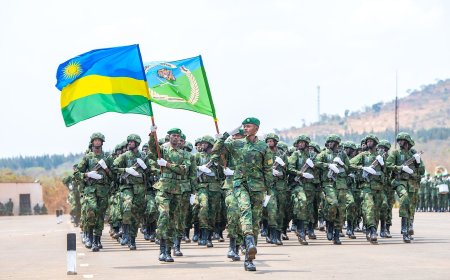
10. Rwanda
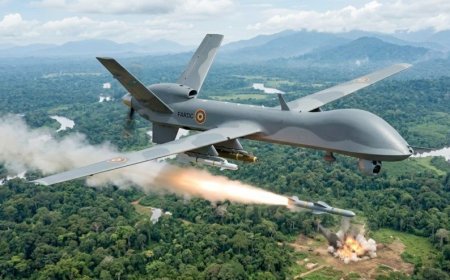
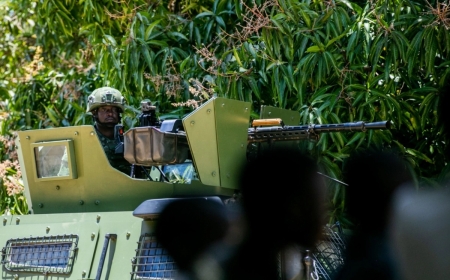
Rwanda has increased its airspace defense capabilities, with imports estimated at 3.50% of the total import volume of sub-Saharan African countries.
With a total value of 118.73 million indicator values (TIV), Rwanda has equipped itself with combat helicopters, light helicopters, armored personnel carriers, short-range air-to-air missiles, and mobile surface-to-air missile systems. The country receives arms from Turkey, China, Russia, Qatar, and the United States.
Photo credit,Getty Images
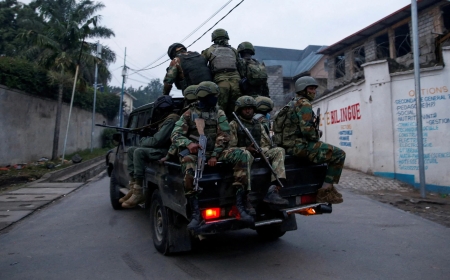
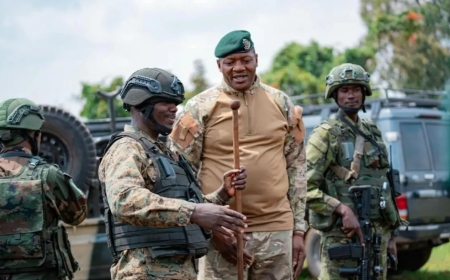
In terms of arms import volumes, Sudan, a country at war, follows with a total value of 115.02 million indicator values (IVs). It is followed by the Democratic Republic of Congo (DRC), which invested approximately 110.9 million indicator values (IVs). Niger, one of the countries of the Sahel Alliance, struggling to combat the jihadist threat, invested 76.54 million indicator values (IVs).
The United States dominates overall arms exports to Africa (19%), followed by China (17%), Russia (15%), France (8.3%), then Turkey and Brazil. However, it is worth noting that China supplied 22% of arms imports to 23 sub-Saharan African states during the period 2021-2025. It is followed by Russia with 12% and Turkey with 11%.
Top 10 Arms Importers in Sub-Saharan Africa (2021–2025) – SIPRI
| Rank | Country | TIV Value (Million) | Share of Regional Arms Imports |
|---|---|---|---|
| 1 | Nigeria | 532.4 | 16% |
| 2 | Senegal | 298.46 | 8.8% |
| 3 | Mali | 272.17 | 8% |
| 4 | Ethiopia | 172.85 | — |
| 5 | Angola | 160.3 | 4.7% |
| 6 | Kenya | 140.62 | 4.1% |
| 7 | Mauritania | 134.36 | 3.9% |
| 8 | Burkina Faso | 127.64 | — |
| 9 | Côte d'Ivoire | 120.33 | 3.5% |
| 10 | Rwanda | 118.73 | 3.5% |
Source: Stockholm International Peace Research Institute report on international arms transfers (2021–2025).