

















DRC Offers U.S. Rubaya Mine Located in M23-Controlled Territory

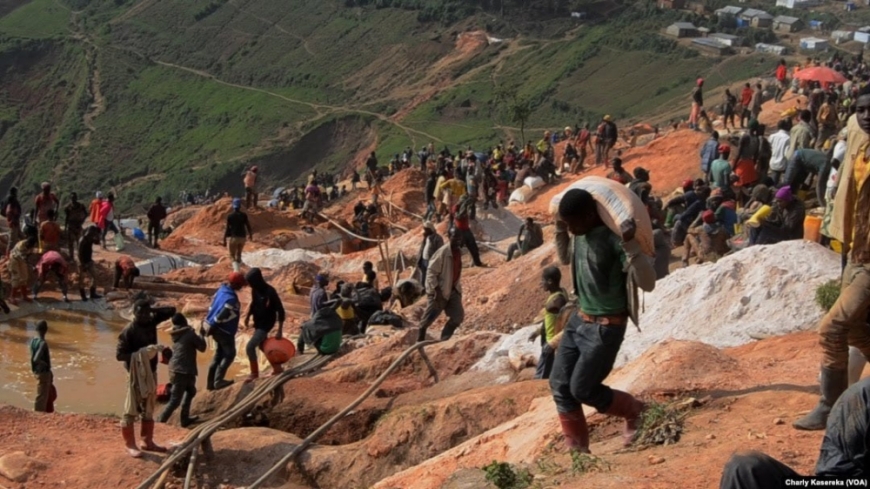
The government of the Democratic Republic of Congo (DRC) has added the strategic Rubaya coltan mine to a shortlist of key mineral assets it is offering to the United States as part of a growing bilateral minerals partnership.
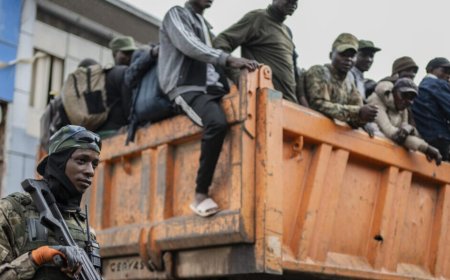
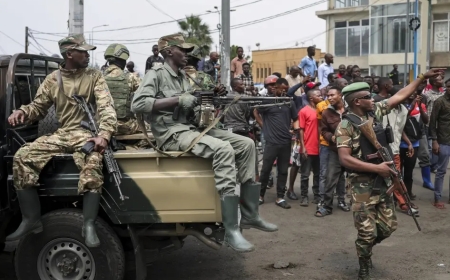
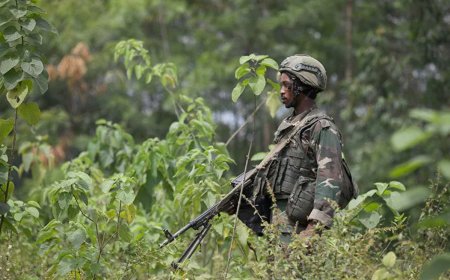
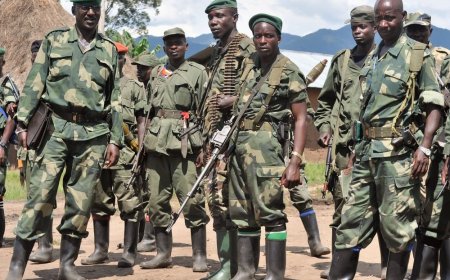
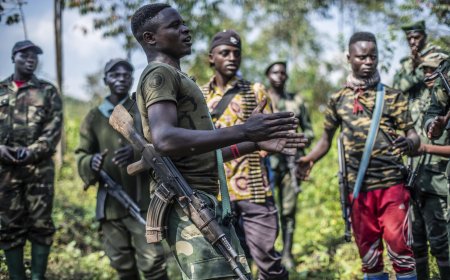
The Rubaya mine, located in eastern Congo, is considered the world’s largest source of coltan and has been under the control of the March 23 Movement (M23) for the past two years.
According to a report by Reuters, a senior Congolese government official and a U.S. diplomat confirmed that the mine was included in discussions during a meeting held in Washington, D.C. on February 5, 2026. The talks aimed to advance a minerals cooperation framework agreed upon by Kinshasa and Washington in December.
Strategic Investment Plan
Kinshasa views the inclusion of Rubaya in the partnership as part of a broader strategy to attract American investment into eastern Congo, a region that has been destabilized by prolonged armed conflict.
Government officials estimate that between $50 million and $150 million will be required to restart operations at the mine. However, they argue that the investment could be quickly recouped given strong global demand for coltan, a critical mineral used in the production of smartphones, electric vehicles, and other high-tech electronics.
For Washington, securing access to Rubaya aligns with broader efforts to diversify supply chains and compete with China’s dominance in Africa’s critical minerals sector. The United States is seeking access to various mineral resources to strengthen its strategic reserves and reduce dependence on Chinese-controlled supply networks.
M23 Criticism
The decision has drawn sharp criticism from M23, which accused the Congolese government of pursuing a flawed minerals agreement with the United States.
A senior official from the rebel group, speaking anonymously to Reuters, argued that Kinshasa should not be signing new mineral agreements while fighting continues in eastern Congo. The official maintained that M23’s objectives are not centered on mineral exploitation but rather on what it describes as the “liberation” of local populations.
The rebel representative further alleged that Kinshasa’s move to offer Rubaya to Washington — despite not controlling the mine — was aimed at drawing U.S. support to help the Congolese army retake the area by military force.
He also claimed that the legal rights to exploit Rubaya’s mineral deposits belong to a private holder rather than the Congolese state.
Rubaya is estimated to account for roughly 15 percent of the world’s coltan production, making it one of the most strategically significant mineral sites globally.