














Over 1,200 households to be compensated for Ruzizi III power project
At least 1,232 households in Rusizi District in the Western Province will be eligible for compensation to pave the way for land acquisition for the Ruzizi...

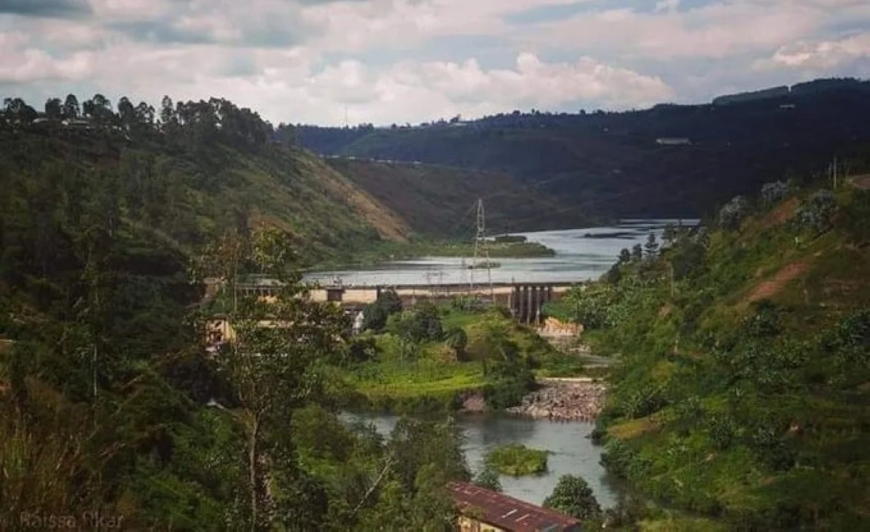
At least 1,232 households in Rusizi District in the Western Province will be eligible for compensation to pave the way for land acquisition for the Ruzizi III power plant on the Rwandan side.
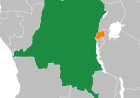
The Ruzizi III Regional Hydropower Project is a 206-megawatts regional project being developed as a public-private partnership between Burundi, the Democratic Republic of the Congo, and Rwanda, together with private-sector sponsors Industrial Promotion Services (the industrial and infrastructure development arm of the Aga Khan Fund for Economic Development) and SN Power (owned by TotalEnergies).
The project is being developed by Ruzizi III Energy Limited, a special-purpose vehicle established to develop, finance, construct, and operate the project.
Once operational, the electricity generated by the project will be shared equally among Burundi, the Democratic Republic of the Congo, and Rwanda, supporting access to reliable, renewable, and affordable electricity across the region.
The project team has completed the identification, inventory, and valuation of land, houses, crops, trees, and other assets that will be affected by the Ruzizi III Regional Hydropower Project.
A list of households who qualify for compensation has now been published.
June 8, 2026, has been set as the cut-off date, meaning it is the final date after which any new assets or developments on the affected land will not be considered for compensation.
The cut-off date is intended to prevent people from adding new assets after learning that the project will acquire their land in an attempt to increase their compensation.
Developers have informed affected residents that only land and assets recorded by the project before June 8, 2026 will be eligible for compensation, and anything added after that date will not be compensated.
“The recent declaration of the land acquisition cut-off date in Rwanda is an important milestone in the implementation of the Resettlement Action Plan (RAP) on the Rwandan side,” Mohsin Tahir, Project Director at Ruzizi III Energy Limited, said.
An estimated $21 million is expected to be spent on compensation.
“On the Rwandan side, based on the land and asset inventory undertaken, it is expected that approximately 1,232 affected households will be eligible for compensation. This will be finalised and confirmed following the cut-off process, including landowners, crop owners, tenants, and sharecroppers,” he explained.
The reported 1,232 affected people are in Rwanda only, located in the two sectors.
In the DRC, the census of those to be affected is still underway, so the final number of affected people is not yet known.
In Burundi, no people will be displaced.
The total project cost is $800 million and construction is expected to start in first quarter of 2027
Tahir mentioned that the project is being developed in accordance with the laws and regulations of the contracting states, lender requirements, and international good practice.
“This includes the environmental and social processes for the project, including land acquisition, compensation, and livelihood restoration,” he said.
The project is financed by the World Bank, African Development Bank, European Union, European Investment Bank, Agence Française de Développement, KfW, International Finance Corporation, and British International Investment, among others.
In June 2025, Anzana Electric Group, an American electricity company, expressed interest in acquiring a 10 per cent equity stake in Rusizi III Holding Power Company Limited (RHPCL).
Project developers announced that Rusizi III Holding Power Company Limited had officially signed a Letter of Intent with Anzana Electric Group, which would enable Anzana to acquire a minority stake in the project once an agreement is concluded.
Once commissioned, Ruzizi III is expected to increase Rwanda’s renewable energy capacity by nearly 30 per cent, almost double Burundi’s current installed generation capacity, and provide much-needed baseload renewable power to Eastern DRC.
Need for more investments
Serge Wilson Muhizi, Chief Executive Officer at Energy Private Developers (EPD), a network of more than 150 companies spanning various energy sub-sectors, said Rwanda needs such mega projects due to rising demand triggered by the e-mobility transition, industrial growth, and rapid urbanisation.
“Rising business opportunities are creating more need for electricity. We are seeing more industries and an increase in electric vehicles, triggering rising energy demand,” he observed.
“Investors expect sufficient, stable, and affordable energy. Such big power projects are needed and will help provide affordable power. Sectors with productive uses of energy have to benefit,” he added.
A study titled Exploring Enabling Energy Frameworks for Electric Mobility in Rwanda warns that electric mobility could place additional strain on Rwanda’s grid if expansion is not carefully managed.
Kigali’s peak power demand is projected to increase by 64 per cent by 2030, even without electric vehicles. The addition of e-mobility will further strain the system, and without upgrades, the number of overloaded lines could be four times higher by 2030.
Innocent Hakizimana, an electrical engineer, indicated that Rwanda needs increased energy generation to sustain rapid economic growth, fuel industrial expansion, and meet ambitious universal access targets.
“Because electricity demand has outpaced supply, generating more power is essential to prevent outages. We are moving from fuel to electricity, especially with electric vehicles. This does not reduce energy demand; it shifts the demand to electricity, meaning we need more power,” he said.
Rwanda has a $3 billion investment plan aimed at doubling the country’s generation capacity by 2030, including the mobilisation of $1 billion in private-sector financing.
The plan targets expanding the country’s installed electricity generation capacity to 1,066 megawatts while ensuring universal electricity access by 2030.