






Army to Join Police In South Africa to Curb Crime & Gang Violence
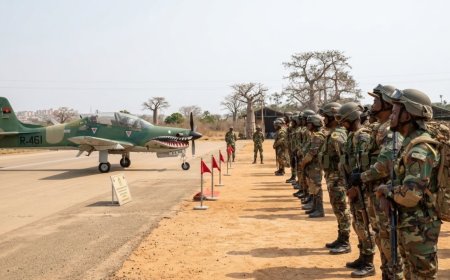
South African President Cyril Ramaphosa ordered the army to assist police in Western Cape & Gauteng after gang violence and illegal mining killings, calling organised crime the main threat to democracy and economic development

South Africa will deploy soldiers domestically as a policing multiplier, placing military resources behind overstretched law enforcement as violent crime rates and illicit mining expand faster than investigative capacity.
Security Capacity Gap
Ramaphosa said he directed police and military chiefs to identify deployment areas "within the next few days" in Western Cape and Gauteng. The South African National Defence Force will support police operations against gang violence and organized criminal networks.
I will be deploying the South African National Defence Force to support the police.
The intervention follows sustained lethal violence. Authorities record roughly 60 killings daily, concentrated in Cape Town gang wars and shootings linked to illegal mining around Johannesburg.
Children in the Western Cape are "caught in the crossfire of gang wars," Ramaphosa said, while residents in Gauteng are displaced by armed mining groups.
"Organised Crime" As Primary Threat
In his state of the nation address and again yesterday, Ramaphosa framed the issue strategically: "Organised crime is now the most immediate threat to our democracy, our society and our economic development."
He added the government's primary focus this year is on stepping up the fight against organised crime and criminal syndicates, using “technology, intelligence and integrated law enforcement."
The government plans to recruit 5,500 police officers and expand intelligence targeting priority syndicates. Firearms remain the dominant murder weapon despite strict ownership laws.
Authorities also face approximately 6,000 abandoned mines exploited by armed groups known locally as "zama zamas."
In 2024 alone, illegal mining cost more than $3bn in lost gold output.
Economic And Governance Pressure
The domestic security push comes as Ramaphosa leads a coalition government formed in June 2024 after the African National Congress lost its parliamentary majority for the first time in 30 years. The pro-business Democratic Alliance joined the coalition, helping restore investor confidence, but unemployment remains high and service delivery protests persist.
Water shortages triggered demonstrations in Johannesburg after taps ran dry for over 20 days. Ramaphosa warned officials they would face criminal charges if they fail to supply water, stating outages reflect "a local government system that is not working."
Earlier, in July, he summarized public concern.
South Africans face corruption and the rise of criminality... killing of innocent people, gender-based violence, gang violence, kidnappings, construction mafia criminality and many others.
Internal Security Doctrine Shift
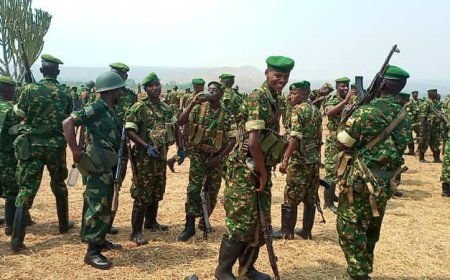
The army’s domestic role reflects policing reinforcement rather than emergency rule. Military units will operate alongside police rather than replace them, indicating integrated enforcement rather than martial law.
The government also tied crime to economic performance, saying fear discourages investment and undermines development.
Ramaphosa also linked security to broader geopolitical rhetoric, arguing nations cannot consider themselves "free" while others face occupation and war, including Palestine, Cuba, Sudan and Western Sahara - framing domestic stability as part of a wider political narrative.
South Africa has paired its domestic security messaging with an outward-facing diplomatic posture, with Cyril Ramaphosa frequently framing international conflicts through the legacy of anti-apartheid struggle.
Pretoria has been among the most vocal governments linking its own history to questions of occupation and self-determination, repeatedly citing the situation in Palestine alongside other contested territories in multilateral forums.