










Al Hilal’s Champions League charge offers new dawn for Rwandan football


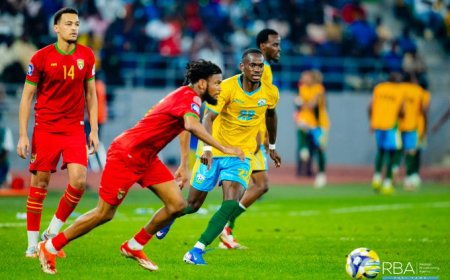
Rwandan Premier League invitational side Al Hilal SC may have suffered their first defeat of the CAF Champions League group stage, last Friday, but their broader impact on the local league cannot be overstated.
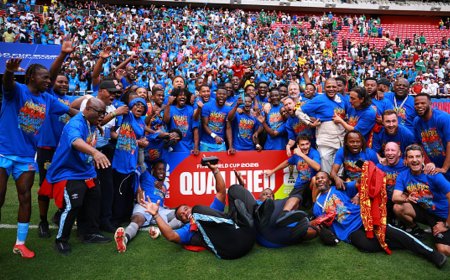
The 2–1 loss to MC Alger in Algiers does little to diminish what has already been a remarkable continental campaign. Al Hilal remains top of Group C with eight points heading into the decisive final round of matches.
More significantly for Rwandan football, their presence in the domestic league — alongside compatriots Al-Merrikh — triggered a ripple effect that could reshape standards for years to come. Forced to relocate due to the civil war in Sudan, Al Hilal first competed in Mauritania, winning the Ligue 1 title in their only season (2024/25), before temporarily joining the RPL for the 2025–26 campaign.
What began as a logistical necessity is rapidly evolving into a transformative chapter for Rwandan football.
Al Hilal currently sits top of the RPL table with 35 points from 15 matches, riding an eight-game winning streak and holding two games in hand over their closest challengers. Their consistency, squad depth, and tactical discipline immediately elevated the intensity of domestic competition.
For local heavyweights APR FC, Rayon Sports, and Police FC, competing against a side that is simultaneously holding its own in the CAF Champions League exposed the gap between domestic dominance and continental readiness. The lesson is clear: success at home does not automatically translate into success in Africa — as APR fans can painfully attest.
Al Hilal’s players operate at a tempo and physical intensity honed through regular high-stakes continental fixtures. Their style of play and game management reflect a club accustomed to pressure on continental nights — a standard that will inevitably force Rwandan clubs to adapt or risk falling further behind.
The ripple effect is already visible. Matches involving Al Hilal attract heightened attention, deeper tactical preparation, and stronger line-ups from opposition teams. Rival coaches are compelled to analyse more thoroughly, and players are pushed to meet higher physical benchmarks.
Over time, such exposure recalibrates what is considered “normal” within the league.
Professional structures as a benchmark
Beyond the pitch, Al Hilal’s institutional strength may prove even more influential.
Long regarded as one of East and Central Africa’s best-managed clubs, they bring structured technical departments, a clear sporting philosophy, and professional administrative systems — areas where many local clubs still lag behind.
Rwandan clubs, many of which rely heavily on institutional backing rather than diversified commercial models, now have a real-life case study operating within their own league.
If APR FC, Police FC, and Rayon Sports absorb elements of that approach — improved recruitment analytics, enhanced conditioning programmes, stronger youth development pipelines — the long-term dividends could be significant.
Football ecosystems evolve not just through victories, but also through learning from others. When one club sets a higher operational standard, others are compelled to follow. The league as a whole rises.
Al Hilal’s Champions League campaign has also cast a wider spotlight on Rwanda Premier League. As they compete against giants such as MC Alger, Mamelodi Sundowns, and potentially beyond the group stage, international audiences inevitably note that the Sudanese club is currently based in Rwanda. This association enhances the league’s visibility. Scouts, analysts, and broadcasters tracking Al Hilal’s progress are indirectly exposed to Rwandan football. Local players sharing the pitch with continental-calibre opposition gain experience that might otherwise require overseas transfers.
For Rwanda’s national team prospects, regular exposure to the pace and physicality embodied by Al Hilal can only sharpen competitive readiness. Domestic players are learning how to cope with high-pressing systems, aerial duels, and tactical discipline comparable to top North and Southern African sides.
Perhaps the most subtle — yet powerful — effect is psychological. Rwandan clubs have often struggled to make meaningful runs in CAF competitions. Early exits reinforced a perceived gap between East African teams and North or Southern African powerhouses.
Watching Al Hilal navigate the same continental waters while training and competing in Rwanda challenges that narrative.
Success becomes less theoretical. It is no longer something happening “elsewhere.” It is happening in Kigali.
If Al Hilal advance to the quarter-finals — or even deeper into the competition — the message will be unmistakable: preparation, structure, and consistency can bridge continental divides. That belief could inspire club boards to invest more boldly and players to dream bigger.
Ambition — perhaps more than anything — is what Rwandan clubs have been missing. There may be concerns that the presence of the Sudanese giants disrupts the competitive balance long dominated by APR and Rayon Sports.
Yet in the long run, their participation appears more stimulative than disruptive. The RPL does not lose its identity by hosting Al Hilal or Al-Merrikh; rather, it gains intensity and continental relevance.
Stronger internal competition produces stronger representatives in Africa. If APR, Police, or Rayon Sports respond by modernising operations and raising performance standards, the beneficiary will be Rwandan football.
Al Hilal’s defeat in Algiers was merely one chapter in a demanding continental journey. Their broader story in Rwanda, however, is far more consequential. Win or lose in the CAF Champions League, Al Hilal’s presence in Rwanda Premier League has already planted seeds of transformation.
If nurtured wisely, those seeds could redefine the trajectory of Rwandan Premier League for years to come. The onus is now on APR, Rayon, Police FC, and the RPL itself not only to learn from Al Hilal and Al-Merrikh — but to act on those lessons for the good of Rwandan football.