































Bill Gates Visits Rwanda to Explore Healthcare Innovation and Medical Manufacturing
Bill Gates visits Rwanda to tour the TKMD syringe factory, assess healthcare progress, and discuss digital health, AI, and Africa's medical future.


Billionaire philanthropist Bill Gates is in Rwanda on a private visit focused on evaluating the country's progress in healthcare and innovation, beginning with a tour of a medical syringe manufacturing plant in Rwamagana District.
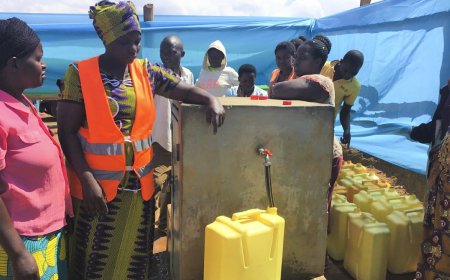
According to reliable sources, Gates visited the TKMD syringe factory in the Mwulire Industrial Park, one of Africa's growing medical manufacturing facilities. During his stay, he is also expected to visit Mwulire Health Centre and meet with a community health worker to gain first-hand insight into Rwanda's community-based healthcare system.
Despite being one of the world's wealthiest individuals, witnesses described Gates' visit as low-profile and informal. His itinerary reportedly includes private meetings and shared meals with local stakeholders at a hotel in Rwamagana.
Gates Foundation Supports Healthcare Investments

The projects visited by Gates are among those supported by the Gates Foundation, where he serves as Chair of the Board.
The TKMD factory officially opened on April 1, 2025, with an initial production capacity of 600,000 to one million syringes per day. The facility employs 110 workers, approximately 80% of whom are women.
Before entering the international market, the syringes underwent rigorous quality testing to ensure they met global standards. The first shipments were purchased by UNICEF for distribution to Ethiopia, Burundi, the Democratic Republic of the Congo, and Mozambique.
According to CNBC Africa, the factory has produced more than 22 million syringes since 2024 and has secured a UNICEF contract to manufacture an additional 150 million syringes.
Officials say local production is expected to reduce delivery times for medical supplies across East, Central, and Southern Africa by up to 90%, strengthening the continent's healthcare supply chain.
Lessons from the COVID-19 Pandemic
During the visit, Gates emphasized that the COVID-19 pandemic highlighted the importance of building reliable regional manufacturing capacity for medicines, vaccines, and essential medical supplies.
He noted that Africa's struggle to access vaccines, syringes, and other critical healthcare products during the pandemic demonstrated the risks of relying solely on imports from overseas.
According to Gates, facilities such as TKMD not only improve access to essential medical equipment but also create jobs, strengthen Africa's preparedness for future health emergencies, and contribute to long-term economic growth.
Praises Rwanda's Health Achievements
Ahead of his visit, Gates said he wanted to learn from Rwanda's approach to combining investments in people, strong public institutions, and community-centered healthcare delivery.
He highlighted that since 2000, Rwanda has reduced under-five child mortality by 80% and maternal mortality by 85%.
"What impresses me is not one single program, but the long-term investment Rwanda has made in its people, institutions, and systems that deliver services directly to communities," Gates said.
He credited the country's progress to sustained investment in primary healthcare, support for community health workers, and the strengthening of institutions such as the Rwanda Biomedical Centre (RBC).
As part of his visit, Gates is expected to observe how community health workers monitor pregnancies, detect diseases early, and refer patients to higher-level health facilities.
Focus on Digital Health and Artificial Intelligence
The visit also highlights Rwanda's growing use of digital technologies and artificial intelligence to improve healthcare services.
Gates praised the country's National Health Intelligence Center, which integrates patient records, treatment data, medicine and medical supply inventories, health insurance information, workforce data, and civil registration records into a unified system.
Officials say the integrated platform enables faster, data-driven decision-making across the healthcare sector.
The Gates Foundation is also supporting Horizon 1000, an initiative aimed at deploying AI-powered healthcare tools to 1,000 primary healthcare facilities by 2028.
Long-Term Investment in Africa
Gates' visit comes shortly after the Gates Foundation announced plans to invest $200 billion over the next 20 years, with a significant share of the funding expected to support projects across Africa.
Gates said that while international partnerships will continue to play an important role, Africa's long-term development will ultimately depend on strong leadership, resilient institutions, and homegrown solutions developed by Africans themselves.